
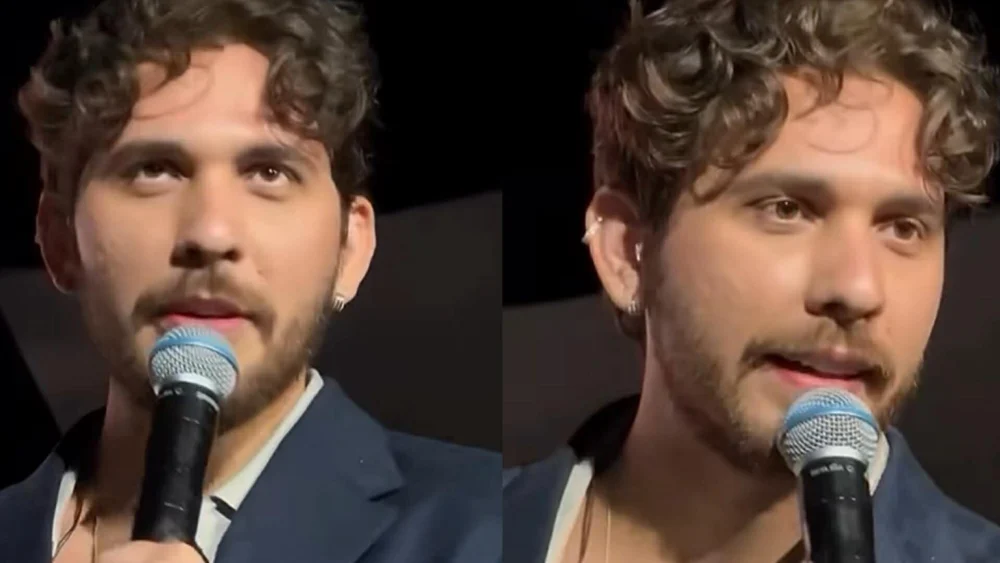
Brazilian sertanejo sensation Gustavo Mioto recently found himself at the center of public attention, first for an unscripted, humorous exchange with a fan during a live performance that quickly went viral, and subsequently for a definitive clarification from influencer Larissa Santos regarding their past romantic involvement. These events collectively underscore the intricate challenges public figures face in maintaining personal boundaries while navigating the ever-present gaze of media and enthusiastic fan bases. Mioto, known for his emotive vocal style and chart-topping hits, has consistently been a subject of public interest, particularly concerning his romantic life. The recent occurrences provide a microcosm of contemporary celebrity culture, where spontaneous interactions and carefully managed statements alike are amplified across digital platforms, shaping public perception and fueling ongoing dialogues about authenticity, privacy, and media responsibility.
The Viral Stage Incident: An Unscripted Moment of Candid Interaction
The catalyst for Mioto’s recent surge in online discussions stemmed from a captivating moment captured during one of his high-energy concerts. As is customary for many artists, Mioto paused his performance to connect with his audience on a more personal level, delving into a reflective monologue about the nature of love. "Eu acho o amor lindo, eu amo ver o amor sendo…" Mioto began, his voice resonating with sincerity as he shared a sentiment often echoed in the romantic themes of his music. The stage lights illuminated the expectant faces of thousands, eager to hear his full thought. However, the intimate atmosphere was momentarily punctuated by an unexpected interjection from the crowd. A fan, seizing the opportunity for a direct interaction, audibly interjected with a pointed remark: "Só não dá certo com você" (It just doesn’t work out for you).
The candid comment, delivered with a mix of playful audacity and perhaps a touch of perceived truth, immediately shifted the dynamic. The audience’s collective gasp quickly transformed into a wave of murmurs and laughter, acknowledging the fan’s bold interjection. Mioto, a seasoned performer accustomed to managing live crowds, displayed his quick wit and stage presence. Without missing a beat, he retorted with a lighthearted, yet firm, "Cala a boca" (Shut up), delivered in a tone that clearly conveyed humor rather than genuine annoyance. This spontaneous exchange, lasting mere seconds, encapsulated the unpredictable nature of live entertainment and the unique bond between an artist and their admirers.
The moment was swiftly captured on countless smartphones and uploaded to social media platforms, particularly Instagram Reels and TikTok, where it proliferated rapidly. Within hours, the clip had garnered millions of views, shares, and comments, igniting a fervent discussion among netizens. The virality of the incident can be attributed to several factors: its unexpectedness, the relatability of a celebrity facing a direct, slightly cheeky personal jab, and Mioto’s immediate, disarming response. Fans reacted with a spectrum of emotions. Many found the interaction genuinely hilarious, with comments like "Nunca ri tanto de um cala a boca" (I’ve never laughed so much at a ‘shut up’) becoming a popular sentiment. Others expressed a degree of empathy for Mioto, recognizing the underlying truth in the fan’s comment, given his publicly known relationship history. A third segment of the audience perceived the fan’s remark as somewhat intrusive or "pesado" (heavy-handed), suggesting that the line between playful banter and personal boundary-crossing had been approached. The incident served as a stark reminder of how every public gesture, every unscripted word, can be immortalized and dissected in the digital age, underscoring the delicate balance celebrities must strike between authenticity and maintaining a curated public image.
Gustavo Mioto’s Public Persona and Romantic Life: A Recurring Narrative
Gustavo Mioto has carved out a significant niche in the Brazilian sertanejo music landscape since his debut, known for hits like "Impressionando os Anjos," "Com ou Sem Mim," and "Anti-Amor." His music often explores themes of love, heartbreak, and resilience, which naturally leads his audience to connect deeply with his personal experiences. This intrinsic link between his artistry and his private life has made his romantic relationships a constant subject of public fascination, a common phenomenon for artists whose work is deeply emotionally resonant.
Mioto’s most high-profile relationship to date was with fellow sertanejo star Ana Castela. Their romance, affectionately dubbed "Boifela" by fans, was intensely followed by the media and public alike. The couple’s journey, from their initial public appearances to their on-again, off-again status, generated considerable speculation and emotional investment from their fan bases. Their relationship began in June 2023, marked by public declarations of love and joint appearances that delighted their followers. However, the relationship faced multiple periods of separation, with the first public breakup occurring in September 2023, only for them to reconcile shortly after. A more definitive separation was announced in January 2024, with both artists citing differences in priorities and the immense pressure of public scrutiny as contributing factors. Each phase of their relationship, particularly the breakups, fueled widespread discussion about Mioto’s romantic prospects and emotional state, creating a narrative of a talented artist navigating the complexities of love under the relentless glare of the spotlight. This background is crucial for understanding the context surrounding the subsequent rumors involving Larissa Santos, as the public’s awareness of Mioto’s recent romantic history significantly influenced the interpretation of new information.
The Larissa Santos Affair: Addressing Speculation and Setting the Record Straight
In the wake of his highly publicized breakup with Ana Castela, Gustavo Mioto’s personal life remained a fertile ground for speculation. It was against this backdrop that rumors emerged in January concerning an alleged affair with Larissa Santos, a prominent influencer and former participant of the popular reality show "Big Brother Brasil." The claims, primarily disseminated by journalist Matheus Baldi on the entertainment program "Fofocalizando," suggested that Santos was "chateada" (upset) because Mioto was reportedly unwilling to publicly acknowledge their relationship. Baldi’s report further speculated that Mioto’s reluctance stemmed from lingering feelings for his ex-girlfriend, Ana Castela, thus weaving a narrative of unrequited hope and emotional entanglement.
The swift and widespread dissemination of these claims necessitated a direct response from Larissa Santos. Understanding the potential for misinterpretation and the perpetuation of an inaccurate narrative, Santos took to her own social media channels to address the controversy unequivocally. She began by directly refuting the core assertion that she was "chateada" with Mioto or that there were any unresolved romantic tensions on her part. "O jornalista que afirmou isso é o mesmo que também disse que o Gustavo ficava com minha amiga Eva e que não queria assumi-la, sendo que eles nunca nem ficaram, né? Mais uma vez tentam criar uma narrativa em que a mulher aparece como se estivesse esperando ser escolhida. Isso não é verdade," Santos declared, directly challenging the credibility of the initial report and critiquing a broader pattern in celebrity journalism. Her statement highlighted a common trope in media reporting, where female public figures are often portrayed as passively awaiting male validation or commitment, a narrative she explicitly rejected.
Santos proceeded to provide a clear and concise account of her relationship with Mioto. She confirmed that they had indeed "ficamos, sim, mas faz um tempo" (had an affair, yes, but it was some time ago), explicitly acknowledging a past romantic involvement. However, she emphasized that their current relationship is strictly platonic: "Hoje somos amigos e tenho carinho pelo Gustavo" (Today we are friends and I have affection for Gustavo). Crucially, Santos stressed the absence of any "cobrança de nenhum dos dois lados" (demands or expectations from either side), dismantling the notion of unfulfilled desires or resentment. She also offered a practical explanation for their continued public appearances, stating, "Vamos continuar aparecendo juntos porque temos o mesmo ciclo de amigos" (We will continue appearing together because we have the same circle of friends). This clarifies that their shared social circles naturally lead to encounters, which should not be misinterpreted as signs of an ongoing secret romance or an unacknowledged relationship. Her concluding remark, "E seguimos aqui tranquilos, e rindo disso tudo," conveyed a sense of peace and amusement regarding the media frenzy, reinforcing her narrative of moving forward amicably. Mioto, while not issuing a direct statement on this particular rumor, has generally maintained a more private stance on his relationships, often allowing those involved to speak or addressing matters indirectly through his art or social media in broader terms. His silence in this instance, following Santos’s clear statement, can be interpreted as an implicit acceptance of her narrative.
Media Scrutiny and the Impact on Public Figures
The incidents involving Gustavo Mioto — from the spontaneous fan interaction to the detailed refutation of relationship rumors — offer a compelling case study into the intense scrutiny faced by public figures in the contemporary media landscape. The rise of gossip journalism, exemplified by programs like "Fofocalizando" in Brazil, thrives on the public’s insatiable appetite for celebrity news, often blurring the lines between verified fact and speculative narrative. These outlets, coupled with the pervasive nature of social media, create an ecosystem where information, whether accurate or not, can spread globally within minutes.
Larissa Santos’s pointed critique of the media’s tendency to "criar uma narrativa em que a mulher aparece como se estivesse esperando ser escolhida" resonates deeply within broader discussions about gendered reporting in celebrity culture. This type of framing not only disempowers female public figures but also perpetuates outdated societal expectations regarding women’s roles in relationships. By actively challenging this narrative, Santos not only clarified her personal situation but also contributed to a more critical discourse on media representation. Her statement highlights the agency that public figures can exert in controlling their own stories, even when confronted with aggressive speculation.
For artists like Mioto, this constant surveillance poses significant challenges. Every public appearance, every social media post, and even seemingly private moments are subject to interpretation, analysis, and often, misrepresentation. The pressure to maintain an authentic connection with fans, while simultaneously safeguarding personal privacy, becomes a tightrope walk. The viral stage incident, while humorous, also illustrates the erosion of traditional boundaries between performer and audience. While such interactions can foster a sense of intimacy and relatability, they also expose artists to unexpected personal comments that can be both endearing and, at times, intrusive. The cumulative effect of such scrutiny can be immense, impacting mental well-being, influencing career decisions, and ultimately shaping the artist’s public image in ways that are often beyond their direct control. The balance between being accessible to fans and protecting one’s private life is a constant negotiation in the digital age, a negotiation that Mioto, like many of his peers, continually undertakes.
Broader Context: Celebrity Culture and Authenticity in the Digital Age
The events surrounding Gustavo Mioto underscore several key aspects of modern celebrity culture. First, there is an undeniable and ever-growing demand for authenticity from public figures. Fans, increasingly jaded by polished, corporate-controlled images, gravitate towards moments that feel genuine and unscripted. The viral "Cala a boca" incident is a prime example; its appeal lay precisely in its spontaneity and Mioto’s unfiltered, albeit humorous, reaction. Such moments foster a deeper connection, making celebrities seem more human and relatable, which can significantly boost their popularity and appeal. However, this pursuit of authenticity is a double-edged sword. While it can enhance engagement, it also opens the door to greater vulnerability, as any unscripted moment can be taken out of context, magnified, or misinterpreted, as seen with the fan’s comment.
The sertanejo music genre, in which Mioto is a prominent figure, plays a unique role in this dynamic. Sertanejo music often explores themes of love, longing, heartbreak, and everyday struggles, creating a strong emotional resonance with its audience. This deep connection means that the personal lives of sertanejo artists, particularly their romantic relationships, become extensions of the narratives in their songs. Fans often feel a personal investment in their idols’ love lives, seeking parallels between the lyrics and the artists’ real-world experiences. This makes the public’s interest in Mioto’s relationships not merely casual curiosity but a more profound, almost empathetic engagement, which explains the intensity of the "Boifela" phenomenon and the subsequent speculation.
Furthermore, the incidents reflect the evolving nature of the artist-fan relationship. Social media platforms have dismantled traditional barriers, allowing for direct communication and creating a perceived intimacy that was previously impossible. While this fosters a strong community, it also means fans feel more entitled to comment on, and even intervene in, their idols’ lives. The fan’s interjection at Mioto’s concert, while cheeky, is a product of this new paradigm, where the lines between public and private are constantly redrawn and often blurred. Celebrities, therefore, must develop sophisticated strategies to navigate this landscape, balancing transparency with the need for personal boundaries, and using their platforms to correct narratives when necessary, as Larissa Santos effectively did.
Conclusion
Gustavo Mioto’s recent experiences offer a compelling narrative on the complexities inherent in modern celebrity life. The viral stage interaction highlighted the unpredictable yet often endearing nature of live performance and the amplified reach of spontaneous moments in the digital age. Simultaneously, the clarification from Larissa Santos regarding their past affair served as a crucial reminder of the media’s power to shape public perception and the imperative for public figures to assert control over their personal narratives. These events collectively demonstrate the delicate tightrope walk artists like Mioto must perform: maintaining an authentic connection with a devoted fanbase while steadfastly safeguarding their privacy from incessant scrutiny and speculative reporting.
As Mioto continues his successful career in the highly competitive Brazilian music industry, these incidents will undoubtedly contribute to the ongoing dialogue surrounding celebrity culture, the ethics of journalism, and the evolving dynamics between artists and their audiences. They reinforce that while fame brings immense opportunities, it also comes with the responsibility of navigating an environment where every personal detail can become public discourse, demanding resilience, transparency when appropriate, and a clear voice to set the record straight amidst the noise. The capacity to manage such challenges, both on and off stage, ultimately defines the enduring legacy of a contemporary public figure.

0 Comments