
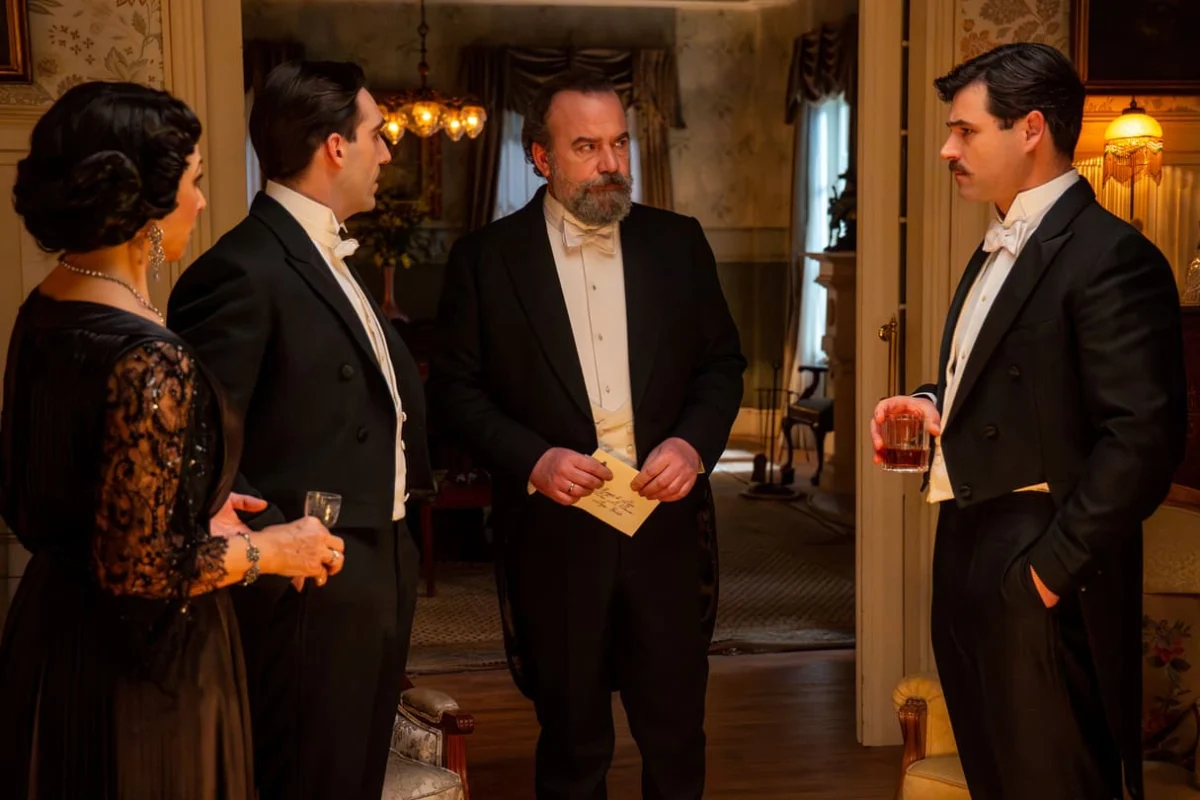
The week of March 23rd to 27th in the acclaimed Spanish drama "La Promesa" is poised to deliver a series of dramatic twists and turns that threaten to reshape the established order within the Luján family and their estate. At the heart of the unfolding narrative lies a perilous business venture involving Manuel and Ciro, a partnership with the enigmatic Duke of Carril, a decision that carries the ominous potential to ignite a fresh conflagration within the palace walls. This high-stakes entanglement, coupled with persistent questions surrounding the tragic demise of Ana and the escalating friction between Leocadia and Cristóbal, creates a volatile atmosphere charged with intrigue and emotional turmoil.
Manuel and Ciro’s Descent into Dangerous Territory
The burgeoning interest of Manuel in forming a business alliance with the Duke of Carril has cast a long shadow of apprehension over the estate. Alonso, the patriarch, has not concealed his profound concern regarding this prospective arrangement, acutely aware of the Duke’s questionable reputation and his deep-seated, albeit often veiled, connections to less-than-savory elements. The Duke of Carril, a figure who has historically operated on the fringes of aristocratic society, is known for his ambitious and often ruthless pursuit of financial gain. His past dealings have been characterized by a willingness to exploit any available avenue, making him a potentially volatile partner for the Luján family’s established interests. This association could expose them to financial risks and, more disturbingly, to the social and legal repercussions that often accompany dealings with such individuals.
Meanwhile, Ciro finds himself increasingly entangled in these significant economic decisions. However, his involvement is marked by a distinctly more impulsive and perhaps desperate approach. His fixation on unilaterally managing Julieta’s dowry, a clear disregard for her autonomy and consent, has ignited a significant rift between him and his wife. This internal conflict within the marriage is not merely a personal dispute; it highlights Ciro’s underlying desperation and his potentially manipulative tendencies, further exacerbating the already strained dynamics within his domestic life. The dowry, a substantial sum often tied to the continuation of family lines and alliances, represents not just financial capital but also a symbol of traditional power structures, which Ciro appears determined to control for his own ends.
Adding another layer of complexity to this already combustible situation is the noticeable and growing camaraderie between Manuel and Julieta. This burgeoning closeness, observed by those around them, introduces a potent emotional dimension to the unfolding financial and familial crises. The unspoken affections and shared confidences between Manuel and Julieta create a subtle undercurrent of romantic tension that could further complicate Manuel’s existing marital obligations and the precarious balance of power within the household. This developing relationship, while perhaps offering solace to both individuals, simultaneously introduces the potential for scandal and further discord.
Leocadia, Cristóbal, and Ángela: A Revelation That Alters Everything
In a parallel storyline that is equally fraught with emotional consequence, the narrative arc involving Leocadia and Cristóbal takes a dramatic and unexpected turn. Leocadia, driven by a complex web of jealousy and unrequited affections, makes a profound confession. She admits to having deliberately misrepresented the paternity of Ángela in order to secure Cristóbal’s continued presence in her life. This revelation, born out of a desperate attempt to maintain a connection, shatters Cristóbal’s perception of his past and his relationships.
This profound discovery plunges Cristóbal into a period of intense introspection and emotional turmoil. He finds himself torn between the echoes of his past, the undeniable pull of his feelings, and the commitment he has made to Teresa. The weight of Leocadia’s confession, coupled with the ethical quandary it presents, forces him to make difficult choices. Ultimately, in an effort to extricate himself from the tangled web of deceit and to potentially salvage some semblance of integrity, he makes the painful decision to distance himself from Teresa, signaling a significant shift in his romantic entanglements.
Ángela, increasingly plagued by a sense of unease and a yearning for truth about her origins, finds herself at a critical juncture. The continued silence from her mother regarding her parentage, coupled with the emotional pain inflicted by this prolonged uncertainty, becomes unbearable. Faced with an insurmountable wall of secrecy and the emotional toll it exacts, Ángela arrives at a drastic decision: she will abandon her relentless pursuit of the truth, at least for the time being. This decision, while seemingly one of resignation, could inadvertently allow hidden truths to fester and potentially resurface with even greater force in the future. The pursuit of identity, especially within the confines of a hierarchical society like that depicted in "La Promesa," is a powerful driver of character development and narrative progression.
Suspicions and Secrets Surrounding Ana’s Demise
The shadow of Ana’s untimely death continues to loom large over the estate, becoming a central focus of the week’s unfolding events. Pía, driven by a growing sense of unease and a maternal instinct for justice, begins to harbor serious suspicions about Ricardo’s involvement. Her suspicions are significantly amplified when she uncovers a crucial piece of evidence that directly links him to the premises where her late wife was employed. This discovery provides a tangible thread for Pía to pull, potentially unraveling a much larger conspiracy.
The tension between Pía and Ricardo escalates palpably as these suspicions take root. The formerly civil, albeit strained, interactions between them are now fraught with unspoken accusations and a palpable sense of distrust. The question that now hangs heavy in the air, casting doubt on the official narrative, is stark and chilling: could Ricardo genuinely be implicated in his wife’s murder? Despite the concerted efforts to advance the investigation and uncover definitive proof, the complexities of the situation strongly suggest that shedding light on the absolute truth will prove to be a far more arduous and intricate undertaking than initially anticipated. The investigation into Ana’s death is not merely a personal tragedy but a potential catalyst for uncovering deeper systemic issues within the estate.
Martina’s Bold Gamble and Defiance of the Patronage
In the professional sphere, Martina finds herself confronting one of the most consequential moments of her young adult life. Her ambitious project for the local refuge is presented to the patronage board, an assembly known for its stringent expectations and often critical assessments, in an atmosphere that is palpably hostile. Undeterred, Martina resolves to stake everything on her conviction, opting for a radical shift in her presentation at the eleventh hour.
Abandoning a purely technical and data-driven approach, she chooses to speak from the heart, drawing upon the unwavering support of the estate’s staff. This impassioned plea, delivered with genuine emotion, manages to resonate with a portion of the committee, eliciting a sympathetic response. However, her unconventional approach does not sit well with everyone. Her decision to deviate from protocol and appeal to sentiment rather than strict business logic ignites a significant confrontation with members of her family, who likely favor a more conservative and less emotionally driven approach to such matters.
Despite this familial opposition, Martina remains resolute. She is determined to propel her project into the public consciousness, even if it means engaging with the press. This proactive stance demonstrates a burgeoning independence and a willingness to confront any obstacles, or individuals, that stand between her and the realization of her vision. Her actions signal a growing assertiveness and a rejection of passive acceptance, potentially setting a precedent for other characters to challenge established norms.
Curro’s Future and New Tensions Within the Palace Walls
The arrival of an emissary from the Royal Household signals the initiation of the formal process to reinstate Curro’s noble title. This development, long anticipated and eagerly awaited, brings a flicker of hope for the restoration of his rightful status. However, a procedural oversight, a seemingly minor administrative error, necessitates a complete restart of the reinstatement proceedings. This setback, while potentially temporary, serves to heighten the existing tensions within the family, adding another layer of anxiety to an already complex situation.
Alonso, ever the pragmatist and keenly aware of the delicate nature of their familial standing, implores for prudence and caution. He understands that any misstep, any public miscalculation, could irrevocably jeopardize Curro’s chances of regaining his title. The weight of this responsibility rests heavily upon him, and he is determined to navigate the situation with the utmost care.
Concurrently, interpersonal relationships within the estate continue to deteriorate. María Fernández and Carlo find themselves embroiled in a series of ongoing confrontations, primarily centered around their differing visions for the future and the contentious issue of utilizing Manuel’s financial resources. This persistent friction and the emotional toll it exacts begin to take a significant and visible toll on María Fernández, suggesting that the internal strife is having a tangible impact on her well-being and her capacity to perform her duties. The strain on these relationships underscores the broader themes of class, ambition, and personal desires clashing within the confines of the grand estate.

0 Comments