
 Jia Lissa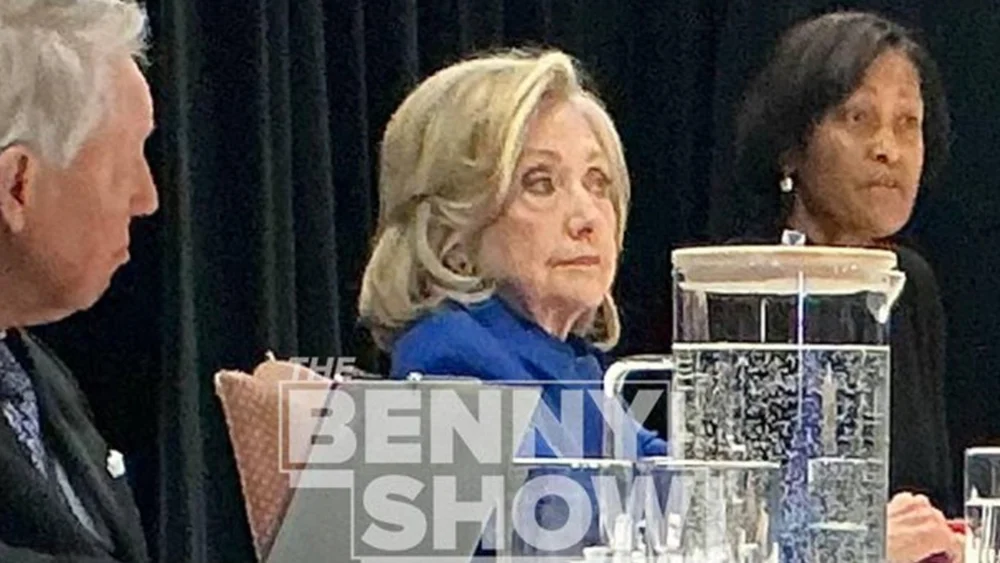
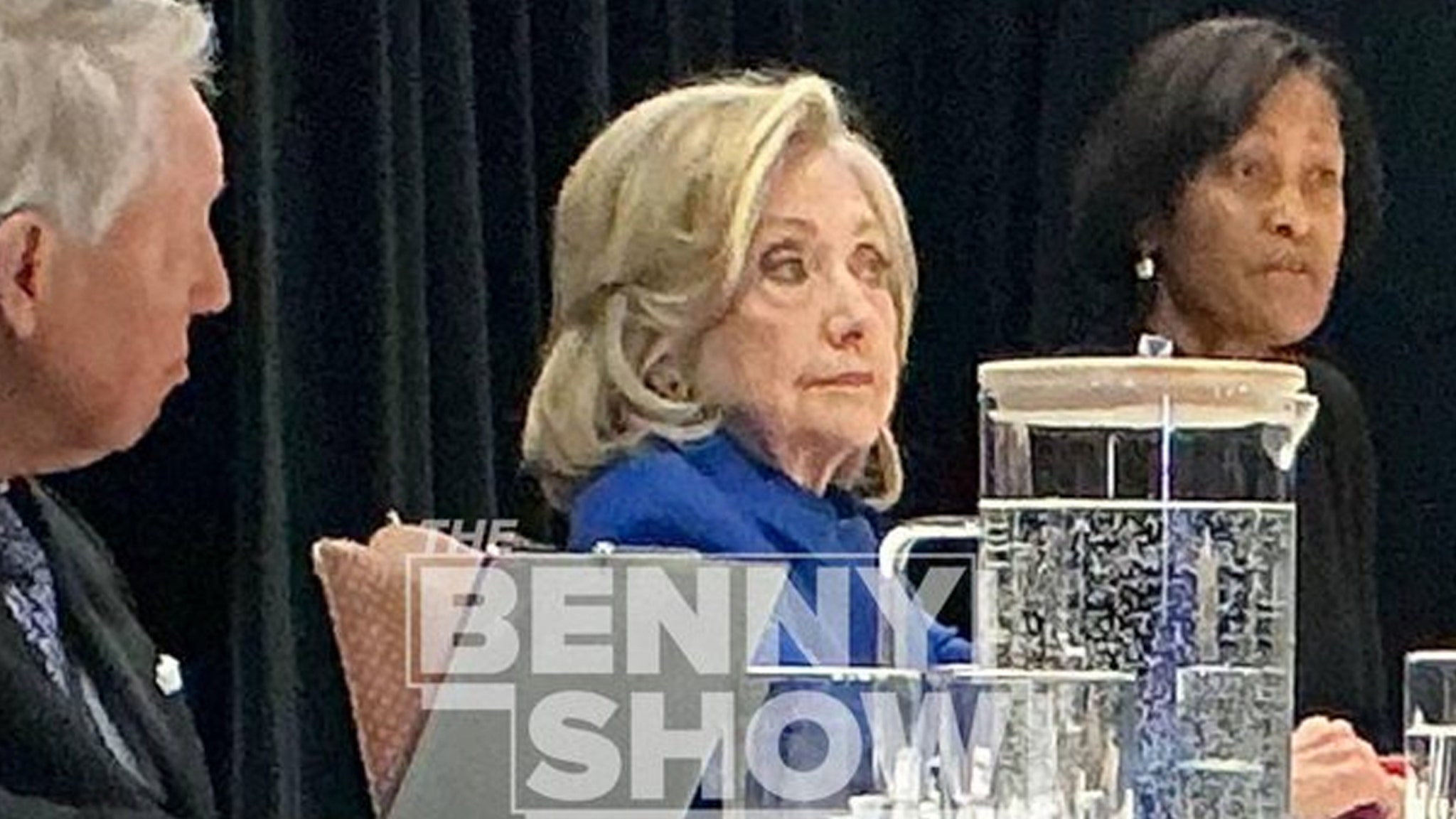
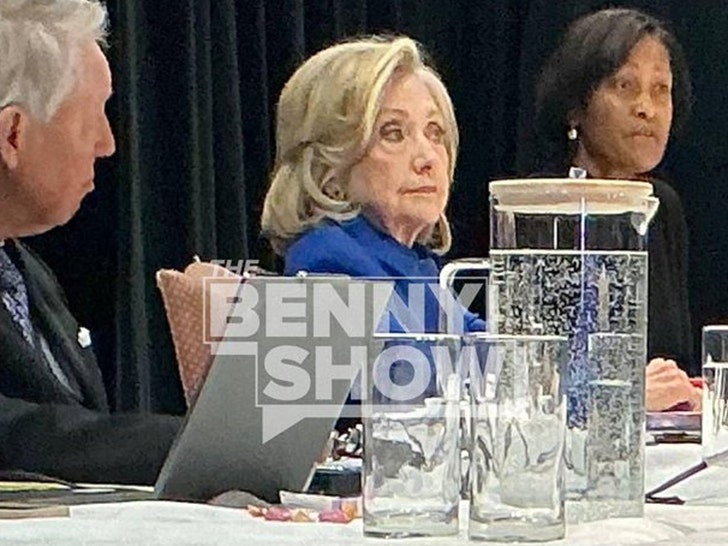
A significant breach of protocol occurred on February 26, 2026, when the first photograph of Hillary Clinton testifying under oath before the House Oversight Committee regarding her association with the late financier Jeffrey Epstein was leaked to the public. The image, depicting the former Secretary of State in a somber blue suit, seated at a table with a large water jug and other individuals, quickly circulated across social media platforms, sparking immediate controversy and raising questions about the integrity and confidentiality of high-profile congressional proceedings.
The Breach and its Immediate Aftermath
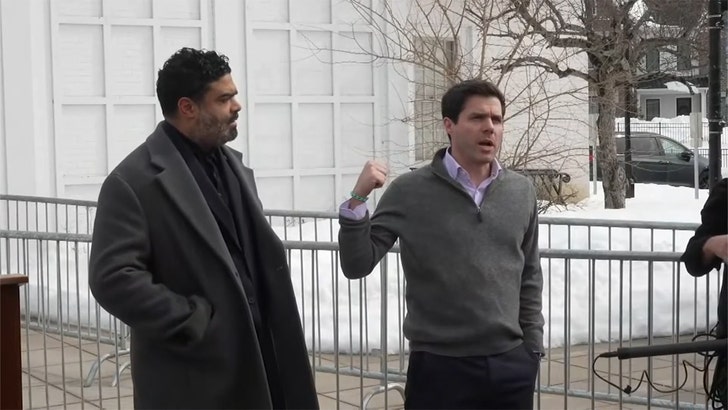
The leaked photograph was initially disseminated by conservative political commentator and podcaster Benny Johnson. Johnson attributed the image to Republican Colorado Congresswoman Lauren Boebert, claiming she had sent it to him. This disclosure immediately implicated a sitting member of Congress in what has been described as a violation of established chamber rules governing such sensitive testimonies. The leak caused an abrupt halt to Clinton’s testimony, as confirmed by an advisor to former President Bill Clinton, who addressed the press outside the hearing room. The advisor stated that the session was briefly paused to address the photographic leak, emphasizing its direct contravention of the rules designed to maintain the decorum and confidentiality of congressional proceedings.
The unauthorized release of the image has ignited a fresh round of debate concerning the weaponization of information, the sanctity of sworn testimony, and the increasingly blurred lines between political commentary and procedural ethics in the digital age. Congressional rules typically prohibit photography and recording inside such hearings to ensure that witnesses can testify without undue external pressure or distraction, and to preserve the integrity of the investigative process. The blatant disregard for these rules by a member of Congress and its immediate dissemination by a prominent media personality underscores the deep partisan divisions and the high stakes involved in the ongoing Epstein investigation.
Background to the Testimony: The Epstein Saga Unfolds
Hillary Clinton’s appearance before the House Oversight Committee marks a pivotal moment in the protracted and deeply controversial investigation into Jeffrey Epstein, a convicted sex offender who died in federal custody in August 2019. Epstein’s vast network of powerful and influential acquaintances, ranging from political figures to business moguls and royalty, has been a subject of intense public scrutiny for years. The "Epstein Files," a collection of unsealed court documents, witness testimonies, and other related materials, have consistently fueled public demand for transparency and accountability, pushing for a thorough examination of who knew what, when, and what actions, if any, were taken.
The House Oversight Committee, empowered with broad investigative authority, has taken a leading role in scrutinizing various aspects of the Epstein scandal. Its mandate includes examining potential systemic failures, the extent of Epstein’s influence, and any alleged complicity or knowledge among high-ranking individuals. The committee’s decision to summon Hillary Clinton, and subsequently her husband Bill Clinton, reflects a determined effort to explore all possible connections to Epstein’s illicit activities, particularly given Bill Clinton’s documented past association with Epstein, including flights on his private jet, dubbed the "Lolita Express."
Public interest in the Epstein case reached a fever pitch following the release of numerous documents detailing accusers’ testimonies and the identities of various individuals associated with Epstein. This steady drip of information has kept the scandal in the national spotlight, with different political factions leveraging the revelations to bolster their narratives or attack opponents. The decision to call Hillary Clinton for testimony, despite her not being directly implicated in Epstein’s crimes, appears to stem from a broader investigative scope aimed at understanding the full extent of Epstein’s network and any potential knowledge or interactions high-profile figures may have had with him.
Clinton’s Stance and Previous Statements
During her testimony, prior to the photo leak, Hillary Clinton reportedly delivered an opening statement that was highly critical of the House Oversight Committee. She accused the committee of using her testimony as a political maneuver, specifically to divert public attention from President Donald Trump’s alleged connections to the Epstein files. This accusation highlights the deeply politicized nature of the entire investigation, where allegations and counter-allegations often intertwine with genuine investigative efforts. Clinton’s claim suggests a belief that the committee’s focus on her was a partisan attack rather than a purely objective inquiry.
Furthermore, earlier reports from the testimony indicated that Clinton stated she "did not recall" ever meeting Jeffrey Epstein. This assertion is significant, as it directly addresses the core question of her personal knowledge or interaction with the disgraced financier. The phrase "did not recall" is frequently used in high-stakes testimonies and often scrutinized by both legal experts and the public for its implications regarding memory, truthfulness, and potential evasiveness. Her statement stands in contrast to the well-documented association between her husband, Bill Clinton, and Epstein, raising questions about the extent of knowledge within the Clinton circle regarding Epstein’s activities.
The political backdrop against which this testimony unfolds is crucial. The Epstein case has become a lightning rod for various conspiracy theories and partisan attacks. For some, the investigation into figures like the Clintons represents a long-awaited reckoning for powerful elites, while for others, it is seen as a politically motivated witch hunt designed to tarnish reputations and distract from other political issues. Hillary Clinton’s accusation against the committee aligns with the latter perspective, framing her appearance as a target of partisan machinations.
The Roles of Benny Johnson and Lauren Boebert
The involvement of Benny Johnson and Congresswoman Lauren Boebert in the photo leak adds a distinct political dimension to the incident. Benny Johnson is a well-known conservative media personality, recognized for his strong pro-Republican views and his platform as a podcaster and commentator. His immediate sharing of the leaked photo is consistent with his role in disseminating news and commentary that often aligns with conservative narratives and critiques of prominent Democratic figures.
Congresswoman Lauren Boebert, a Republican representative from Colorado, is a prominent figure within the conservative movement and is known for her outspoken and often controversial political stances. Her alleged role in providing the photo to Johnson suggests a deliberate act to make public what was intended to remain confidential. This action, if proven, could lead to significant repercussions, including potential ethics investigations within the House of Representatives. Congressional rules explicitly prohibit the unauthorized dissemination of materials from closed or confidential proceedings, and such breaches can carry serious consequences, including censure or other disciplinary actions.
The political motivations behind such a leak are multifaceted. For conservative figures, exposing a photo of Hillary Clinton testifying in the Epstein investigation could be seen as a victory, reinforcing narratives about the alleged culpability of Democratic elites and feeding into broader criticisms of the establishment. It also serves to maintain the Epstein scandal in the public consciousness, particularly as it relates to figures often targeted by conservative media. However, it simultaneously undermines the integrity of the investigative process and could be perceived as a violation of the trust placed in elected officials.
Implications and Broader Impact
The leak of Hillary Clinton’s testimony photo carries several significant implications, both for the ongoing Epstein investigation and for the broader political landscape.
Impact on the Epstein Investigation:
The immediate effect of the leak is a disruption of the testimony itself. While the hearing reportedly resumed, the incident likely introduced an element of tension and distraction. More broadly, it could lead to increased scrutiny of the committee’s procedures and potentially make future witnesses less willing to speak freely if they fear unauthorized disclosures. It also reinforces the highly politicized atmosphere surrounding the Epstein case, suggesting that the pursuit of truth may be intertwined with partisan maneuvering.
Procedural and Ethical Concerns:
The alleged involvement of a sitting Congresswoman in leaking a photo from a sensitive hearing raises serious ethical and procedural questions. The House Ethics Committee could launch an investigation into Congresswoman Boebert’s actions. Such a breach undermines the very rules designed to ensure a fair and confidential process, essential for effective oversight and investigation. It sets a dangerous precedent, potentially encouraging further unauthorized disclosures in future hearings, thereby eroding trust in congressional proceedings.
Political Ramifications:
For Hillary Clinton, the leaked photo, regardless of its content, instantly re-centers her in a highly controversial narrative that many of her supporters would prefer to avoid. While her team has emphasized the procedural violation, the image itself becomes a potent symbol in the ongoing political battles. For Congresswoman Boebert and Benny Johnson, the incident likely galvanizes their conservative base, who may view it as an act of defiance against a perceived establishment. However, it could also draw criticism from those who prioritize decorum and ethical conduct in government, including some within their own party.
Public Perception and Trust:
Incidents like this further erode public trust in political institutions. When rules are brazenly broken, especially by those sworn to uphold them, it fosters cynicism about the fairness and impartiality of governmental processes. The public’s desire for answers regarding Epstein’s network is immense, but if the methods used to obtain those answers are perceived as unethical or politically motivated, it can undermine the legitimacy of any findings.
Looking Ahead: Bill Clinton’s Testimony
The fallout from Hillary Clinton’s testimony and the photo leak sets a tense stage for the upcoming appearance of former President Bill Clinton before the House Oversight Committee. Scheduled for the day following Hillary Clinton’s testimony, Bill Clinton’s session is anticipated to be equally, if not more, scrutinized given his well-documented past connections to Jeffrey Epstein. His testimony is expected to delve deeper into the nature of their relationship, the frequency of their interactions, and the extent of his knowledge regarding Epstein’s activities.
The committee will undoubtedly be under immense pressure to prevent any further leaks or disruptions during Bill Clinton’s testimony. Security and procedural enforcement are likely to be significantly heightened. His appearance will offer another opportunity for the committee to gather crucial information and for the public to gain further insight into a scandal that continues to reverberate through the highest echelons of power.
The leaked photograph of Hillary Clinton’s testimony is more than just a fleeting image; it is a stark illustration of the deep political divides, the intense public interest, and the inherent challenges in conducting sensitive investigations in an era dominated by instant information and partisan warfare. As the Epstein saga continues to unfold, the incident serves as a potent reminder of the fragility of established protocols and the enduring power of a single, unauthorized image to shape public discourse.

 Eva Lovia
 Julia Chirkova
 Julia Prastini
 Nila Kartika Wati
 admin
admin