
 Rifan Muazin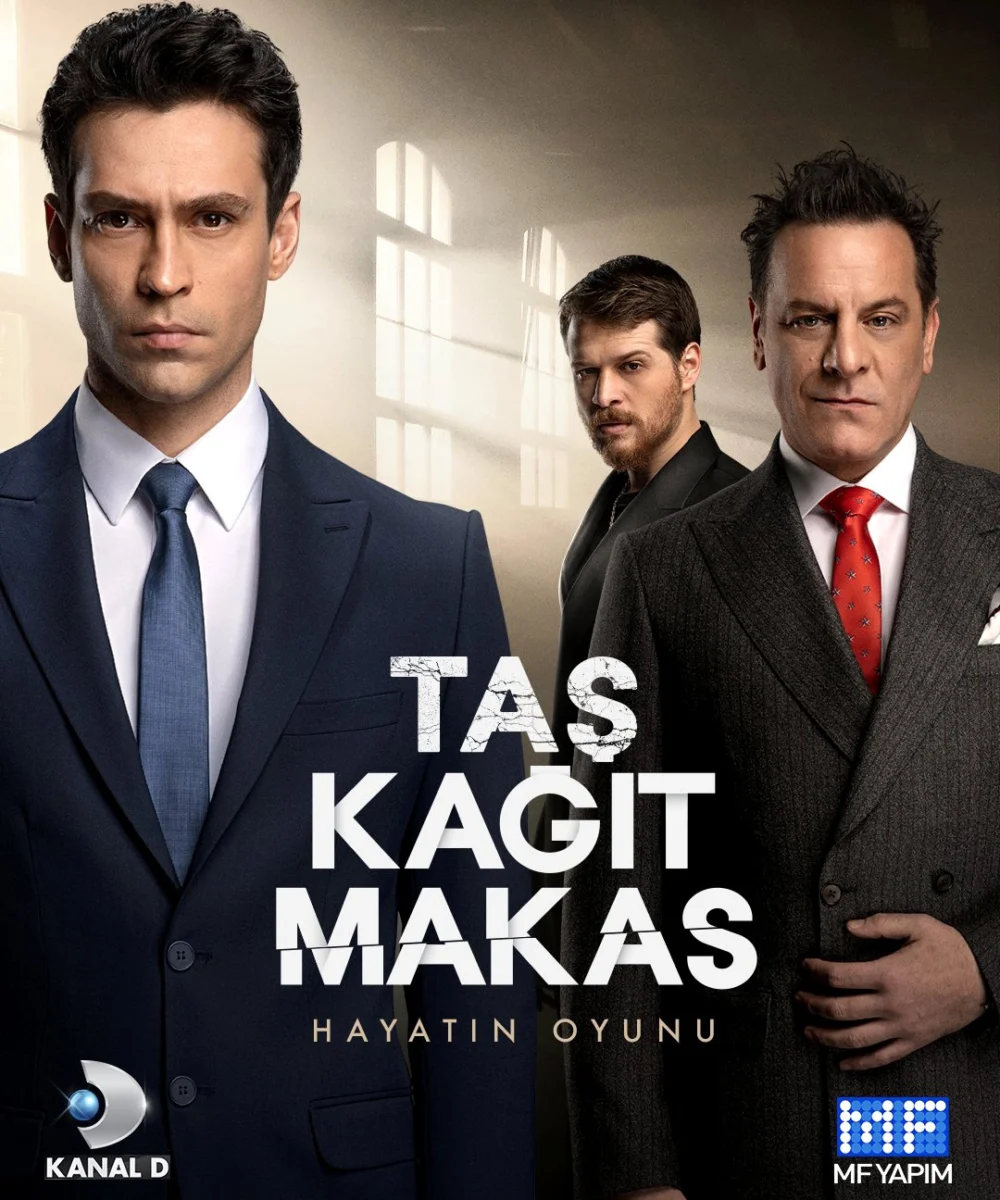
The highly anticipated Turkish drama, Remember (Tas Kagit Makas), which translates to "Rock, Paper, Scissors," premiered on Kanal D on February 28, 2024, captivating audiences with its intricate plot, compelling characters, and profound exploration of memory, justice, and societal power dynamics. Produced by MF Yapim and directed by Volkan Keskin and Yusuf Pirhasan, with a screenplay by Ugras Gunes, the series is slated for 19 episodes, each spanning an impressive 120-140 minutes, a characteristic length for premium Turkish productions designed for deep narrative immersion. Filmed against the vibrant backdrop of Istanbul, the crime drama delves into the extraordinary journey of Umut Tanrikulu, a young man armed with a flawless memory, as he fights to exonerate his father, falsely accused of murder.
The Genesis of a Quest for Justice: A Fateful Night in Istanbul
The narrative centers on Umut (Ekin Koc) and his father, Riza (Bulent Seyran), who share a quiet, unassuming life in Istanbul. Riza, a dedicated cleaning worker in a bustling high-rise office building, has poured his life into raising Umut. Their world, though modest, is imbued with a unique dimension due to Umut’s rare neurological condition: Hyperthymesia. This extraordinary ability grants him an autobiographical memory, allowing him to recall every detail, every sound, and every image he has ever experienced with perfect clarity. While this gift often manifests as a superpower, it also carries a significant emotional burden, as the concept of forgetting, a natural human coping mechanism, is entirely alien to him. Every joy, every pain, every fleeting moment remains perpetually vivid, shaping his perception of reality.
The serene existence of the Tanrikulu family is shattered one morning. Riza departs for his usual shift at the plaza, unaware that this day will irrevocably alter their lives. That same evening, Istanbul’s elite gather for a lavish party to welcome back Fecir Emirkiran (Burak Yoruk), a scion of immense wealth and influence, recently returned from London. Fecir is portrayed as charismatic yet dangerously manipulative. Browsing social media, he becomes fixated on a young woman’s singing talent and insists she perform at his exclusive event. Coincidentally, this young woman, Busra (Ebrar Karabakan), resides in the same modest neighborhood as Riza and Umut, a twist of fate that sets a tragic chain of events in motion.
As the night progresses, the celebratory atmosphere sours into a nightmare. Fecir, exhibiting his darker tendencies, isolates Busra, forcing her to sing for him privately. When Busra attempts to escape his unwanted advances, tragedy strikes, culminating in her lifeless body being discovered in the forest adjacent to the plaza. Unbeknownst to the unfolding horror, Riza leaves work that evening, having purchased a new cellphone as a birthday gift for Umut. However, Riza’s behavior is disoriented; he wanders into the forest, confused about his whereabouts and purpose. This disorientation is a symptom of early-stage Alzheimer’s disease, a silent battle he has been fighting, unknown to both himself and Umut. The stark contrast between Umut’s perfect recall and Riza’s nascent memory loss establishes a central thematic tension that underpins the entire series.
The following morning, Umut’s anxiety mounts over his father’s prolonged absence. A frantic call reveals Riza’s confusion, his fragmented descriptions painting a picture that Umut, with his perfect memory, pieces together: his father is lost in the same forest where Busra met her tragic end. Rushing to the scene, Umut finds Riza, but also the horrifying sight of Busra’s body. Shocked and heartbroken, they report the discovery to the authorities, and are subsequently taken to the hospital.
The Web of Deceit and the Fight for Innocence
The immediate aftermath sees the neighborhood grappling with Busra’s untimely death. During her funeral, the police make a dramatic entrance, arresting Riza and accusing him of murder. The news sends shockwaves through the community, none more profound than for Umut, who knows with absolute certainty his father is incapable of such a heinous act. Yet, Riza, plagued by his burgeoning Alzheimer’s, can recall nothing from that fateful night, leaving him powerless to defend himself.
The case quickly garners significant media attention, transforming into a high-profile spectacle. Under immense public and political pressure to resolve the case swiftly, the prosecutor demands quick action. The police, capitalizing on Riza’s vulnerability and cognitive impairment, manipulate the situation. They threaten harm to Umut, coercing Riza into a false confession. This sequence highlights the series’ commentary on the potential for corruption and undue pressure within the justice system, where expediency can overshadow truth.
Despite the overwhelming odds, Umut’s resolve remains unbroken. His unwavering belief in his father’s innocence fuels a fierce determination. He begins to strategically leverage his extraordinary memory, transforming it from a personal burden into a powerful tool for justice. In his desperate quest, Umut crosses paths with Alev Parlak (Serra Ariturk), a passionate and principled law student. Their encounter on a city bus sparks an unexpected alliance; Alev is deeply moved by Umut’s plight and quickly becomes his closest confidante and legal ally, bringing her knowledge and unwavering empathy to the fight for Riza’s freedom.
Another pivotal encounter occurs when Umut serendipitously meets Harun Yakar (Ozan Guven), a brilliant and highly successful defense attorney renowned for representing Istanbul’s wealthiest and most influential figures. Harun, initially reluctant to involve himself in a seemingly unwinnable case, is eventually swayed by Umut’s tragic backstory, including the devastating loss of his entire family in a car accident. This shared experience of profound loss forges an unexpected bond, leading Harun to accept Umut’s case. Harun is depicted as a man of strategic brilliance, often operating without rigid ethical constraints, driven by a desire for success. He recognizes the potential to exploit Umut’s unwavering determination and unique memory, seeing it as a key asset in navigating the complex legal landscape. Together, this unlikely trio – the young man with perfect memory, the idealistic law student, and the cynical but brilliant lawyer – embark on a perilous journey to uncover the dark truths concealed by Fecir Emirkiran and construct a case that could finally deliver justice. Umut’s path is fraught with obstacles and powerful adversaries, but his hope remains steadfast. Armed with his unparalleled memory, courage, and the support of his new allies, he confronts a corrupt system, determined to clear his father’s name and expose the deadly secrets of a powerful man.
Delving into the Character Psyches and Thematic Undercurrents
The strength of Remember lies not only in its suspenseful plot but also in its meticulously crafted characters, each embodying complex psychological layers and contributing to the series’ thematic depth.
Umut Tanrikulu (Ekin Koc): As the protagonist, Umut’s hyperthymesia is central to his identity and the plot. He is not merely a witness but a living archive, capable of recalling every nuance of past events. This ability makes him an unparalleled investigator, yet it also traps him in a perpetual state of emotional recall, unable to forget the pain and trauma he has experienced, including the false accusation against his father. Ekin Koc’s portrayal brings a compelling vulnerability and fierce determination to Umut, showcasing the internal struggle of a young man burdened by a gift that is both a blessing and a curse. His journey is one of maturation, as he learns to harness his memory for a greater purpose, transforming personal grief into a catalyst for justice.
Harun Yakar (Ozan Guven): Harun is arguably the most morally ambiguous and intriguing character. A highly successful defense attorney, he epitomizes the "win at all costs" mentality, his reputation built on never losing a case. His initial cynicism regarding the legal system and his focus on lucrative, high-profile clients suggest a man detached from pure ideals of justice. However, his decision to take Umut’s case, prompted by Umut’s tragic past, hints at a deeper, buried sense of justice or perhaps a desire for redemption. Ozan Guven masterfully portrays Harun’s polished exterior, beneath which lies a man shaped by past loss, whose strategic mind, devoid of strict ethical boundaries, makes him a formidable, albeit unpredictable, ally. His character serves as a critical exploration of pragmatism versus principle in the pursuit of truth.
Alev Parlak (Serra Ariturk): Alev represents the unyielding spirit of justice and empathy. A dedicated law student, her idealism stands in stark contrast to Harun’s cynicism. Her accidental meeting with Umut on a bus quickly evolves into a deeply personal commitment to his cause. Serra Ariturk imbues Alev with a fierce intelligence and a compassionate heart, making her the moral compass of the trio. Her legal knowledge, combined with her emotional support, provides a crucial anchor for Umut in his tumultuous journey, highlighting the importance of unwavering belief in the face of systemic corruption.
Fecir Emirkiran (Burak Yoruk): The antagonist, Fecir, transcends the typical villain archetype. While outwardly charming and powerful, his polished public image conceals a deeply conflicted and emotionally wounded individual. His return from London and his family’s wealth position him at the apex of Istanbul’s elite, but his actions betray a profound psychological turmoil. The series delves into Fecir’s backstory, revealing a domineering, emotionally cold father whose lack of love and constant criticism fueled an insatiable need for validation. This upbringing has warped his perception of power and control, blurring the lines between ambition, pain, and dangerous behavior. Burak Yoruk’s performance brings a nuanced complexity to Fecir, allowing viewers to glimpse the vulnerability beneath the veneer of ruthlessness, making him a more compelling and tragic figure than a mere symbol of evil.
Riza Tanrikulu (Bulent Seyran): Riza is the tragic figure whose plight ignites the entire narrative. As Umut’s devoted father, his sudden diagnosis of early-stage Alzheimer’s disease serves as a cruel irony, juxtaposing his fading memories against Umut’s perfect recall. His inability to defend himself due to his memory loss underscores the profound injustice he faces, making him a poignant symbol of vulnerability in the face of a ruthless system.
Broader Impact and Societal Reflections
Remember (Tas Kagit Makas) transcends a simple crime drama, offering a rich tapestry of social commentary and thematic explorations.
The Turkish Legal System and Corruption: The series unflinchingly portrays the darker side of the justice system, where wealth and power can manipulate outcomes, media pressure can sway investigations, and false confessions can be coerced. This reflection resonates with broader global discussions on judicial integrity and the vulnerability of marginalized individuals against powerful entities. The series raises critical questions about whether justice is truly blind or if it can be bought and sold.
The Nature of Memory and Identity: At its core, Remember is a profound meditation on memory. Umut’s hyperthymesia and Riza’s Alzheimer’s disease create a fascinating dichotomy, forcing viewers to consider what it means to remember everything, or to forget everything. How does memory shape our identity, our perception of truth, and our capacity for justice? The series suggests that while perfect memory can be a powerful weapon, it also carries the weight of every past trauma, while the loss of memory can strip one of their ability to defend their very identity.
Class Disparity and Privilege: The stark contrast between Umut and Riza’s modest life and Fecir Emirkiran’s opulent world highlights significant class disparities in Turkish society. The series explores how privilege can shield individuals from accountability, while those without power often bear the brunt of injustice. This social commentary adds a layer of realism and relevance, connecting the fictional narrative to real-world societal issues.
Hope Versus Cynicism: The interplay between Umut’s unwavering hope for justice and Harun’s cynical pragmatism creates a dynamic tension. Umut’s youthful idealism challenges Harun’s jaded view of the world, suggesting that even in the most corrupt systems, the pursuit of truth and justice can still ignite change. The series asks whether it is possible to maintain hope in a system designed to crush it.
Production Excellence and Global Appeal
MF Yapim, a prominent production company known for its high-quality dramas, brings its expertise to Remember, ensuring compelling storytelling and high production values. The selection of Istanbul as the primary filming location not only provides visually stunning backdrops but also grounds the narrative in a tangible, culturally rich setting. The 120-140 minute episode length, typical for Turkish dramas, allows for meticulous plot development, deep character arcs, and an immersive viewing experience, differentiating it from shorter, more episodic formats common in Western television. Kanal D, as a major broadcast network, ensures widespread reach within Turkey, while the global popularity of Turkish dramas positions Remember for significant international appeal. The series’ exploration of universal themes such as justice, memory, and the fight against corruption transcends cultural boundaries, making it resonant with audiences worldwide. The intriguing title "Tas Kagit Makas" (Rock, Paper, Scissors) itself serves as a metaphor for the strategic games of power, chance, and manipulation that play out within the narrative, hinting at the intricate battle of wits that Umut and his allies must wage.
In conclusion, Remember (Tas Kagit Makas) is poised to be a significant addition to the landscape of Turkish drama. With its compelling premise, complex characters, and insightful exploration of profound societal and psychological themes, it promises not only gripping entertainment but also a thought-provoking commentary on the enduring quest for truth and justice in a world often swayed by power and deceit. The journey of Umut, armed with his extraordinary memory, against a seemingly insurmountable system, is a testament to the resilience of the human spirit and the unyielding pursuit of what is right.



 Eva Lovia
 Julia Chirkova
 Julia Prastini
 Nila Kartika Wati
 Jia Lissa
 admin
admin