
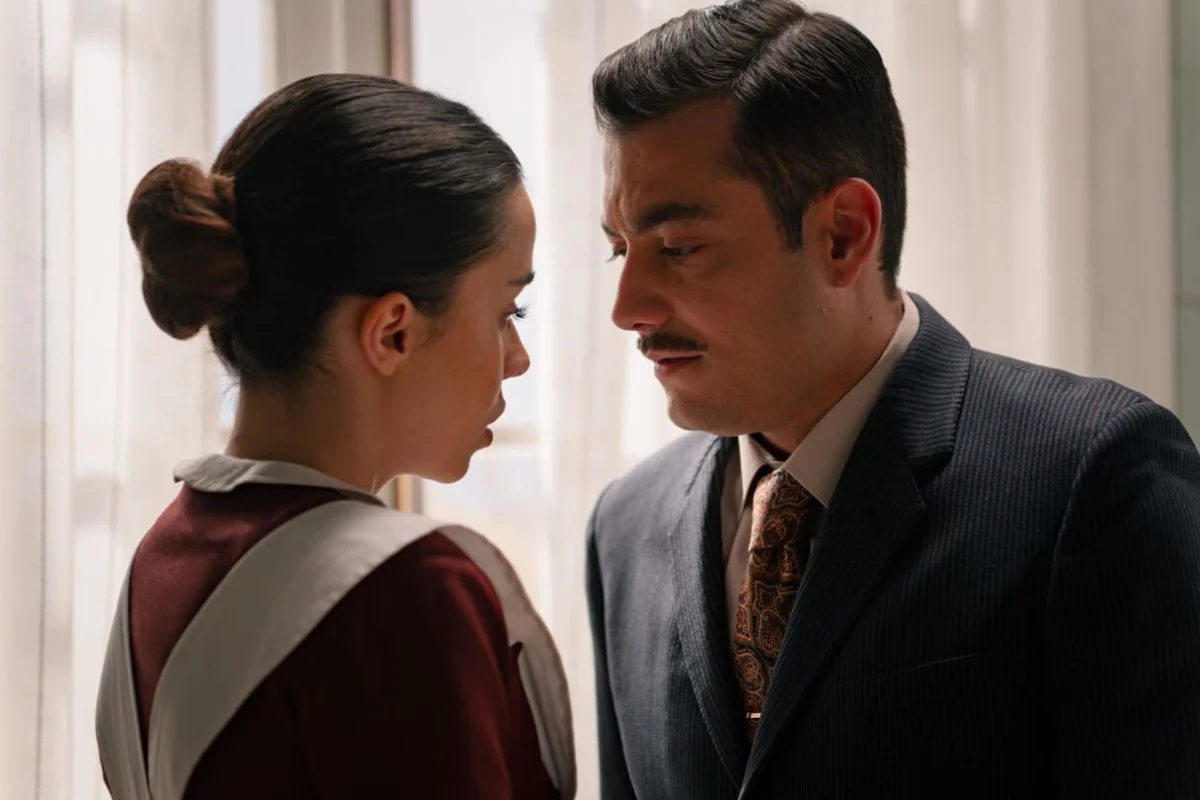
The already precarious relationship between Paula and Tasio in the popular Spanish drama "Sueños de Libertad" has taken another perilous turn, escalating from a near discovery to an undeniable emotional entanglement. What began as an apparent effort to curb burgeoning feelings has, once again, culminated in a powerful connection that neither character can afford to ignore. Both are acutely aware of the dangerous territory they are navigating, yet each encounter between them only deepens the chasm between their desires and their obligations, making it increasingly difficult to look away from the precipice.
A Brush with Discovery and Escalating Tensions
The latest developments in the series underscore the escalating risks associated with Paula and Tasio’s clandestine interactions. Following a recent near-miss where Carmen, Tasio’s wife, almost uncovered a thoughtful gesture Tasio had made towards Paula, the young woman expressed her grave concerns. She made it unequivocally clear that their current level of exposure was unsustainable and that they could not continue to risk discovery in such a manner. The palpable tension between them was undeniable, as was the pervasive fear of being found out. Consequently, Paula implored Tasio for greater caution, recognizing that even the smallest misstep could have catastrophic consequences for both their lives and the established order within the series’ narrative.
This plea for discretion, however, did not lead to the intended emotional distancing. Instead, it served as a catalyst for Tasio to express his deepest vulnerabilities to Paula, revealing a level of emotional honesty he had previously withheld.
Tasio’s Confession: A Battle Between Love and Obligation
In one of the most emotionally charged scenes to date, Tasio confessed to Paula, "If you leave, you kill me. I don’t want to lose you." These words encapsulate the profound emotional turmoil he is experiencing, a man caught between his burgeoning feelings for Paula and the marital commitments he still upholds. His confession highlights a complex internal conflict, where genuine affection for his wife coexists with an undeniable and growing attachment to Paula.
Further elaborating on his internal struggle, Tasio admitted his lack of control over the unfolding situation. "I don’t want to lose my wife either because I love her too," he acknowledged. This stark admission reveals a deeply felt contradiction that weighs heavily on him. This internal battle has led Tasio to a harsh self-assessment, acknowledging that his actions are dragging Paula into a painful and seemingly inescapable predicament. His candidness, while potentially cathartic, also underscores the severity of the situation and the potential for widespread emotional fallout.
The Unyielding Pull: Another Kiss, Deeper Entanglement
Despite the expressed need for distance and the acknowledged complexities, the emotional barrier between Paula and Tasio once again crumbled. The conversation, laden with a potent mix of emotion and guilt, ultimately led to another kiss, a physical manifestation of their continuing and deepening feelings. This embrace was not an impulsive act but rather a definitive signal that both characters are becoming increasingly ensnared in a narrative that is rapidly approaching a critical juncture.
The gravity of their connection was further underscored by Paula’s subsequent statement, a poignant and revealing declaration that perfectly encapsulates their current predicament: "I wish I could hate you and push you away." This powerful line from Paula, as delivered in the latest episode, leaves no room for doubt that the bond between her and Tasio has transcended mere fleeting attraction. It has evolved into a significant emotional conflict with the potential for far-reaching and serious repercussions in the forthcoming chapters of "Sueños de Libertad."
Contextualizing "Sueños de Libertad" and its Themes
"Sueños de Libertad," a Spanish period drama that premiered in February 2024, has quickly captivated audiences with its intricate storylines set in the early 20th century. The series, produced by Atresmedia Televisión in collaboration with Diagonal TV, explores themes of social hierarchy, forbidden love, and the pursuit of freedom within the confines of a patriarchal society. Set in the town of La Degollada, the narrative centers on Julia Valbuena, who, after her mother’s death, is forced to flee her home and assumes a new identity as an anonymous maid in the De la Reina family’s textile factory. Her journey is fraught with challenges as she navigates the oppressive environment, uncovers family secrets, and forms complex relationships.
The relationship between Paula and Tasio is a central subplot, representing a dangerous transgression of social norms and personal commitments. Tasio, a character deeply entrenched in the societal expectations of his time and status, finds himself drawn to Paula, whose circumstances place her in a subordinate position. Their interactions are inherently risky, not only due to the potential for social ostracism but also because of Tasio’s existing marital ties. The series consistently plays on the tension between duty and desire, exploring the psychological toll such conflicts take on individuals.
Analyzing the Implications: A Narrative Crossroads
The escalating intensity of Paula and Tasio’s relationship in "Sueños de Libertad" signifies a critical narrative crossroads. Tasio’s confession, admitting love for both his wife and Paula, introduces a profound ethical and emotional dilemma. This internal conflict not only jeopardizes his marriage but also places Paula in a vulnerable position, entangled in a web of deceit and unspoken desires.
Potential Ramifications:
- Discovery and Social Ruin: The most immediate threat is discovery by Carmen or other members of the community. In the social context of early 20th-century Spain depicted in the series, such an affair would carry severe consequences, potentially leading to public humiliation, social ostracism, and irreparable damage to reputations. For Paula, whose new identity is already a precarious foundation, discovery could mean the complete unraveling of her life.
- Emotional Devastation: The series is adept at portraying the emotional toll of such forbidden relationships. The guilt, anxiety, and heartbreak experienced by all parties involved are likely to intensify. Tasio’s divided loyalties could lead to a devastating emotional breakdown, impacting his decisions and relationships. Paula, while drawn to Tasio, also expresses a wish to hate him, indicating an awareness of the destructive nature of their bond.
- Impact on Other Characters: The entanglement of Paula and Tasio will inevitably affect other characters within the narrative. Carmen’s potential discovery could lead to significant shifts in her relationships and emotional state. Other factory workers or members of the De la Reina family may become privy to their secret, leading to further complications and alliances.
- Narrative Drive: The deepening of this forbidden romance provides a strong engine for future plot developments. The "will they, won’t they" dynamic, now coupled with explicit declarations of feelings and undeniable physical intimacy, creates immense anticipation for how the writers will resolve or escalate this central conflict. The series’ ability to sustain this tension while offering satisfying narrative progression will be key to its continued success.
"Sueños de Libertad" is skillfully weaving a tapestry of forbidden love, societal constraints, and personal conflict. The intensifying relationship between Paula and Tasio serves as a potent symbol of the characters’ struggle for agency and happiness within a restrictive world. As their emotions deepen and the risks escalate, audiences are left to ponder the inevitable consequences of their dangerous dance, anticipating the dramatic revelations and emotional fallout that are sure to follow. The series has established a clear trajectory, indicating that this passionate, yet perilous, connection will remain a central focus, driving much of the upcoming dramatic tension.

0 Comments