
 Julia Chirkova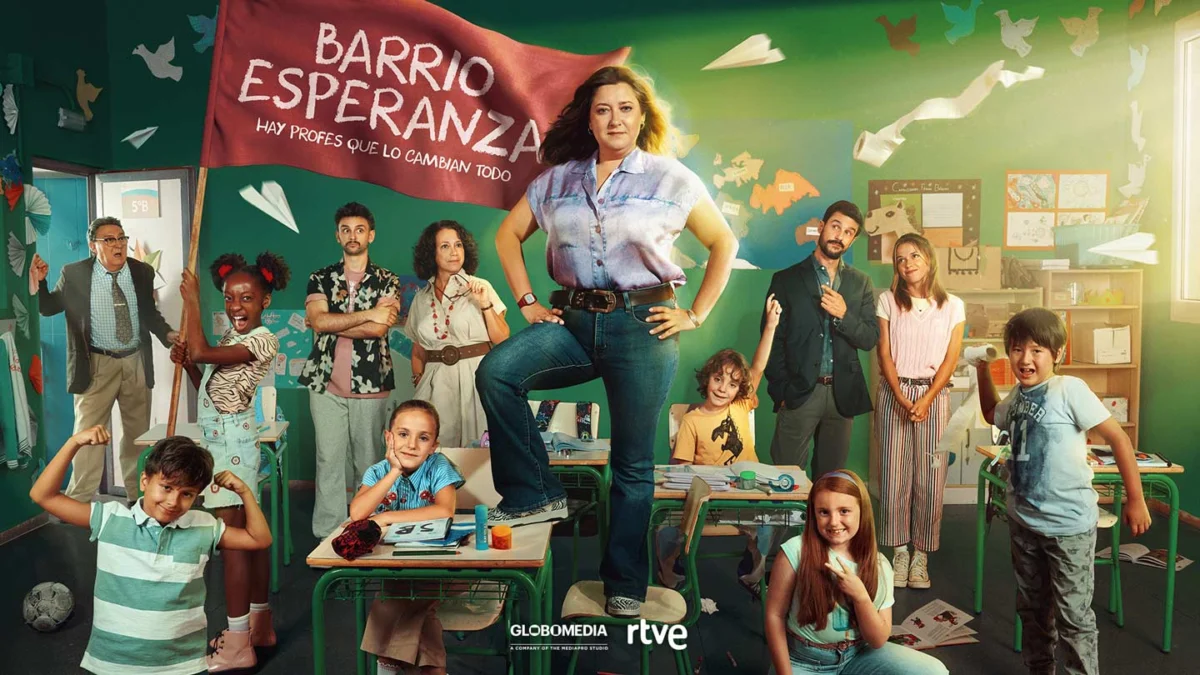
RTVE has officially confirmed the premiere date for "Barrio Esperanza," its highly anticipated new comedy series set to debut on La 1. The public broadcaster is positioning the show directly against formidable rivals in the highly competitive Sunday prime time slot, including Antena 3’s popular Turkish drama "Una nueva vida" and Telecinco’s enduring reality staple "Supervivientes." This strategic placement signals RTVE’s ambitious intentions to capture a significant share of the weekend television audience and further bolster its commitment to national fiction.
The decision to launch "Barrio Esperanza" on a Sunday evening underscores RTVE’s ongoing strategy to strengthen its primetime programming with original fictional content. In recent months, the public broadcaster has seen encouraging results from its investment in domestic series. Titles such as "ENA" and "Sin Gluten" have demonstrated the growing capacity of Spanish productions to compete effectively against established, long-running formats. These successes have contributed to a positive upward trend in viewership figures for RTVE’s scripted offerings, suggesting a growing appetite among audiences for relatable, locally produced narratives. "Barrio Esperanza" is the latest in this line of programming, aiming to build upon this momentum.
A Calculated Risk in a Fierce Prime Time Battle
The choice of Sunday prime time is a deliberate and calculated move by RTVE. This particular evening is widely recognized as one of the most challenging and competitive slots in the weekly television landscape. By pitting "Barrio Esperanza" against "Una nueva vida," a series that has cultivated a loyal and substantial viewership on Antena 3, and "Supervivientes," a perennial ratings powerhouse for Telecinco, RTVE is making a bold statement about its confidence in the new comedy. This juxtaposition is not merely a scheduling coincidence but a strategic decision designed to challenge the established order and carve out a new space for its programming.
The implications of this competitive positioning are significant. Success in this slot will not only depend on the inherent quality of "Barrio Esperanza" but also on its ability to resonate with viewers seeking a different kind of entertainment compared to the dramatic narratives of "Una nueva vida" or the intense reality competition of "Supervivientes." RTVE is betting on the series’ family-friendly, accessible, and emotionally driven tone to attract a broad demographic, potentially drawing viewers away from existing commitments or capturing those who may be seeking alternatives. This strategy reflects a broader trend in the television industry where broadcasters are increasingly willing to take risks to differentiate their offerings and capture audience attention in a fragmented media environment.
The Genesis of "Barrio Esperanza": A Focus on Second Chances and Education
"Barrio Esperanza" is the brainchild of screenwriters Iván Escobar and Antonio Sánchez Olivas, known for their work in crafting narratives that blend humor with social commentary. The series is described as a social comedy characterized by its sharp wit and an optimistic, vitalist tone. At its core, "Barrio Esperanza" delves into the daily realities and intricate dynamics of a public school. This setting provides a fertile ground for exploring a wide range of characters and situations, from the mundane to the profoundly impactful.
A central theme woven throughout the narrative is the concept of second chances. The series is designed to explore the challenges and triumphs associated with rebuilding lives and forging new paths, particularly within the context of an educational institution. This thematic focus suggests that "Barrio Esperanza" aims to be more than just a lighthearted comedy; it aspires to touch upon deeper societal issues. Topics such as inclusion, diversity, and the pressures of societal expectations are expected to be addressed with a relatable and emotional touch, making the series potentially thought-provoking for its audience. The setting of a public school, often a microcosm of society itself, offers a platform for examining these complex issues through a lens of humor and humanity.
The development of such a series often involves extensive research into the operational realities and human experiences within educational settings. While specific details of the production timeline are not provided in the initial announcement, it is reasonable to infer that the creative process would have involved consultations with educators, parents, and potentially students to ensure authenticity in the portrayal of school life. The choice of a public school as the primary setting also aligns with RTVE’s mandate as a public service broadcaster, often aiming to reflect the diverse realities of Spanish society.
A Stellar Ensemble Cast Led by Mariona Terés
The success of any ensemble-driven comedy hinges on the chemistry and talent of its cast, and "Barrio Esperanza" appears to be well-equipped in this regard. The series features a strong ensemble cast, with Mariona Terés taking center stage in the titular role of Esperanza. Terés portrays a character grappling with a past that has shaped her, as she endeavors to reconstruct her life within the challenging environment of the school. Her performance is expected to anchor the emotional core of the series.
Complementing Terés’s lead performance are a number of notable Spanish actors. Alejo Sauras, Mariano Peña, Ana Jara, Guillermo Campra, and Laura de la Uz are among the key players bringing to life a faculty that is as varied as it is prone to conflict and contrast. This diverse group of actors suggests a dynamic range of characters, each with their own motivations, quirks, and backstories, which are essential for generating both comedic situations and dramatic depth within a school setting. The interplay between these characters is likely to be a primary driver of the series’ humor and its exploration of interpersonal relationships. The casting of experienced actors alongside potentially emerging talents can also create a fresh yet familiar dynamic for viewers.
The collaborative nature of a production like "Barrio Esperanza" often involves extensive work between the cast and the creative team to develop nuanced characters. This may include workshops, script read-throughs, and discussions about character motivations and backstories. The ensemble approach allows for multiple storylines to unfold simultaneously, catering to a wider range of audience interests and ensuring that the narrative remains engaging throughout its run.
RTVE’s Steadfast Commitment to National Fiction
The premiere of "Barrio Esperanza" signifies a reinforcement of RTVE’s strategic commitment to investing in and promoting Spanish fiction. In an era of globalized content, the public broadcaster’s focus on domestically produced narratives underscores a dedication to reflecting and celebrating Spanish culture, talent, and storytelling traditions. This strategy aims not only to entertain but also to foster a sense of national identity and pride through its programming.
By consistently offering original fiction in prime time, RTVE seeks to cultivate a loyal viewership that values relatable stories and characters. The success of previous ventures like "ENA" and "Sin Gluten" provides a strong foundation for this ongoing effort. These series have shown that Spanish-language dramas and comedies can achieve significant critical acclaim and audience engagement, challenging the perception that international productions automatically hold sway in popular viewing slots.
"Barrio Esperanza" is envisioned to achieve more than just laughter; it is intended to evoke emotion and stimulate reflection. This dual objective aligns with the core mission of public service broadcasting, which often prioritizes content that possesses social value and contributes to public discourse. By tackling themes of inclusion, second chances, and the complexities of the education system with both humor and heart, RTVE hopes to offer viewers a program that is both entertaining and meaningful. The series’ ability to connect with audiences on an emotional level, while also prompting them to consider broader societal issues, will be a key measure of its success in fulfilling RTVE’s broader programming goals. The public broadcaster’s sustained investment in this area suggests a long-term vision for enriching the Spanish television landscape with diverse and impactful fictional narratives.


 Eva Lovia
 Julia Prastini
 Jia Lissa
 admin
admin
 Raisa Andriana