
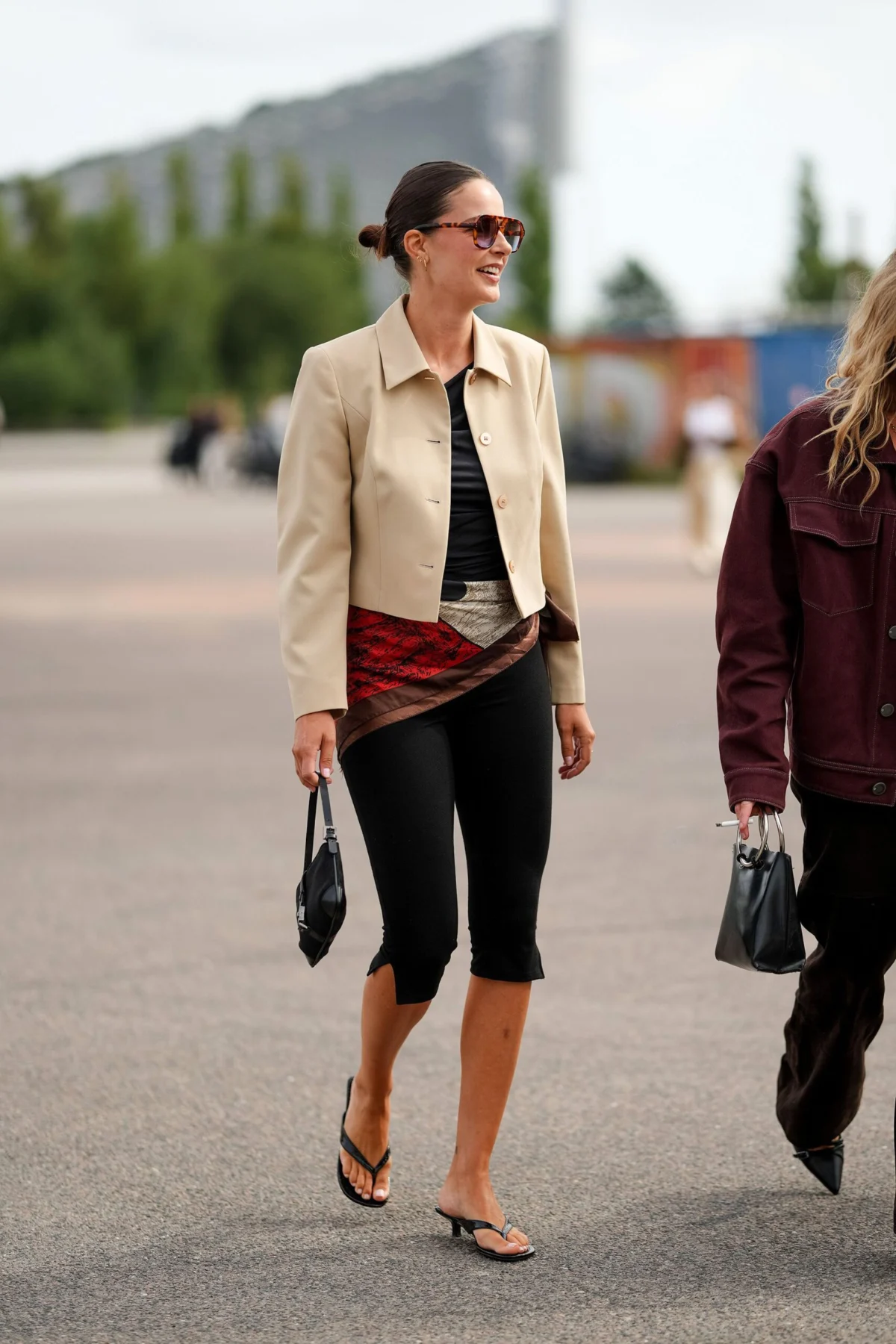
The international fashion landscape is witnessing a definitive shift in hemline dynamics as the Spring-Summer 2026 collections signal the official resurgence of capri pants. After a nearly two-decade hiatus dominated by wide-leg trousers and oversized silhouettes, the mid-calf "pedal pusher" has reclaimed its status as a cornerstone of the modern wardrobe. This revival, observed across major fashion capitals from Milan to New York, represents more than a fleeting nostalgic trend; it is a calculated pivot toward a refined, practical femininity that balances mid-century elegance with contemporary utility. Industry analysts and creative directors alike are noting that the capri pant is poised to replace the standard denim jean as the preferred choice for consumers seeking a sophisticated yet relaxed aesthetic for the warmer months.

The Genesis of a Subversive Classic: The Sonja de Lennart Legacy
The history of the capri pant is inextricably linked to the post-war desire for liberation and functional style. Created in 1948 by Prussian designer Sonja de Lennart, the garment was born out of a rebellious spirit. De Lennart, who sought to provide women with a practical alternative to restrictive skirts and heavy trousers, named the design after the Italian island of Capri—a destination her family adored and a location that epitomized the "dolce vita" lifestyle.
At the time of their inception, these trousers—often referred to in colloquial terms as "fishermen pants"—were considered subversive. By baring the ankle and lower calf, they challenged the conservative sartorial norms of the late 1940s. The design featured a high waist, a slim fit through the hip and thigh, and a signature small slit at the side of the hem to allow for greater movement. This combination of form and function quickly caught the attention of the era’s most influential style icons, transforming a functional garment into a symbol of high-fashion casualness.

A Chronology of Style: From Hollywood Icons to the 2026 Runway
The trajectory of the capri pant serves as a roadmap of 20th and 21st-century fashion cycles. Each era has reinterpreted the silhouette to reflect the prevailing cultural mood.
The Golden Age (1950s–1960s)
The 1950s cemented the capri pant’s status as a staple of "informal elegance." Audrey Hepburn famously wore them in the 1954 film Sabrina, paired with black ballet flats, creating a look that remains a blueprint for minimalist chic. Simultaneously, Jackie Kennedy adopted the style for her summers in Hyannis Port, associating the garment with the American "Camelot" aesthetic. In Europe, Brigitte Bardot popularized the gingham-patterned capri in St. Tropez, infusing the look with a sense of Mediterranean sensuality.

The Experimental Decades (1980s–2000s)
During the 1980s, the capri pant evolved into the "legging" era, often rendered in spandex or high-stretch fabrics influenced by the burgeoning fitness craze. By the late 1990s and early 2000s, the silhouette returned to its denim and cargo roots. Pop culture icons of the Y2K era frequently paired low-rise capris with kitten heels and midriff-baring tops, a stark departure from the polished versions of the 1950s.
The 20-Year Hiatus and the 2026 Renaissance
Following the 2000s, fashion moved toward extreme proportions—first the "skinny jean" and subsequently the ultra-wide "puddle" pant. The Spring-Summer 2026 season marks the end of this cycle. Designers are now returning to the "clean line" philosophy. On the current runways, the capri pant has been stripped of its Y2K excesses and returned to its tailored origins. The 2026 iteration is characterized by structured fabrics, high-rise waists, and a focus on the "tapered silhouette" that emphasizes the natural contour of the leg.

Supporting Data: Market Demand and Consumer Behavior
The return of the capri pant is supported by shifting consumer data within the luxury and mass-market sectors. Market research indicates a growing fatigue with "oversized" fashion, which has dominated retail floors for over five years. Retail analytics from early 2025 showed a 35% increase in searches for "cropped tailored trousers," signaling to designers that the market was primed for the capri’s return.
Furthermore, the "Quiet Luxury" movement has played a pivotal role in this resurgence. Consumers are increasingly investing in "trans-seasonal" pieces that offer versatility. The capri pant, when executed in high-quality materials such as compact cotton, gabardine, or technical knits, fits the criteria for an essential wardrobe building block. According to inventory reports from major retailers like Zara and H&M, the sell-through rate for mid-calf trousers in the first quarter of the 2026 season has outperformed traditional straight-leg denim by approximately 12%.

Runway Analysis: Ralph Lauren and the New Sophistication
The Spring-Summer 2026 collection by Ralph Lauren serves as a primary example of how the capri pant is being repositioned for the modern woman. Lauren, a designer synonymous with timeless American style, showcased capris in a palette of crisp whites, navy blues, and earthy neutrals. The styling emphasized a "nautical-meets-executive" look, where the trousers were paired with sharp blazers and classic button-down shirts.
Other designers have followed suit, focusing on "compact" fabrics that provide a slimming effect without the discomfort of traditional shapewear. The 2026 capri is not merely a leisure item; it is being presented as a viable alternative for the professional environment. By pairing the trousers with elegant pumps or pointed-toe flats, the look transitions seamlessly from a high-level business meeting to an evening social engagement.

Industry Reactions: Creative Directors Speak on the Silhouette
Creative directors across the industry have noted that the return of the capri pant is a response to a collective desire for "intentionality" in dressing. In statements regarding their Spring-Summer 2026 lines, many designers highlighted the garment’s ability to showcase footwear—a critical category for luxury brand revenue.
"The capri pant allows for a focus on the ankle and the shoe, which is often lost in wider silhouettes," noted one lead designer during Milan Fashion Week. "It provides a frame for the body that feels both exposed and protected, offering a type of femininity that is grounded in reality rather than costume."

This sentiment is echoed by fashion stylists who argue that the capri pant is the ultimate "solution" garment. It solves the dilemma of dressing for transitional weather—providing more coverage than a short but more breathability than a full-length trouser.
The Commercial Landscape: Where to Source the Trend
The democratization of the capri trend is evident in the diverse range of brands offering the silhouette for the 2026 season. From high-end luxury houses to accessible high-street retailers, the market is saturated with variations of the cropped pant.

- Max Mara: Known for its architectural approach to tailoring, Max Mara has introduced capris in luxury wool blends and compact jerseys, targeting the professional demographic.
- The Frankie Shop: Catering to the "street style" enthusiast, this brand offers more minimalist, slightly edgier versions in technical fabrics.
- Zara and Mango: These fast-fashion giants have rapidly pivoted their production to include capris in various colors and textures, from classic black cotton to bold, seasonal prints.
- H&M: The retailer has focused on the "essential" aspect of the trend, offering affordable versions that emphasize comfort and ease of wear.
Broader Implications: Sustainability and the Essential Wardrobe
The resurgence of the capri pant also aligns with the broader industry move toward sustainability and the "capsule wardrobe" concept. Because the capri pant is rooted in a classic aesthetic, it is less likely to be discarded after a single season compared to more avant-garde trends. Its ability to be styled with existing wardrobe staples—such as the white shirt, the trench coat, and the ballet flat—encourages a "buy less, wear more" philosophy.
The 2026 capri pant is being marketed not as a novelty, but as a long-term investment. By evoking the timeless imagery of Mediterranean vacations and mid-century cinema, brands are tapping into a sense of "aspirationally permanent" style. This psychological positioning ensures that the capri pant remains relevant far beyond the current season.

Conclusion: A New Standard for Summer Elegance
As the Spring-Summer 2026 season progresses, the capri pant is set to solidify its position as the definitive trouser of the year. Its journey from a rebellious design by Sonja de Lennart to a Hollywood staple, and finally to a modern runway essential, proves its enduring appeal. By offering a blend of refined lines, practical lengths, and sophisticated styling options, the capri pant provides a compelling answer to the question of modern femininity. For the consumer looking to navigate the complexities of contemporary life with grace and ease, the "pedal pusher" is no longer a relic of the past—it is the future of the essential wardrobe.

0 Comments