
 Julia Chirkova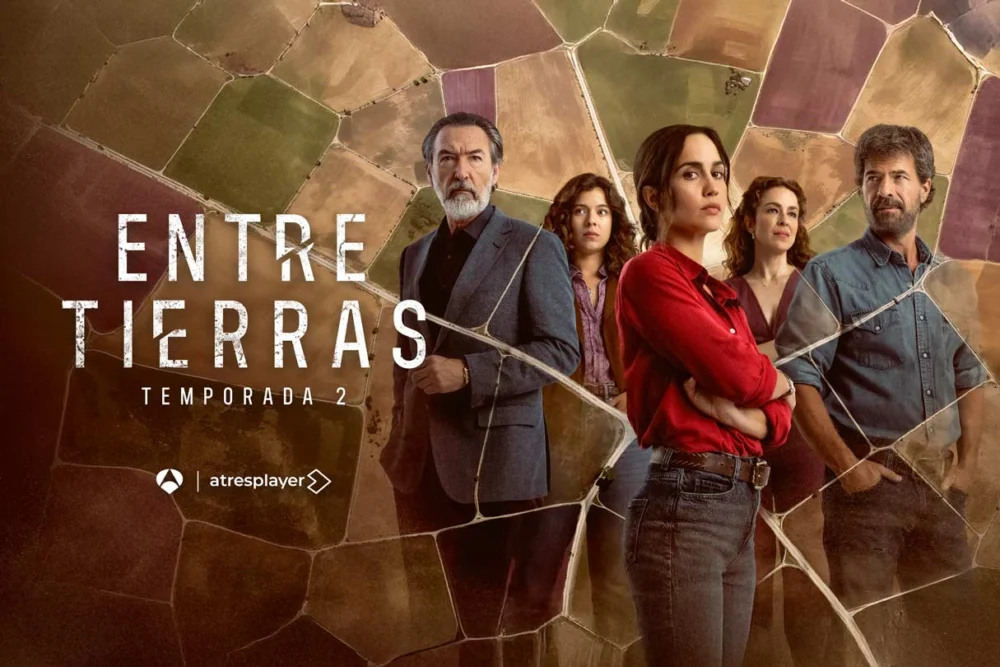
The highly anticipated second season of the critically acclaimed Spanish drama "Entre Tierras," which captivated audiences and became the most-watched series of 2024, is set to premiere on March 15th on the Atresmedia platform, atresplayer. Starring Megan Montaner, the new installment promises to delve deeper into the life of María, navigating complex family dynamics, evolving rural landscapes, and a love that continues to defy expectations. The series, lauded for its powerful storytelling and international appeal, will subsequently be broadcast in the prime-time slot of Antena 3, continuing its trajectory as a significant fixture in Spanish television programming.
This return marks a pivotal moment for "Entre Tierras," a production that not only dominated the ratings in its debut year but also solidified its position as a major international success. The upcoming ten episodes are poised to further explore the resilience of its protagonist against a backdrop of profound societal and economic shifts in rural Spain.
María’s Enduring Struggle: Land, Legacy, and Love
The narrative picks up nearly two decades after María lost Manuel, a period during which she single-handedly shouldered the responsibility of raising her children, Nicolás and the young Manuela. The second season finds María still fiercely defending the Cervantes family’s land, but the context of her struggle has dramatically transformed. The passage of time has ushered in sweeping changes across the agricultural sector. Issues such as widespread migration, a scarcity of agricultural labor, and the emergence of ambitious entrepreneurs eager to exploit the land with little regard for its heritage are now at the forefront. María’s journey in this new era will be defined by her ability to adapt to these profound transformations while steadfastly preserving her roots and the legacy entrusted to her.
The series is set to continue its exploration of universal themes that resonated deeply with viewers. These include the intricate and often challenging dynamics of family relationships, the lingering pain of loss and grief, the stark realities of class disparity, and the inevitable modernization of the rural world. Central to the unfolding drama will be a love story that is once again portrayed as both inescapable and profoundly complicated, promising to keep audiences engaged with its emotional depth.
An Enriched Ensemble Cast for a Decisive Season
Megan Montaner reprises her commanding role as María, anchoring a season that boasts a reinforced and stellar ensemble cast. Joining her are a host of talented actors, including Silvia Abascal, Rodolfo Sancho, Ginés García Millán, José Pastor, Itziar Miranda, Clara Garrido, Germán Alcarazu, Marina Guerola, Helena Ezquerro, Carlos Serrano-Clark, Helena Kaittani, and Carlos Sholz, among others. This collection of seasoned performers is expected to bring new layers of complexity and intensity to the unfolding drama.
The second season will comprise ten meticulously crafted episodes, each approximately 50 minutes in length. The production has been filmed across a variety of evocative locations, including Almería, Castilla-La Mancha, and the Community of Madrid, further enhancing the visual richness and authenticity of the series’ portrayal of rural Spain.
"Entre Tierras" is a production by Atresmedia in collaboration with Boomerang TV, a testament to the strong partnership between these industry leaders. The series is under the directorial guidance of Humberto Miró, Salvador García Ruiz, and David Montoya, whose combined vision has been instrumental in shaping the show’s compelling narrative and aesthetic.
The Phenomenon of 2024: A Ratings Triumph
The initial broadcast of "Entre Tierras" on Antena 3 in January 2024 marked a significant milestone, achieving the most successful fiction launch in nearly two years. The series premiere captured an impressive 16.3% of the market share, immediately signaling its potential for widespread appeal. Over the course of its initial 10-episode run, the series averaged 1,295,000 viewers per episode, securing an average share of 12.3%. Furthermore, the reported figures did not account for the substantial viewership gained through deferred viewing and streaming, indicating a robust and engaged audience that consumed the content across multiple platforms.
The success of "Entre Tierras" was not confined to Spanish borders. The series rapidly gained traction in numerous international markets, consistently ranking among the most-viewed shows for weeks on end. This international acclaim has firmly established "Entre Tierras" as one of the most impactful Spanish productions in recent years, underscoring its global appeal and narrative strength.
With the premiere of its second season on atresplayer on March 15th, "Entre Tierras" embarks on a crucial phase. This new installment presents an opportunity to solidify its legacy and to ascertain whether the audience’s dedication to María’s journey remains as strong. The coming episodes will test the series’ ability to maintain its momentum and to continue captivating viewers with its compelling blend of personal drama, historical context, and the enduring spirit of its protagonist.
Context and Background: The Genesis of a Rural Saga
The initial success of "Entre Tierras" can be attributed to its timely exploration of themes that resonate deeply within contemporary Spanish society, particularly concerning the rural exodus and the preservation of agricultural heritage. The series taps into a nostalgic yet realistic portrayal of rural life, juxtaposing it with the inevitable forces of modernization and economic change. The decision to set the story in a specific historical period, likely the mid-20th century, allowed for the examination of traditional values clashing with emerging societal shifts, creating a fertile ground for dramatic conflict.
The source material, often adapted from popular novels or historical narratives, frequently provides a rich foundation for such ambitious productions. The success of the first season can be seen as a validation of Atresmedia and Boomerang TV’s strategy to invest in high-quality, character-driven dramas that address significant cultural and social narratives. The series’ ability to translate these narratives into compelling television that appeals to a broad demographic, both domestically and internationally, speaks volumes about its production values and storytelling prowess.
Key Themes and Their Significance
The enduring appeal of "Entre Tierras" lies in its multifaceted exploration of universal human experiences. The theme of family conflict is central, with María’s struggles often stemming from or impacting her relationships with her children and other family members. The series delves into the complexities of generational divides, inherited responsibilities, and the often-difficult choices individuals make to protect their loved ones.
Loss and grief are also potent forces within the narrative. The spectral presence of Manuel, María’s lost love, undoubtedly casts a long shadow, influencing her decisions and emotional landscape. The series’ ability to portray the lingering impact of loss, and how individuals learn to live with it, adds a layer of profound emotional resonance.
The theme of class difference is inextricably linked to the rural setting. The series likely portrays the stark contrasts between landowning families and agricultural laborers, exploring the power dynamics and social inequalities inherent in such a system. As the narrative progresses into a new era, the introduction of external business interests further complicates these class dynamics, introducing new forms of exploitation and resistance.
The modernization of the rural world is perhaps the most defining element of the second season. The agricultural sector is undergoing rapid transformation, driven by technological advancements, changing economic imperatives, and demographic shifts. María’s adaptation to this new landscape, where traditional farming methods may be challenged by more industrialized approaches, forms the crux of her new struggle. This theme allows the series to engage with contemporary issues facing rural communities worldwide.
Finally, the exploration of love, both enduring and challenging, serves as a constant undercurrent. Whether it is the memory of a lost love or the potential for new romantic entanglements, love in "Entre Tierras" is rarely simple. It is often intertwined with duty, sacrifice, and societal expectations, making its pursuit a source of both joy and profound complication.
Production and Technical Aspects
The choice of filming locations in Almería, Castilla-La Mancha, and the Community of Madrid is not merely aesthetic but also strategic. These regions offer diverse landscapes that can authentically represent the varied terrains and settings crucial to the rural drama. Almería, known for its arid beauty, can evoke the harshness and resilience of the land, while other areas might provide the contrasting imagery of fertile fields or more developed rural communities.
The collaboration between Atresmedia and Boomerang TV suggests a commitment to high production values. This includes cinematography that captures the essence of the Spanish countryside, meticulously crafted period costumes and set designs that immerse the audience in the era, and a strong directorial vision that ensures a cohesive and compelling narrative. The average episode length of 50 minutes is standard for high-quality drama series, allowing for sufficient character development and plot progression within each installment.
Broader Implications and Future Outlook
The continued success of "Entre Tierras" has significant implications for the Spanish television industry. It demonstrates a sustained demand for high-quality dramatic content that explores national identity and historical narratives. The series’ international reach also serves as a powerful showcase for Spanish talent, both in front of and behind the camera, potentially opening doors for further international co-productions and distribution deals.
The anticipation surrounding the second season suggests that the audience remains invested in María’s story and the world of "Entre Tierras." The series’ ability to evolve with its characters and its setting, while retaining its core thematic concerns, will be crucial for its long-term success. As the narrative delves into a period of significant transformation, the series has the opportunity to address pressing contemporary issues facing rural communities, offering both entertainment and a platform for reflection. The upcoming episodes are expected to not only entertain but also to spark conversations about heritage, progress, and the enduring human spirit in the face of change.




 Eva Lovia
 Julia Prastini
 Nila Kartika Wati
 Jia Lissa
 admin
admin