
 Lina Irawan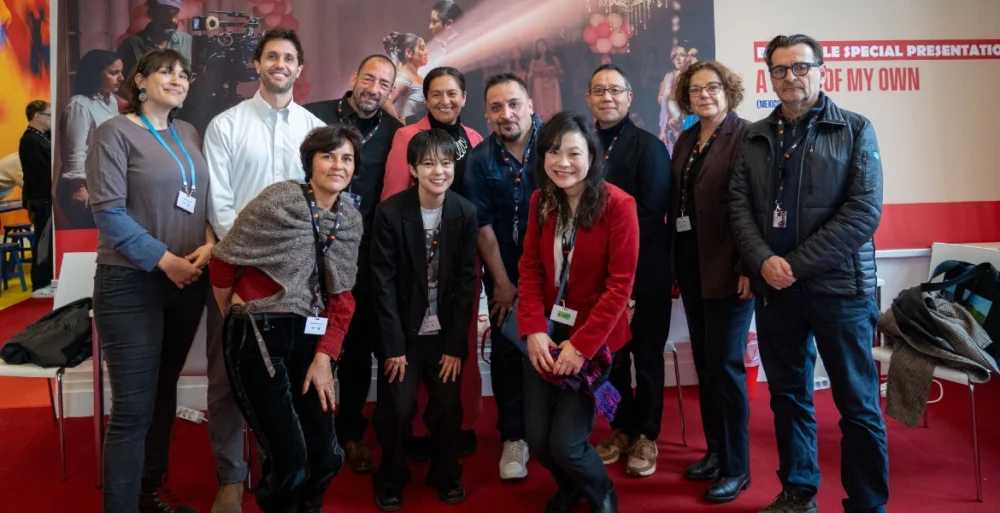
The Chilean delegation has concluded its participation in the 76th edition of the Berlin International Film Festival, widely known as the Berlinale, with a positive strategic balance defined by significant European co-production agreements and new international representation contracts. As one of the premier events on the global cinematic calendar, the Berlinale and its accompanying European Film Market (EFM) served as a vital platform for Chilean filmmakers to solidify their presence on the world stage. This year’s performance underscores the growing maturity of the Chilean audiovisual industry, which continues to leverage international partnerships to overcome domestic budgetary constraints and reach a broader global audience.
Strategic Co-productions: The Evolution of Dog Legs
A primary highlight of the mission was the success of the feature film "Dog Legs" (Patas de Perro), directed by Matías Rojas Valencia and produced by Tomás Gerlach through the Chilean outfit A Simple Vista Producciones. During the festival, the production team finalized a pivotal co-production agreement with the French company Epicentre Films. This partnership is further bolstered by the participation of Colombia’s Rhayuela Films and Germany’s Klinker Film, creating a robust four-nation tapestry of support for the project.
"Dog Legs" is a cinematic adaptation loosely based on the eponymous novel by the acclaimed Chilean writer Carlos Droguett. Droguett, a central figure in the "Generation of ’38," is known for his visceral prose and deep exploration of the human condition, often focusing on marginalized figures and the psychological toll of social violence. By bringing Droguett’s literature to the screen, Rojas Valencia—who previously gained international recognition for "A Place Called Dignity"—aims to bridge the gap between Chile’s rich literary history and contemporary visual storytelling.
The project is currently in an advanced stage of financing. With Chilean state funds already secured, the production team anticipates completing the full financial scheme during 2026. This timeline sets the stage for principal photography to begin in 2027. The chosen location for the shoot is Valdivia, a city in southern Chile renowned for its rain-slicked landscapes and its own prestigious international film festival. The selection of Valdivia is not merely aesthetic; it reflects a commitment to regional decentralization within the Chilean film industry, moving production away from the capital, Santiago, to utilize the unique atmospheric qualities of the south.
Global Distribution and Sales Breakthroughs
Beyond the realm of production, the Chilean delegation secured vital agreements in the sectors of sales and distribution, ensuring that Chilean stories reach international screens. Niña Niño Films, a production house known for its bold and contemporary narratives, reached a significant agreement for the feature film "Mordida" (Bite), directed by Roberto Doveris. The film will now be represented by the German sales and festival agency Patra Spanou Film.
Patra Spanou is a boutique agency highly regarded for its curated catalog of arthouse and independent cinema, making it an ideal partner for Doveris’s work. Doveris has previously made waves in the international circuit with films like "Las Plantas" (The Plants), which won the Grand Prix of the Generation 14plus International Jury at the Berlinale in 2016. The partnership for "Mordida" suggests a continued confidence in Doveris’s unique directorial voice and the commercial viability of Chilean queer and youth-oriented cinema in the European market.
Simultaneously, the television and series sector saw a major breakthrough. Río Estudios finalized a European distribution deal for the series "Isla Oculta" (Hidden Island) with the international sales boutique TVCO. Based in Italy, TVCO specializes in high-quality independent content and has a strong track record of placing Latin American productions into European broadcasting and streaming networks. "Isla Oculta" represents the increasing diversification of the Chilean audiovisual sector, which is moving beyond traditional feature films to embrace high-concept episodic storytelling that appeals to global digital platforms.
The Asia-Pacific Pivot: CinemaChile and the Rapa Nui Initiative
One of the most innovative outcomes of the 76th Berlinale was the strategic alliance formed between CinemaChile—the official agency for the international promotion of Chilean cinema—and Cinema at Sea – Okinawa Pan-Pacific International Film Festival. This Japanese festival is specifically dedicated to cinematic works originating from or linked to the Pacific Ocean and the Pan-Pacific region.
This agreement marks a deliberate shift in Chile’s cultural diplomacy, aiming to strengthen the "Asia-Pacific axis" and consolidate the presence of Rapa Nui (Easter Island) within the international film circuit. While Chile has long looked toward Europe and North America for partnerships, the Okinawa alliance recognizes the cultural and geographical synergies between Chile’s island territories and the broader Pacific community.
As a direct result of this partnership, Rapa Nui filmmaker Waitiare Kaltenegger Icka has been selected to participate in an intensive workshop focused on co-production and internationalization. This program is specifically designed for filmmakers from Pacific island territories, providing them with the tools to navigate the complexities of global film finance while maintaining their cultural integrity. Kaltenegger Icka’s project, which is spoken in the Rapanui language, explores contemporary identity on the island from an indigenous perspective. By supporting projects in native languages, CinemaChile is not only promoting artistic diversity but also contributing to the preservation of intangible cultural heritage through the medium of film.
Chronology of the 76th Berlinale Mission
The success achieved at the festival was the culmination of a multi-phased strategy that began months before the February event.
- Pre-Festival Preparation (Q4 2025): CinemaChile and the Ministry of Cultures, Arts, and Heritage selected a diverse group of producers and directors to represent the country. Intensive pitch training and market analysis were conducted to ensure that projects like "Dog Legs" and "Mordida" were ready for international scrutiny.
- The European Film Market (Days 1-5): The first half of the festival was dominated by the European Film Market (EFM) at the Gropius Bau. This is where the Chilean stand served as a hub for hundreds of meetings. It was during this period that the co-production deals for "Dog Legs" with French and German partners were debated and refined.
- Strategic Networking and Panels (Days 6-8): The delegation participated in several "Country Sessions," where the Chilean tax incentive programs and diverse filming locations were presented to international producers. The alliance with the Okinawa Pan-Pacific International Film Festival was formally discussed during these high-level networking events.
- Closing and Balance (Days 9-10): As the festival concluded, the final distribution agreements for "Mordida" and "Isla Oculta" were signed, and the delegation conducted a final assessment of the strategic goals met.
Supporting Data and Economic Context
The Chilean audiovisual sector has become an increasingly important component of the country’s "creative economy." According to data from the Chilean Ministry of Cultures, the audiovisual sector contributes significantly to the national GDP, with international co-productions playing a vital role. In the last decade, Chilean films have won over 300 international awards, including two Academy Awards ("A Fantastic Woman" and "Bear Story"), which has elevated the "Chilean Brand" (Marca Chile) to a position of prestige.
The co-production model, as seen with "Dog Legs," is essential for the sustainability of the industry. By partnering with France (Epicentre) and Germany (Klinker), Chilean producers can access European subsidies and tax rebates, such as those provided by the CNC (France) or various German regional funds. This not only increases the production value of the films but also guarantees distribution in those territories, which are traditionally the largest markets for international arthouse cinema.
Furthermore, the focus on Rapa Nui and the Asia-Pacific region aligns with Chile’s broader economic goals. As a member of APEC (Asia-Pacific Economic Cooperation), Chile is looking to expand its cultural exports to Japan, South Korea, and China. The Okinawa agreement serves as a cultural bridgehead into these lucrative and culturally rich markets.
Official Responses and Industry Implications
While official statements from the Ministry are usually reserved for post-event reports, industry insiders have expressed optimism regarding the "Okinawa-Rapa Nui" axis. Analysts suggest that this move acknowledges the unique position of Chile as a "tri-continental" nation, with roots in South America, Antarctica, and Oceania.
The inclusion of Waitiare Kaltenegger Icka in the Okinawa workshop is seen as a landmark moment for indigenous representation. For years, Rapa Nui has often been used as a backdrop for foreign productions, but this new initiative empowers local creators to tell their own stories in their own language. This shift toward "self-representation" is expected to resonate well with international festivals that are increasingly prioritizing diverse and authentic indigenous voices.
In the case of "Dog Legs," the successful financing of a film based on a Carlos Droguett novel signals a resurgence of interest in "literary cinema." Producers believe that high-quality adaptations of national literature provide a solid intellectual foundation that attracts European co-producers who value narrative depth and historical context.
Broader Impact and Future Outlook
The outcomes of the 76th Berlinale demonstrate that Chilean cinema is no longer just "emerging" but has become a consolidated player in the global market. The strategic shift toward multi-lateral co-productions and the exploration of the Asia-Pacific market indicate a sophisticated understanding of global film dynamics.
As the industry looks toward 2026 and 2027, the focus will remain on ensuring that the agreements signed in Berlin translate into tangible productions. The success of "Isla Oculta" in securing European distribution also points toward a future where Chilean TV series may become as globally recognized as its films. With the 2027 filming of "Dog Legs" in Valdivia on the horizon, the Chilean audiovisual sector continues to prove that it can combine local identity with international ambition, turning the "end of the world" into a central hub for cinematic innovation.


 Eva Lovia
 Julia Chirkova
 Julia Prastini
 Nila Kartika Wati
 Jia Lissa