
 Eva Lovia
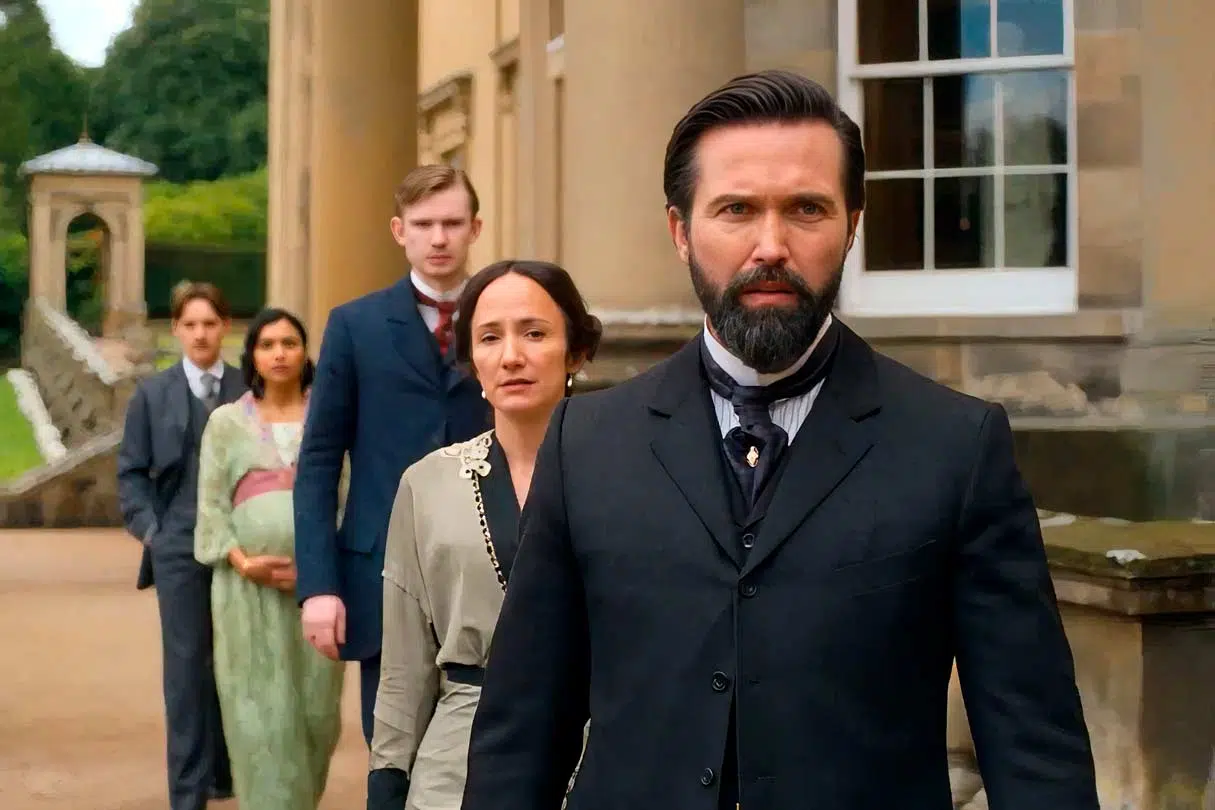
In a pivotal scene that has sent shockwaves through the narrative of "Sueños de Libertad," Gabriel, the sharp legal mind of the series, has revealed a calculated and potentially devastating plan to alter the production of the family’s esteemed perfume line. His proposal, presented with an unnerving blend of confidence and cold calculation, targets the very foundation of quality and prestige that Damián and Gervasio painstakingly built, aiming to drastically reduce manufacturing costs by compromising on ingredient quality. This strategic maneuver not only threatens the financial viability of the business but also risks eroding the brand’s hard-won reputation, a legacy deeply intertwined with the identity of the protagonists.
The tension in the room was palpable as Gabriel laid out his proposition: to continue producing the existing perfume formulas, but at a significantly reduced cost. "We will continue to produce these perfumes, but cheaper," Gabriel declared, his statement leaving no room for immediate counterarguments. This assertion, however, immediately ignited concerns among those present regarding the inevitable impact on product quality. The inherent conflict between cost-cutting and maintaining the integrity of a premium product was starkly highlighted.
The Inevitable Compromise: Quality vs. Cost
Despite immediate objections that altering ingredients would inevitably degrade the quality and be noticeable to consumers, Gabriel remained steadfast. The argument presented was that the essence of the perfumes would be preserved, a claim met with skepticism by those who understood the intricate art of perfumery. "It is impossible to change the ingredients and not change the quality. Customers will notice the difference," warned his interlocutors, their voices tinged with apprehension. Yet, Gabriel appeared unfazed, his prepared response suggesting a pre-meditated strategy that prioritized financial gains over traditional quality benchmarks.
The foundation of Gabriel’s audacious plan lies in an external report he commissioned. This document, presented not as a point for discussion but as an irrefutable endorsement of his strategy, serves as his primary weapon. "This report was written by an external expert. I didn’t pull it out of thin air," he emphasized, effectively shutting down any attempt to question the validity of his proposal. This move underscores Gabriel’s strategic approach: to bypass consensus and present a fait accompli, backed by seemingly objective data.
A Timeline of Strategic Maneuvers
The genesis of Gabriel’s plan can be traced back to recent financial pressures faced by the family’s perfume business. Following a period of intense market competition and rising raw material costs, the company’s profit margins had begun to shrink. This economic reality, coupled with an ambitious expansion into the lucrative Parisian market, likely created the perfect storm for a drastic cost-reduction initiative.
Key Chronological Markers:

- Past: Damián and Gervasio establish the perfume house, emphasizing artisanal quality and rare ingredients, building a reputation for luxury and exclusivity.
- Recent Past: Increasing production costs and competitive pressures begin to impact profitability. Whispers of a potential sale or significant investment from external partners emerge.
- Immediate Past: Gabriel, acting as legal counsel and strategist, begins discreetly analyzing the company’s financial structure and production processes. He likely consults with industry experts on cost-optimization strategies.
- Present: Gabriel presents his cost-cutting proposal, backed by an external expert report, to the relevant stakeholders within the company.
- Near Future: The decision rests with Hugo Borosar, the majority shareholder, whose approval is crucial for the plan’s implementation.
The Paris Gambit: A Move Beyond Local Control
Gabriel’s urgency in pushing the proposal forward, as evidenced by his insistence on its prompt dispatch to Paris, reveals the true scope of his ambition. The mention of Paris is not coincidental; it signifies that the ultimate decision-making power lies with Hugo Borosar, the majority shareholder. "The decision is in Hugo Borosar’s hands, and I remind you that he is the majority shareholder," Gabriel stated with chilling finality. This statement effectively sidelines any local input or dissent, framing the discussion as a mere formality.
The implication is clear: Gabriel has already secured the support, or at least the silent acquiescence, of the key decision-maker. The report is presented as a courtesy, a perfunctory step before enacting a plan that has already been greenlit. "I’ve given it to you out of courtesy so you can give your opinion. Although I must also say, I don’t particularly care about your opinion," he concluded, his dismissive tone leaving no doubt about his intentions. The meeting was abruptly concluded with a curt, "And now, if you’ll allow me, let’s get back to work," signaling the end of any meaningful dialogue.
Broader Implications: Legacy Under Siege
Gabriel’s strategic move transcends mere financial engineering. It represents a deliberate attempt to dismantle the very essence of the legacy that Damián and Gervasio meticulously crafted. By devaluing the perfumes through cheaper ingredients, Gabriel aims to obliterate the distinction between a handcrafted luxury item and a mass-produced commodity. This action is a direct assault on the artisanal heritage and the emotional investment that built the brand’s reputation.
The fact that Gabriel can execute this without needing to persuade his immediate colleagues underscores a significant shift in power dynamics. The reliance on the majority shareholder’s endorsement suggests a potential consolidation of control or a strategic alliance that bypasses the traditional stakeholders’ influence. This move could have far-reaching consequences for the company’s market positioning, its customer loyalty, and the very identity of the "Sueños de Libertad" brand.
Expert Analysis: The Risks of Dilution
Industry analysts have long warned about the perils of compromising product quality in pursuit of short-term cost savings. While a reduction in ingredient costs can initially boost profit margins, the long-term impact on brand perception and customer loyalty can be devastating.
"In the luxury goods market, particularly in perfumery, the perceived value is intrinsically linked to the quality of ingredients and the exclusivity of the scent," commented a seasoned market strategist, who requested anonymity due to ongoing industry relationships. "If consumers perceive a decline in quality, even subtly, it can lead to a rapid erosion of trust and a shift towards competing brands that maintain their commitment to premium standards. This is particularly true for heritage brands that have built their reputation on a foundation of excellence."
The "Sueños de Libertad" brand, historically associated with meticulously sourced components and complex aromatic profiles, faces a critical juncture. Gabriel’s strategy, while financially astute in the short term, carries the significant risk of alienating its core customer base, who have come to expect and appreciate the brand’s unwavering commitment to quality. The long-term success of this maneuver will ultimately depend on whether Hugo Borosar prioritizes immediate profit over the enduring value of brand heritage and consumer trust. The narrative arc of "Sueños de Libertad" is now poised to explore the fallout of this bold, and potentially destructive, business decision.



 Julia Chirkova
 Julia Prastini
 Jia Lissa
 admin
admin
 Raisa Andriana