
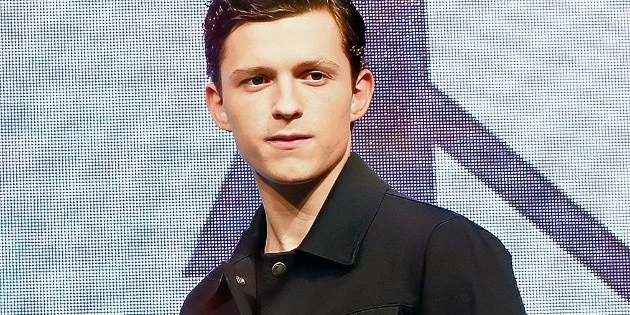
A recent statement by actor Tom Holland, known for his portrayal of Spider-Man in the Marvel Cinematic Universe, has once again ignited the long-standing rivalry between fervent fans of Marvel’s web-slinger and DC Comics’ Dark Knight. Holland’s seemingly dismissive assessment of Bruce Wayne’s capabilities as a hero has reopened intense discussions across various platforms, centering on the fundamental differences and perceived strengths of these two iconic characters. The comments, published during an interview with Entertainment Tonight, saw Holland directly challenge Batman’s status, attributing his heroic prowess primarily to his vast financial resources rather than intrinsic abilities or dedication. This remark has not only fueled the ongoing debate but also provided a fresh perspective from an actor deeply embedded in one side of the comic book universe’s most cherished rivalries.
The Catalyst: Holland’s "Entertainment Tonight" Interview
During an interview with Entertainment Tonight, a prominent platform for entertainment news, Tom Holland expressed his candid thoughts on a hypothetical matchup or comparison between Spider-Man and Batman. The actor, whose public persona is often characterized by an infectious enthusiasm and occasional candidness, did not shy away from offering a provocative take on the Caped Crusader. "He has nothing superior. He just has more money than ‘Spider-Man.’ That’s all, being honest," Holland stated, a quote that quickly circulated and became the flashpoint for renewed online contention. This assertion, delivered by an actor who embodies the very essence of the "friendly neighborhood Spider-Man," immediately resonated with fans who champion the everyman hero over the billionaire vigilante. The context of the interview, often involving lighthearted questions about superhero dynamics, inadvertently provided a platform for Holland to articulate a viewpoint that many fans of Spider-Man share: that Peter Parker’s heroism is self-made and intrinsic, while Batman’s is significantly augmented by his immense wealth and the technological advantages it affords him.
A Tale of Two Heroes: Deconstructing Holland’s Statement
Holland’s blunt assessment distilled Batman’s multifaceted heroism down to a singular, material attribute: money. This simplification, while provocative, deliberately overlooks a spectrum of other critical qualities that define Bruce Wayne as a hero. To truly understand the depth of the debate Holland reignited, it is imperative to analyze the distinct characteristics that elevate both Batman and Spider-Man to their legendary statuses, far beyond mere financial standing or superpowers.
Batman’s Arsenal Beyond Wealth:
Bruce Wayne, the man behind the cowl, is undeniably one of the wealthiest individuals in the DC Universe. His fortune, inherited from Wayne Enterprises, indeed funds his elaborate crime-fighting operation, including the Batcave, advanced gadgets, sophisticated vehicles, and global intelligence networks. However, to suggest this is his only superiority fundamentally misrepresents the character. Batman’s true strengths lie in a constellation of non-monetary attributes:
- Exceptional Intellect and Detective Skills: Bruce Wayne possesses a genius-level intellect, often described as one of the smartest minds in the DC Universe. He is a master detective, capable of solving complex cases that baffle law enforcement and even other metahumans. His deductive reasoning, forensic knowledge, and psychological understanding of criminals are paramount to his success.
- Master Combatant and Strategist: Batman is trained in virtually every known form of martial arts, making him one of the most formidable hand-to-hand combatants in fiction. His physical prowess is the result of decades of rigorous training, pushing his body to the peak of human potential. Beyond physical might, he is a brilliant tactician and strategist, capable of outthinking and outmaneuvering opponents far more powerful than himself. He meticulously plans for every contingency, often having contingency plans for his contingency plans.
- Technological Prowess and Innovation: While his money buys technology, it is Bruce Wayne’s ingenuity and scientific acumen that often conceptualizes and develops much of the advanced equipment he uses. He is an accomplished engineer, computer scientist, and inventor, constantly adapting and innovating his arsenal to counter new threats.
- Indomitable Willpower and Psychological Warfare: Perhaps Batman’s most defining characteristic is his sheer willpower. He operates under extreme duress, facing cosmic threats and personal trauma, yet he never breaks. This mental fortitude allows him to push past human limits. Furthermore, he masterfully employs psychological warfare against his enemies, using fear and intimidation as primary tools to protect Gotham.
- Moral Code and Unwavering Commitment: Batman’s strict no-kill rule, often challenging his own darker impulses, is a testament to his profound moral compass. His commitment to justice, born from witnessing his parents’ murder, is absolute and relentless, driving him to sacrifice personal life for his mission.
Spider-Man’s Unique Strengths:
Conversely, Peter Parker, Spider-Man, is the quintessential "everyman" hero. His powers are accidental, acquired through a radioactive spider bite, and his background is one of financial struggle and personal loss. Yet, his heroism is equally profound:
- Superhuman Abilities: Spider-Man possesses enhanced strength, agility, reflexes, and the ability to cling to surfaces. These powers, particularly his superhuman speed and acrobatic combat style, make him a formidable opponent.
- Spider-Sense: This precognitive ability warns him of impending danger, allowing him to react to threats before they materialize. It is a crucial survival mechanism that compensates for his lack of invulnerability.
- Web-Slinging and Mobility: His self-invented web-shooters provide unmatched mobility across urban landscapes, allowing him to traverse cities with speed and grace, often surprising opponents.
- Genius-Level Intellect: Peter Parker is a brilliant scientist and inventor, particularly in the fields of chemistry, physics, and engineering. He invents his web-fluid and web-shooters, and often uses his scientific knowledge to solve problems and defeat villains.
- Relatability and Moral Compass: Spider-Man’s struggles with everyday life – balancing heroism with school, work, and relationships – make him incredibly relatable. His guiding principle, "With great power comes great responsibility," is a profound moral philosophy that defines his heroic journey, emphasizing selfless service over personal gain.
Holland’s statement, therefore, strips away the intellectual, psychological, and physical dedication that underpins Batman’s heroism, reducing him to merely a rich man with expensive toys. While wealth certainly facilitates Batman’s operations, it is his genius, discipline, and unwavering will that truly make him the Dark Knight.
The Enduring Rivalry: Marvel vs. DC
The debate sparked by Holland’s comments is not an isolated incident but rather a recurring symptom of the deep-seated rivalry between two of the largest and most influential comic book publishers in the world: Marvel Comics and DC Comics. This rivalry, spanning over eight decades, extends far beyond the pages of comic books, permeating films, television series, video games, and the very fabric of popular culture.
Historically, the competition between Marvel and DC has been a driving force for innovation within the comic book industry. DC, established earlier, set many of the archetypes for superheroes with characters like Superman (1938) and Batman (1939). Marvel, particularly under the creative genius of Stan Lee, Jack Kirby, and Steve Ditko in the 1960s, introduced a different approach, focusing on more grounded, flawed, and relatable characters like Spider-Man (1962), the Fantastic Four, and the Avengers, often struggling with real-world problems.
This fundamental difference in character philosophy often fuels the "who would win" debates. DC characters are frequently depicted as mythic, god-like figures operating on a grand, almost operatic scale, while Marvel characters are often portrayed as heroes with feet of clay, dealing with personal anxieties, financial woes, and ethical dilemmas alongside their superheroics. Spider-Man, the friendly neighborhood hero, epitomizes this Marvel approach, making his struggle and triumphs feel more immediate and human. Batman, while human, operates with a near-superhuman level of preparation and psychological warfare, often placing him in a league with metahumans through sheer force of will and intellect.
The enduring nature of these debates, whether about individual character matchups or the overall superiority of one comic universe over another, serves several purposes. It fosters a strong sense of community among fans, providing endless fodder for discussion and creative speculation. It also keeps these characters and their respective brands perpetually relevant, ensuring continued engagement and interest across generations.
Fandom’s Fury: The Online Discourse
Holland’s remarks quickly became viral across social media platforms such, reigniting the flame wars that are a characteristic feature of online fandom. On Twitter, hashtags like #BatmanVsSpiderMan and #TomHolland quickly trended, with users passionately defending their preferred hero. Reddit forums dedicated to Marvel, DC, and general superhero discussions saw an explosion of threads dissecting Holland’s statement and offering counter-arguments.
Pro-Batman Arguments:
Many Batman fans, often referred to as the Bat-Family, emphasized that while Bruce Wayne has money, his real power comes from his unparalleled intellect, strategic genius, physical training, and indomitable will. Arguments frequently highlighted his ability to go toe-to-toe with literal gods and meta-humans through sheer planning and tactical prowess. Some pointed out that Batman’s wealth is merely a tool, much like Spider-Man’s web-shooters, and without Bruce Wayne’s mind and body, the money would be useless in crime-fighting. Memes comparing Batman’s detailed contingency plans to Holland’s seemingly casual dismissal flooded feeds, with many expressing mock outrage or disappointment at the actor’s perceived ignorance of Batman’s depth.
Pro-Spider-Man Arguments:
Spider-Man enthusiasts, on the other hand, largely embraced Holland’s statement as validation of their hero’s inherent superiority. They underscored Peter Parker’s journey as an orphan, his struggles with responsibility, and his self-made heroism, often contrasting it with Batman’s privileged background. Many argued that Spider-Man’s powers, combined with his scientific intellect and moral compass, make him a more authentically "heroic" figure, unreliant on external resources. They highlighted that Peter Parker builds his own tech (web-shooters, web-fluid) from scratch, whereas Bruce Wayne purchases or inherits his. The relatability factor was also a key point, with many feeling that Spider-Man’s struggles resonate more deeply with everyday people.
Beyond the direct "who would win" arguments, the discourse also touched on the nature of actor commentary. While some fans appreciated Holland’s honesty and playful engagement, others cautioned against actors making definitive statements about characters outside their direct purview, suggesting it could be seen as disrespectful to the creative teams and long history behind other franchises. Nevertheless, the intense exchange of opinions demonstrated the vibrant, passionate, and occasionally tribal nature of superhero fandoms, where loyalty to characters runs deep and debates are often seen as a form of celebration.
The Actor’s Persona: Tom Holland and His Spider-Man Identity
Tom Holland’s public persona has become inextricably linked with his portrayal of Peter Parker/Spider-Man. Known for his youthful energy, earnestness, and propensity for accidentally revealing plot details (earning him the affectionate nickname "Spoiler-Man"), Holland’s candid nature often blurs the lines between the actor and the character he plays. His recent comments about Batman fit this pattern perfectly, reflecting a certain youthful exuberance and perhaps a playful, character-driven loyalty.
Actors often develop a deep understanding and affection for the characters they embody for extended periods. For Holland, who has played Spider-Man across multiple films since 2016, the character’s ethos of responsibility and self-reliance is likely deeply ingrained. His statement about Batman could be interpreted not just as a personal opinion, but as a channeling of Spider-Man’s own humble, yet powerful, perspective – a character who often faces off against wealthy, technologically advanced villains and consistently triumphs through wit, agility, and moral strength, rather than an overflowing bank account.
This phenomenon highlights how an actor’s public statements can significantly impact fan perception and fuel ongoing discussions. When an actor like Holland, so closely associated with a beloved character, voices an opinion on a rival, it carries weight and generates immediate buzz. It reinforces the meta-narrative of the Marvel-DC rivalry, transforming a lighthearted interview into a significant moment in the ongoing cultural conversation about superheroes.
Financial and Cultural Stakes: The Box Office and Beyond
While seemingly a trivial debate, the underlying rivalry between Marvel and DC, and by extension, their flagship characters like Spider-Man and Batman, carries significant financial and cultural weight. Both characters are titans of their respective universes, boasting billions of dollars in box office revenue, extensive merchandise lines, and enduring cultural impact.
Box Office Giants:
Both Batman and Spider-Man franchises have consistently delivered blockbuster success. Christopher Nolan’s Dark Knight trilogy (2005-2012) redefined the superhero genre, with The Dark Knight (2008) grossing over $1 billion worldwide and receiving critical acclaim, including an Academy Award for Heath Ledger’s performance. More recently, Matt Reeves’ The Batman (2022) garnered over $770 million globally. On the Marvel side, Tom Holland’s Spider-Man films have been immense successes, with Spider-Man: Far From Home (2019) earning over $1.1 billion and Spider-Man: No Way Home (2021) achieving a staggering $1.9 billion worldwide, making it one of the highest-grossing films of all time. These figures underscore the immense popularity and commercial viability of both characters, proving that audiences worldwide are deeply invested in their stories.
Merchandise and Cultural Impact:
Beyond the silver screen, Batman and Spider-Man are merchandising powerhouses. From comic books and action figures to video games and theme park attractions, their images are ubiquitous. They represent different facets of heroism: Batman, the symbol of grim determination and strategic brilliance, and Spider-Man, the emblem of youthful idealism and relatable struggle. Their cultural impact extends to inspiring countless artists, writers, and fans, shaping perceptions of heroism, justice, and responsibility for generations. Debates like the one sparked by Holland, therefore, are not just idle chatter; they are part of the ongoing cultural dialogue that keeps these characters vibrant and relevant in an ever-evolving media landscape.
The Web of the Future: Spider-Man’s Trajectory in the MCU and Beyond
The original article mentions that after a specific film (likely Spider-Man: Far From Home or an anticipated re-release), the future of Spider-Man in the MCU was uncertain. This uncertainty was a significant point of contention and discussion among fans and industry insiders for several years, following the complex co-production deal between Sony Pictures (which owns the film rights to Spider-Man) and Marvel Studios/Disney.
The initial deal allowed Spider-Man to appear in the MCU, leading to his introduction in Captain America: Civil War (2016) and subsequent solo films like Spider-Man: Homecoming (2017) and Spider-Man: Far From Home (2019), as well as appearances in Avengers: Infinity War and Avengers: Endgame. However, after Far From Home, negotiations between Sony and Disney reached a stalemate, briefly threatening Spider-Man’s continued presence in the MCU. This period of uncertainty caused widespread fan distress, highlighting the character’s critical role in the shared universe.
Ultimately, a new agreement was reached, paving the way for Spider-Man: No Way Home (2021). This film became a monumental success, not only financially but also critically, by masterfully integrating elements from previous Spider-Man film iterations, confirming the multiverse concept, and providing a poignant, character-defining arc for Holland’s Peter Parker.
Following the success of No Way Home, producers Amy Pascal and Kevin Feige confirmed plans for another Holland-led Spider-Man trilogy within the MCU, signaling a continued partnership between Sony and Disney. This news brought immense relief and excitement to fans, ensuring that Holland’s portrayal of the character would continue to evolve within the interconnected narrative of the Marvel Cinematic Universe.
Beyond the MCU, Sony Pictures continues to expand its own "Sony’s Spider-Man Universe" (SSU) with films centered around Spider-Man’s rogues’ gallery and associated characters, such as Venom, Morbius, and Kraven the Hunter. While Holland’s Spider-Man’s direct involvement in the SSU films has been minimal or indirect so far, the ongoing collaboration and the success of the character across different cinematic ventures underline Spider-Man’s status as a cornerstone of modern superhero cinema. Holland’s comments, therefore, arrive at a time when the character he embodies is at a peak of popularity and cinematic influence, further amplifying the resonance of his statements.
Conclusion
Tom Holland’s casual yet impactful remarks about Batman’s reliance on wealth have done more than just spark another round of fan arguments; they have underscored the enduring power of comic book characters to provoke discussion, passion, and loyalty. The debate between Batman and Spider-Man, often framed as "brains vs. brawn" or "wealth vs. responsibility," reflects deeper philosophical questions about heroism itself. While Holland’s statement simplified Batman’s complex attributes, it served as a catalyst for fans to articulate why their chosen hero resonates with them, delving into the nuanced strengths that make each character uniquely compelling.
In an era dominated by superhero franchises, such discussions are vital. They keep the characters alive in the public consciousness, generating buzz, fostering community, and reminding us of the rich histories and moral complexities that define these modern mythologies. Whether one champions the billionaire strategist or the relatable web-slinger, the passionate discourse ensures that both Batman and Spider-Man remain indelible figures in the pantheon of pop culture, continually inspiring new generations to ponder what truly makes a hero.

0 Comments