
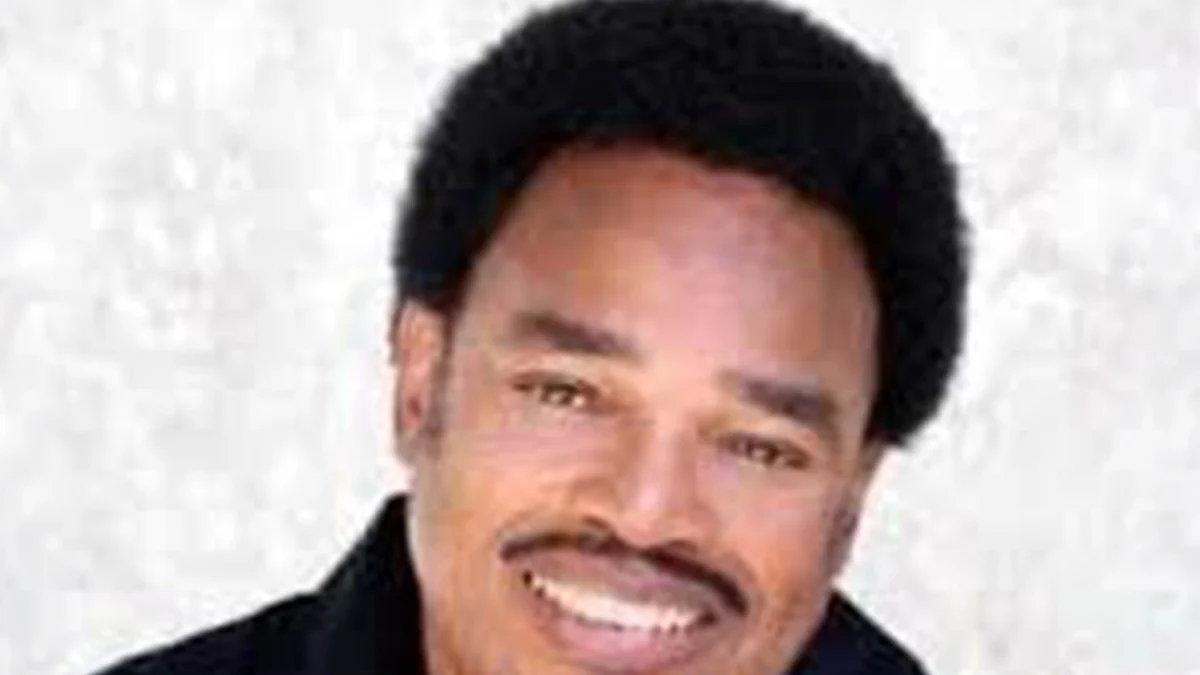
Gilstrap’s illustrious career spanned over five decades, establishing him as one of the most sought-after session vocalists in the industry. His work transcended genres, making him an invaluable asset to countless recording artists and producers. While his name might not have been as widely recognized as some of the superstars he collaborated with, his voice was undeniably foundational to the sound of an era, leaving an indelible mark on popular music and culture.
A Voice Behind the Sunshine: Collaborations with Stevie Wonder
Jim Gilstrap’s association with Stevie Wonder represents one of the most significant chapters of his career. It was his soulful lead vocal on the opening lines of "You Are The Sunshine of My Life" – "You are the sunshine of my life / That’s why I’ll always be around" – that introduced the song to millions and immediately set its warm, heartfelt tone. This track, released in 1972 as part of Wonder’s groundbreaking album "Talking Book," quickly became a global phenomenon, reaching number one on the Billboard Hot 100 chart and earning Wonder a Grammy Award for Best Male Pop Vocal Performance in 1974. Gilstrap’s contribution was not merely a backing vocal; it was a defining element, an integral part of the song’s identity, providing a memorable counterpoint to Wonder’s own subsequent lead vocal.
The impact of "Talking Book" cannot be overstated. Released during a period of immense creative flourishing for Wonder, it solidified his status as a musical genius, blending funk, soul, pop, and jazz with innovative synthesizer use. Gilstrap’s involvement extended beyond this single; he lent his vocal talents to several other pivotal albums in Wonder’s legendary discography. These included "Fulfillingness’ First Finale" (1974), "Wonderlove" (1974), and the critically acclaimed "Innervisions" (1973), another masterpiece that showcased Wonder’s evolving artistry and earned him a Grammy for Album of the Year. Gilstrap’s ability to seamlessly blend his voice into Wonder’s intricate arrangements, adding depth, texture, and emotional resonance, speaks volumes about his skill and musicality. His contributions were a testament to the collaborative spirit that defined much of the golden age of Motown and R&B, where the collective talent of musicians and vocalists often shaped the distinctive sound of an artist.
Capturing the Spirit of an Era: The "Good Times" Theme
Beyond his work with Wonder, Jim Gilstrap’s voice became an auditory emblem of 1970s American television culture through his performance of the theme song for the popular sitcom "Good Times." Debuting in 1974, "Good Times" became a landmark series, portraying the struggles and triumphs of the Evans family living in a Chicago housing project. The show’s theme, with its catchy melody and uplifting lyrics ("Good times, any time you’re ready / Good times, easy to get to / Good times, just look around you / Good times, you’ll find them there"), perfectly encapsulated the series’ blend of humor and social commentary.
Gilstrap’s powerful and emotive delivery of the theme song became instantly recognizable to millions of households across America. For many, his voice is inextricably linked to the warmth, resilience, and occasional heartbreak depicted in the series. The "Good Times" theme transcended its role as mere television intro music; it became a cultural touchstone, often cited in discussions about iconic TV show themes and the representation of Black families on television during that era. His performance imbued the song with a sense of hope and enduring spirit, mirroring the core message of the show itself. The theme song’s enduring popularity, still referenced and celebrated decades later, underscores the lasting impact of Gilstrap’s vocal performance and its place in the annals of pop culture.
A Flourishing Solo Career: "Swing Your Daddy" and "I’m on Fire"
While Gilstrap primarily excelled as a session vocalist, he also ventured into a successful solo career, proving his versatility as a frontman. In 1975, he released his debut solo album, "Swing Your Daddy," which spawned two significant hit singles: the title track, "Swing Your Daddy," and "I’m on Fire." "Swing Your Daddy" became a dancefloor anthem, showcasing Gilstrap’s vibrant vocal delivery and earning him chart success, particularly in the R&B and disco genres. It demonstrated his ability to command attention in his own right, moving from the collaborative background to the solo spotlight with ease.
The album "Swing Your Daddy" and its singles resonated with audiences during a dynamic period in music history, where soul, funk, and disco were converging and dominating the airwaves. His follow-up solo effort, "Love Talk," further cemented his presence as a recording artist. These albums allowed Gilstrap to explore his own artistic vision, showcasing his range not just as a singer, but also as an interpreter of songs. His solo work, though perhaps less widely known than his collaborations, remains a cherished part of his legacy, highlighting his multifaceted talent and contributing to the rich tapestry of 1970s soul music.
The Architect of Sound: A Prolific Session Vocalist for Legends
Jim Gilstrap’s true enduring legacy, however, lies in his unparalleled work as a session vocalist. Over five decades, he became a trusted and sought-after voice for an extraordinary roster of music legends, spanning an incredible array of genres. The list of artists he collaborated with reads like a "who’s who" of music royalty, underscoring his immense talent and adaptability.
His collaborations included titans of R&B and Soul such as Quincy Jones, Aretha Franklin, Anita Baker, Whitney Houston, James Ingram, George Benson, Bill Withers, Gladys Knight, Luther Vandross, Patti LaBelle, and Teddy Pendergrass. With Quincy Jones, a legendary producer and arranger, Gilstrap contributed to projects that defined contemporary R&B and pop. His work with Aretha Franklin, the "Queen of Soul," and Whitney Houston, known for her powerful vocals, speaks to his ability to complement and enhance voices of immense stature without being overshadowed. He added depth to the smooth stylings of George Benson and James Ingram, and provided crucial harmonies for the raw emotion of Bill Withers and the sophisticated sound of Luther Vandross. Working with Patti LaBelle and Gladys Knight, two formidable vocalists, further demonstrated his capacity to blend with and support some of the strongest voices in music history.
Beyond the realm of R&B and Soul, Gilstrap’s versatility saw him contributing to projects by pop icons like Michael Jackson and Kenny Loggins, and even the country superstar Dolly Parton. His ability to adapt his vocal style to different musical contexts, whether it was the intricate pop arrangements of Michael Jackson, the smooth rock of Kenny Loggins, or the country storytelling of Dolly Parton, is a testament to his exceptional skill and ear. Session vocalists often act as the unsung heroes of countless hit records, providing harmonies, ad-libs, and sometimes even uncredited lead parts that elevate a song from good to great. Gilstrap was a master of this craft, his voice an invisible yet indispensable thread woven into the fabric of popular music across multiple generations. His extensive discography as a session artist highlights not just his vocal prowess, but also his reliability, professionalism, and consistent ability to deliver exactly what a song needed.
The Unsung Hero: Legacy and Impact on the Music Industry
Jim Gilstrap’s passing marks the end of an era for many who knew and admired his work, both within the industry and among discerning music lovers. His career illuminates the vital role played by session musicians and vocalists – often behind-the-scenes talents whose contributions are foundational to the success and enduring appeal of countless songs and albums. These artists are the architects of sound, providing the intricate layers that make a recording truly shine. Gilstrap was a prime example of such an artist, whose influence reverberated throughout the music landscape.
His legacy is one of unparalleled professionalism, versatility, and a profound commitment to his craft. He will be remembered not only for the specific, iconic moments his voice created, such as the opening of "You Are The Sunshine of My Life" and the "Good Times" theme, but also for the sheer breadth and depth of his contributions to the work of so many legendary artists. His ability to move seamlessly from lead vocals on his own hits to providing crucial backing harmonies for others underscores his immense talent and adaptability.
The music industry, and indeed the broader cultural landscape, owes a significant debt to artists like Jim Gilstrap. They are the bedrock upon which much of popular music is built, their voices and instrumental talents shaping the sounds that define generations. While specific tributes from his numerous collaborators are expected to emerge in the coming days, the collective sentiment across the music community will undoubtedly recognize his invaluable contributions and the profound impact he had on the sonic identity of multiple genres.
Jim Gilstrap’s voice brought joy, solace, and recognition to millions. He helped define the sound of an era, and his contributions will continue to resonate for years to come. At 79, he leaves behind a remarkable body of work that serves as a testament to his artistry and dedication. He may have been the "sunshine" in many iconic tunes, and his light will continue to shine through his timeless recordings.

0 Comments