
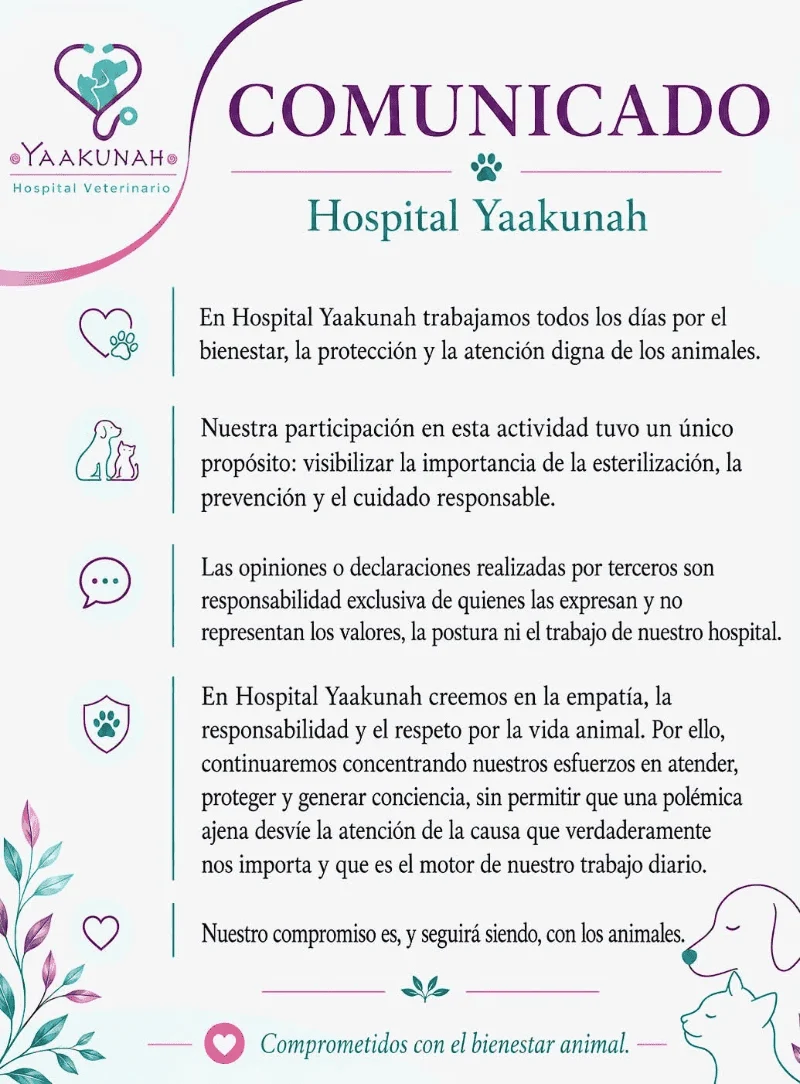
The contentious comments made by television personality Pedro Sola regarding pets have taken a significant new turn, as Hospital Yaakunah, a prominent veterinary center in Mexico City, issued a comprehensive statement publicly disassociating itself from Sola, the program Ventaneando, and even the television network. This decisive move came in the wake of an intense wave of public criticism directed at the hospital following a broadcast segment featuring the Ventaneando team and Sola visiting its facilities. The incident has ignited a broader discussion on media ethics, the responsibility of public figures, and the critical role of animal welfare organizations in navigating public perception.
The Genesis of the Controversy: Pedro Sola’s Remarks and Public Outcry
The controversy originated with comments attributed to Pedro Sola, a long-standing and recognizable figure on the popular Mexican entertainment news program Ventaneando, broadcast by TV Azteca. While the precise date of Sola’s initial remarks is not specified in the immediate context, they involved suggestions about "envenenar perros" (poisoning dogs). These statements quickly drew widespread condemnation across social media platforms and from animal rights advocacy groups. Such remarks, perceived as promoting animal cruelty, struck a raw nerve within a society increasingly sensitized to animal welfare issues. Mexico has seen a significant rise in activism and legal reforms aimed at protecting animals, making Sola’s comments particularly inflammatory. Animal abuse, including poisoning, is a criminal offense in many Mexican states, carrying penalties that range from fines to significant jail time. Public reaction was swift and overwhelmingly negative, with calls for Sola to be held accountable and for the television network to address the issue. This initial backlash set the stage for subsequent events, painting Sola as a controversial figure in the animal welfare debate.
Ventaneando’s Visit to Yaakunah: A Perceived PR Attempt Gone Awry
In what many observers interpreted as an attempt to mitigate the damage caused by Sola’s earlier statements, the Ventaneando team, including Sola himself, visited Hospital Yaakunah’s facilities in Mexico City. The segment, which aired on July 17, depicted Sola interacting with rescued dogs, accompanied by his colleagues Mónica Castañeda and Linet Puente. During the broadcast, the team also presented a donation to the foundation associated with the hospital. The segment’s apparent intention was to showcase a different side of Sola and to align him, and by extension the program, with a positive animal welfare initiative. However, this public relations strategy backfired spectacularly.
Immediately after the broadcast, Hospital Yaakunah faced an unexpected deluge of criticism on digital platforms. Numerous users questioned the hospital’s decision to host Sola, especially given his recent controversial declarations. The online community swiftly condemned the collaboration, perceiving it not as a genuine act of support for animal welfare, but rather as a cynical media maneuver designed to "cleanse" Sola’s image. This backlash highlighted the public’s acute awareness and intolerance for perceived hypocrisy, particularly when it involves sensitive issues like animal protection. The hospital found itself caught in the crossfire, accused of complicity in a "media circus" and of compromising its values for television exposure.
Hospital Yaakunah’s Decisive Stance: A Public Disavowal
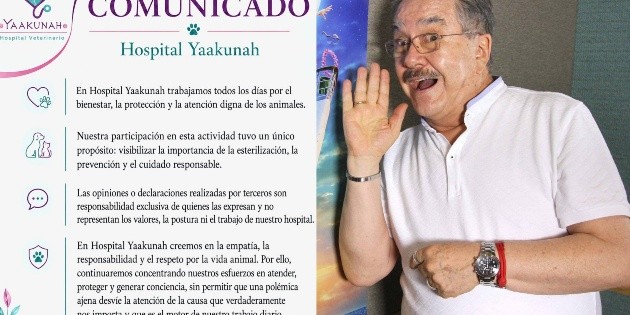
Faced with mounting public pressure and a wave of negative reviews and accusations, Hospital Yaakunah moved quickly to issue an official statement. This communiqué, distributed across its social media channels, represented a powerful and unequivocal disavowal of Pedro Sola, Ventaneando, and the television network. The hospital emphasized that its core mission has always been, and remains, the unequivocal promotion of animal welfare and public education.
The most salient point of the statement was the clear separation drawn between the clinic and the public figures involved. Hospital spokespersons explicitly stated that the opinions previously expressed by the television host "do not represent our values." This direct refutation was crucial in repositioning the hospital away from any perceived endorsement of Sola’s past comments. Furthermore, the organization underscored that its intention in opening its doors to Ventaneando was not to participate in a public relations campaign. The statement unequivocally declared, "No es relevante limpiar el nombre de nadie" (It is not relevant to clear anyone’s name). This bold assertion dismantled the narrative that the hospital was aiding a damage control effort, instead firmly redirecting the focus back to its foundational commitment to animals. The communiqué also detailed that any resources obtained through donations are allocated entirely to critical treatments, such as oncological care and orthopedic surgeries for rescued dogs and cats, reinforcing the hospital’s altruistic purpose and transparent use of funds.
Social Media Erupts: Waves of Criticism and Support
The public response to both the initial Ventaneando segment and Yaakunah’s subsequent statement was immediate and multifaceted, primarily unfolding on social media platforms. Critics viewed the TV segment as a transparent attempt by TV Azteca to repair the reputational damage inflicted by Sola’s words. However, this strategy produced an inverse effect for Hospital Yaakunah, which began to accumulate negative reviews and accusations of being part of a "media circus." This online scrutiny extended beyond the immediate controversy, with some users leveraging the situation to resurface alleged past instances of medical negligence at the hospital, further complicating its public image.
Conversely, the hospital’s decisive communiqué garnered significant support from various animal rights collectives and concerned citizens. These groups applauded Yaakunah for its integrity and for prioritizing its mission over potential media exposure. They echoed the sentiment that the focus should remain on the victims of animal mistreatment and the broader cause of animal welfare, rather than on the public image of entertainment figures. This polarization of opinion underscored the deep societal divisions on animal protection issues and the power of collective digital action in influencing public discourse and institutional responses.
The Broader Context of Animal Welfare in Mexico
The controversy surrounding Pedro Sola’s comments and Hospital Yaakunah’s response unfolds against a backdrop of increasing awareness and legal protection for animals in Mexico. According to various animal welfare organizations, Mexico faces significant challenges regarding animal abandonment and cruelty. Estimates suggest that millions of street animals, primarily dogs and cats, suffer from neglect, hunger, and abuse. Mexico City, a sprawling metropolis, is home to a substantial population of stray animals, making the work of organizations like Yaakunah crucial.
In recent years, several states within Mexico, including Mexico City, have strengthened their animal protection laws. For instance, animal cruelty, including acts like poisoning, is now widely recognized as a criminal offense. Penalties vary by jurisdiction but can include fines ranging from thousands of pesos to prison sentences of several years. These legal frameworks reflect a growing societal consensus that animals are sentient beings deserving of protection and respect. Public figures, therefore, operate in an environment where their words and actions regarding animals are subjected to intense scrutiny and carry significant weight, impacting public perception and potentially inciting legal action. The Ley de Protección a los Animales del Distrito Federal (Animal Protection Law for the Federal District), for example, explicitly prohibits acts of cruelty and negligence, providing a legal basis for activists to demand accountability.
Media Ethics and Public Accountability
This incident has profound implications for media ethics and the accountability of public communicators. Television personalities, by virtue of their platforms, wield considerable influence over public opinion. Sola’s original comments raised serious questions about the responsibility of broadcasters to exercise caution and sensitivity, especially on topics that can incite harm or promote illegal activities. The attempt by Ventaneando to rehabilitate Sola’s image through a seemingly charitable act also sparked a debate about the authenticity of such media interventions and whether they truly serve public interest or merely corporate image management.
The hospital’s strong repudiation serves as a powerful reminder that not all organizations are willing to be co-opted for PR purposes, especially when it conflicts with their core values. This case illustrates the growing power of social media as a watchdog, capable of holding public figures and institutions accountable in real-time. The rapid dissemination of information and collective outrage demonstrated how quickly public sentiment can turn, compelling organizations to take decisive action. It emphasizes the imperative for media outlets to cultivate a culture of responsibility and ethical conduct, recognizing the far-reaching impact of their content on societal values and individual behavior.
The Unfolding Aftermath and Future Implications
As of the latest reports, TV Azteca, the communication company behind Ventaneando, has not issued a new official statement following Hospital Yaakunah’s public rejection. This silence, in itself, is a notable aspect of the aftermath, suggesting a strategic decision to avoid further entanglement in the controversy. Previously, the network had reportedly launched an internal awareness campaign on pet care, which now appears insufficient to quell the public’s indignation regarding Sola’s comments.
The case continues to fuel debate across various sectors, from media professionals discussing ethical broadcasting standards to animal rights activists pushing for stronger enforcement of animal protection laws. Petitions from activists demanding investigations into Sola’s original declarations have been received by relevant authorities, indicating that the matter may have legal ramifications beyond public opinion. This ongoing scrutiny underscores the importance of public figures understanding the gravity of their words and the potential consequences. For Hospital Yaakunah, the episode, while challenging, ultimately served to reinforce its commitment to animal welfare and its independence from commercial media agendas. The institution’s firm stance has likely bolstered its credibility among its core supporters and the wider animal protection community, showcasing its unwavering dedication to its altruistic mission.
Yaakunah’s Continued Mission: A Beacon for Vulnerable Animals
Despite the recent media storm, Hospital Yaakunah continues its daily operations, focusing on its primary mission: providing medical care and support to vulnerable animals rescued from the streets. The institution aims to move past the media episode and concentrate exclusively on its altruistic labor. Its commitment to treating critical cases, including those requiring complex oncological and orthopedic interventions, remains unwavering. The hospital serves as a vital resource for countless animals that would otherwise suffer or perish, embodying the very values of compassion and responsibility that were at the heart of the recent controversy. This incident, while disruptive, has ultimately reaffirmed the essential role of such organizations in society and the public’s expectation that animal welfare be treated with the utmost seriousness and respect.
This article was produced with the assistance of artificial intelligence and reviewed by an editor.

0 Comments