
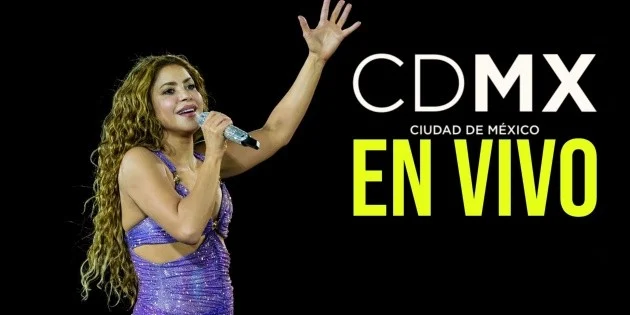
Mexico City is bracing for an unparalleled cultural spectacle as global music icon Shakira is slated to perform a monumental, free concert in the heart of the capital, the historic Zócalo, this Sunday, March 1st, commencing promptly at 20:00 hours local time. This highly anticipated event is poised to draw hundreds of thousands of attendees to one of the world’s largest public squares, reaffirming Mexico City’s reputation as a vibrant hub for massive cultural gatherings and making high-caliber entertainment accessible to all. The concert, an initiative promising to transcend geographical barriers, will also be extensively broadcast across various digital platforms, ensuring that fans worldwide can partake in the Colombian superstar’s electrifying performance.
The Iconic Stage: Mexico City’s Zócalo
The choice of the Zócalo, officially known as the Plaza de la Constitución, as the venue underscores the magnitude of Shakira’s performance. This sprawling central plaza, steeped in centuries of history, serves as the symbolic and literal heart of Mexico. Flanked by the Metropolitan Cathedral, the National Palace, and the Old Portal de Mercaderes, the Zócalo has been a silent witness to pivotal moments in Mexican history, from Aztec rituals to colonial parades, and modern political rallies to grand public celebrations. Its capacity to accommodate an estimated 100,000 to 200,000 people directly on the main square, with hundreds of thousands more spilling into surrounding streets, makes it a unique and challenging stage for any artist. Over the years, the Zócalo has hosted an impressive roster of international and national artists, including Paul McCartney, Roger Waters, Justin Bieber, Vicente Fernández, and Grupo Firme, each drawing record-breaking crowds and cementing its legacy as a premier open-air concert venue. For Shakira, a performer renowned for her dynamic stage presence and global appeal, the Zócalo offers an unparalleled opportunity to connect with a diverse Mexican audience on an unprecedented scale.
Shakira’s Global Phenomenon and Enduring Legacy
Shakira Isabel Mebarak Ripoll, known mononymously as Shakira, has been a force in the global music industry for over three decades. Her career, which began in the early 1990s in her native Barranquilla, Colombia, quickly transcended Latin American borders to establish her as a global pop icon. With a distinctive blend of Latin pop, rock, belly dancing, and world music influences, Shakira has sold over 80 million records worldwide, making her one of the best-selling music artists of all time. Her accolades include numerous Grammy Awards, Latin Grammy Awards, MTV Video Music Awards, and Billboard Music Awards, testament to her enduring artistic impact and commercial success. Hits like "Hips Don’t Lie," "Waka Waka (This Time for Africa)," "Whenever, Wherever," and "Ojos Así" have not only topped charts globally but have also become cultural touchstones, showcasing her versatility as a songwriter, vocalist, and performer. Beyond her musical achievements, Shakira is also a prominent philanthropist, particularly through her Pies Descalzos Foundation, which provides education and nutrition to impoverished children in Colombia, reflecting her commitment to social causes. Her performance in Mexico City is not merely a concert; it is a cultural event that celebrates her immense contribution to music and her deep connection with the Latin American audience.
Comprehensive Viewing Options: Bridging the Digital Divide
Recognizing the immense public interest and the logistical limitations of accommodating every fan in the Zócalo, the organizers, in collaboration with the artist, have implemented a multi-faceted approach to ensure maximum accessibility for the concert. The primary digital gateway for global audiences will be Shakira’s official social media channels. Fans are encouraged to tune into her verified profiles on YouTube, Instagram, Facebook, and TikTok, where the live stream will commence simultaneously with the physical concert at 20:00 hours Central Mexico Time. This strategic use of digital platforms not only caters to her global fanbase but also provides a safe and convenient viewing alternative for those unable to attend in person, irrespective of their geographical location within or outside Mexico. The decision to leverage these platforms highlights the evolving landscape of live entertainment, where digital outreach is as crucial as the physical event itself.
For residents of Mexico City who wish to experience the communal atmosphere without navigating the dense crowds directly in front of the main stage, the local government has announced the installation of several giant screens in key streets adjacent to the Zócalo. These designated viewing areas will allow thousands more to enjoy the concert collectively, benefiting from large-scale visuals and high-fidelity sound, while maintaining a degree of comfort and safety away from the epicentre of the main crowd. While specific street names were not immediately disclosed, these auxiliary viewing zones are typically strategically placed along major avenues leading into the Zócalo, such as 20 de Noviembre, Pino Suárez, and Madero, maximizing visibility and crowd dispersion. This thoughtful provision underscores the city’s commitment to public safety and ensuring a positive experience for as many citizens as possible.
Logistical Masterplan: Ensuring Safety and Order
Hosting an event of this scale in a densely populated urban environment like Mexico City’s historic centre necessitates an intricate logistical and security masterplan. City authorities, including the Secretariat of Citizen Security (SSC), the Secretariat of Comprehensive Risk Management and Civil Protection (SGIRPC), and the Secretariat of Mobility (SEMOVI), have been working in conjunction with event organizers for weeks to coordinate all necessary measures. Key aspects of this plan include:
- Crowd Control and Access Points: Establishing multiple controlled entry and exit points to the Zócalo, with designated routes for ingress and egress to prevent bottlenecks. Trained personnel will manage crowd flow, particularly crucial during peak arrival and departure times.
- Security Deployment: A substantial deployment of police officers will be on site, both uniformed and plainclothes, to ensure public order, deter criminal activity, and respond to any emergencies. Metal detectors and bag checks are standard protocols at such events.
- Medical Services: Multiple medical aid stations, staffed by paramedics and equipped with ambulances, will be strategically positioned around the venue to provide immediate assistance for any health-related incidents.
- Traffic Management: Significant road closures will be implemented in the surrounding areas of the Zócalo well in advance of the concert, affecting major arteries. Public transportation, particularly the Metro system, will likely operate with extended hours and increased frequency to facilitate attendee movement, although specific details are usually announced closer to the event.
- Waste Management: A robust clean-up operation will be planned for immediately after the concert to manage the large volume of waste generated by hundreds of thousands of attendees, reflecting the city’s commitment to maintaining its public spaces.
- Communication: Clear signage and public address systems will be used to disseminate information, direct crowds, and issue emergency alerts if necessary.
These comprehensive measures are vital to ensure that the event proceeds smoothly, prioritizing the safety and well-being of all concert-goers, a paramount concern for any major public gathering in the city.
Economic and Cultural Ripple Effects
While the concert itself is free, the economic ripple effects on Mexico City are substantial. Large-scale public events invariably lead to an uptick in local commerce. Hotels in the downtown area and surrounding neighbourhoods typically experience increased occupancy rates as fans travel from other states and even internationally to attend. Local businesses, from street vendors selling food and beverages to souvenir shops, restaurants, and bars, anticipate a significant surge in sales. Transportation services, including taxis, ride-sharing apps, and public transit, will also see heightened demand. This influx of economic activity provides a welcome boost to the city’s informal and formal economies, showcasing the tangible benefits of cultural tourism.
Culturally, the event reinforces Mexico City’s position as a vibrant global capital and a champion of accessible arts. By offering a free concert featuring an artist of Shakira’s stature, the city government champions the idea that world-class entertainment should be available to all citizens, regardless of their economic background. Such events foster a sense of community, civic pride, and shared experience, uniting diverse segments of the population under the banner of music and celebration. It also serves as a powerful statement about the city’s commitment to cultural programming and its ability to host major international events successfully.
A Tradition of Grand Public Spectacles
The tradition of massive free concerts in the Zócalo is deeply embedded in Mexico City’s cultural fabric. For decades, the plaza has served as a democratic stage, hosting legendary performances that have become part of the city’s collective memory. From the iconic rock festivals of the 1970s to more recent performances by global superstars, these concerts are more than just entertainment; they are public declarations of cultural vitality and a testament to the city’s enduring spirit. The planning and execution of such events often involve significant coordination between various government agencies, private sponsors, and the artists themselves, reflecting a collaborative effort to bring these spectacles to life. Shakira’s upcoming performance adds another illustrious chapter to this rich history, promising to be one of the most memorable free concerts the Zócalo has ever witnessed, further solidifying its reputation as a democratic stage for the masses.
Anticipation and the Road Ahead
As Sunday, March 1st, approaches, anticipation among fans across Mexico and beyond is palpable. Social media platforms are abuzz with excitement, travel plans, and predictions for Shakira’s setlist. For many, this concert represents a rare opportunity to see a global icon perform live, a moment that will undoubtedly create lasting memories. For Mexico City, it is another opportunity to showcase its organizational prowess, its vibrant culture, and its ability to host world-class events that captivate both local and international audiences. The stage is set, the digital channels are ready, and the Zócalo awaits the arrival of Shakira, ready to transform into a pulsating heart of rhythm and celebration, echoing with the sounds of a global superstar. This historic free concert is poised to be not just a musical performance, but a monumental civic gathering, a cultural touchstone, and a testament to the unifying power of music in one of the world’s most dynamic cities.

0 Comments