
The twilight hues of the palace gardens served as the clandestine stage for a moment that has sent ripples of excitement through the dedicated fanbase of the popular Spanish drama series, ‘La Promesa’. Manuel, the heir to the illustrious Luján family, found himself ensnared by a potent mix of anticipation and nervousness as he awaited the arrival of Julieta. The air, thick with the scent of blooming flora, seemed to mirror the burgeoning emotions that had been simmering beneath the surface for weeks. This encounter, steeped in the drama and intrigue that defines ‘La Promesa’, marks a pivotal turning point in the narrative, promising to reshape the intricate relationships and power dynamics within the fictional world of the Luján estate.
The Weight of the Wait and the Burden of Secrets
Julieta’s late arrival, accompanied by a soft apology, "I got a bit late," carried a subtle undertone of the pressures she was under. Manuel, outwardly dismissing the delay, couldn’t mask the palpable tension that had built with each passing minute. The original text highlights this, noting that "every minute of waiting had weighed like a slab." This simple yet profound observation underscores the depth of Manuel’s feelings and the significance he attached to their meeting, a stark contrast to the casual indifference he feigned.
Crucially, Julieta’s tardiness was not a matter of simple oversight but a consequence of a prior, deeply personal confrontation. Before meeting Manuel, she had been cornered by Ciro, her husband, who sought an intimate moment. Julieta’s firm, albeit uncomfortable, declaration, "I don’t want to have children with Ciro," reveals a chasm in her marital relationship. This statement, more than just a personal preference, speaks volumes about her emotional detachment from Ciro and her underlying desires, which, unbeknownst to him, lay elsewhere. The weight of this secret, coupled with the societal expectations of her role, undoubtedly contributed to her delayed arrival and her evident unease.
A Confession of Longing and Shared Desires
Once seated on a secluded bench, away from the prying eyes of the palace staff and inhabitants, Manuel finally found the courage to voice the anxieties that had plagued him. He confessed that the preceding week had been exceptionally trying, largely due to the constant presence of María and Ciro’s daughter, a situation that had disrupted the fragile peace of his existence. "I’ve missed being able to talk to you alone," he admitted, his voice thick with emotion. This raw expression of yearning is a significant departure from the stoic facade he often presents, revealing the vulnerability that Julieta’s presence evokes in him.
His confession then blossomed into a detailed enumeration of all that he longed for: the absence of constant observation, the freedom to have their own private space, the simple pleasure of shared walks to the palace. His heartfelt plea, "To be happy," was met with an immediate and resonant echo from Julieta, who completed his thought with, "To be free." This synchronicity in their desires, their thoughts seemingly aligned, underscores the profound connection that has developed between them, a connection that transcends their prescribed social roles and forbidden circumstances.
The Inevitable Storm and the Unspoken Truth
A sudden clap of thunder shattered the idyllic atmosphere, a dramatic foreshadowing of the emotional tempest that was about to break. Manuel, ever the pragmatist, suggested a hasty retreat to the palace to avoid being caught in the downpour. Julieta readily agreed, but with a crucial addendum: "It’s not advisable for us to be seen arriving together." This cautious remark highlights the precarious nature of their clandestine relationship and the potential repercussions should their interactions be discovered. Their parting was brief, marked by a simple, "Good night, Manuel."
However, Julieta’s resolve wavered. The unspoken words, the unfulfilled desires, proved too potent to suppress. She paused, turned back, and retraced her steps, driven by an urgency that could no longer be contained. The message she felt compelled to deliver was not one that could wait for the dawn. "I’ve come back to tell you that you didn’t arrive, Manuel. The first time we met was not a chance encounter. It was destiny bringing our lives together, and now you are already part of everything I am," she declared, her voice barely audible above the rising wind.

The First Kiss: A Reckless Act of Fate
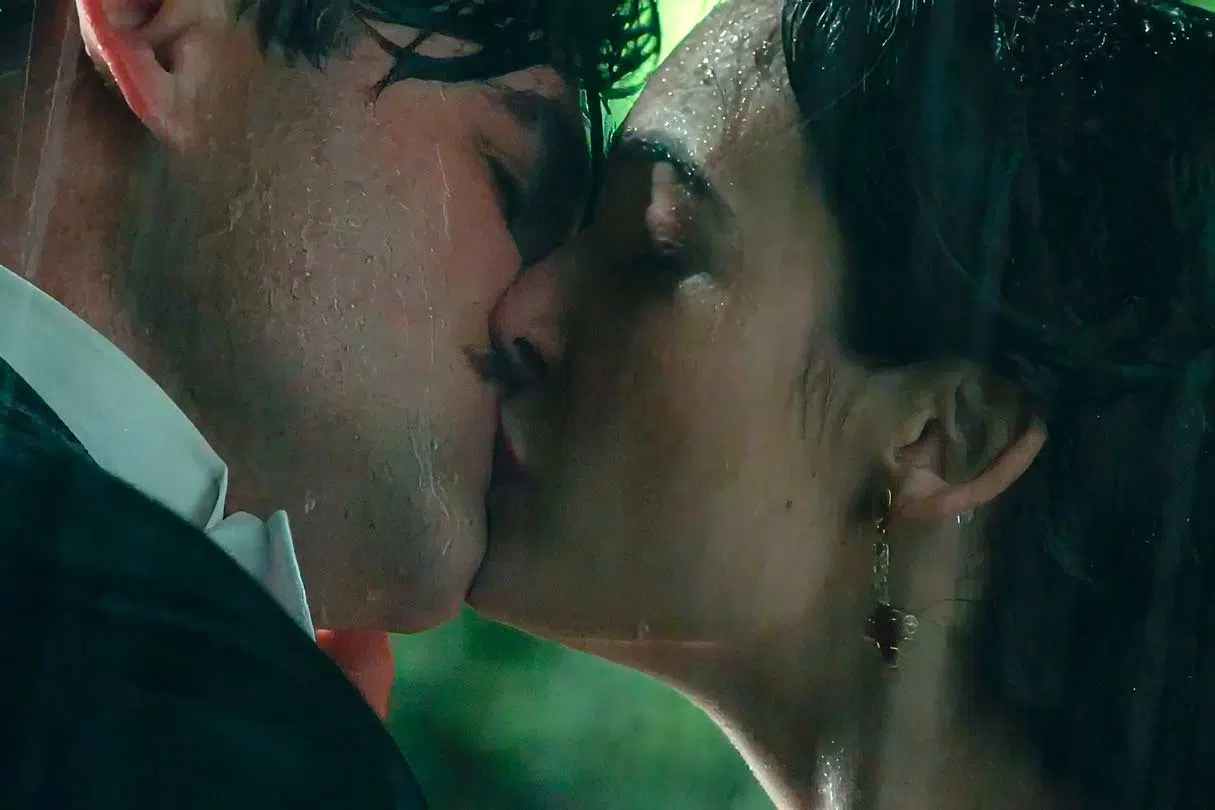
As the first drops of rain began to fall, punctuating Julieta’s heartfelt confession, the air crackled with an undeniable tension. Manuel, his heart pounding in his chest, could no longer restrain himself. Words became superfluous, replaced by the primal language of action. He lunged towards her, and beneath the burgeoning storm, he surrendered to the moment, capturing her lips in a passionate embrace.
This kiss, a stolen moment beneath the tempestuous sky, is precisely the scene that ‘La Promesa’ aficionados have been anticipating since the genesis of this seemingly impossible love story. It represents a culmination of suppressed desire, a bold step across a boundary from which there is no return. The very act of kissing Julieta, the wife of his cousin, is a transgression that immediately strikes Manuel with a wave of guilt.
Defiance and the Second Embrace
Yet, Julieta refuses to acknowledge the transgression as a mistake. She views it as an inevitable consequence, something far greater than their individual wills. "I was waiting for what has happened," she confessed, drenched by the rain, her conviction unwavering. Her declaration signifies her acceptance of her feelings and her willingness to confront the potential fallout.
Manuel, acutely aware of the societal implications – the familial ties, the commitments, the ticking time bomb of their forbidden love – attempts to articulate the gravity of their actions. But Julieta remains unperturbed. Her unwavering gaze and determined stance signal a shift in her character; she is no longer willing to fight against the undeniable pull towards Manuel. When she warns him that if he doesn’t step away, she will kiss him again, it is Manuel who closes the distance, sealing their defiance with a second, more resolute kiss.
The Unfolding Future: A Promise of Turmoil
Thus, under the dramatic backdrop of the rain-lashed night, far removed from the gilded cage of the palace walls, ‘La Promesa’ has delivered one of its most romantically charged scenes to date. This burgeoning romance, a classic tale of forbidden love, now stands as a potent force poised to disrupt the established order of the Luján household. As Manuel himself now understands, such passionate, uncontainable love affairs often carry a heavy price, capable of dismantling everything in their path.
The implications of this pivotal event are far-reaching. The relationship between Manuel and Julieta, now irrevocably altered, will undoubtedly cast a shadow over the existing dynamics within the palace. Ciro’s potential discovery of this affair could lead to explosive confrontations, fracturing the already complex family alliances. Furthermore, Julieta’s declaration about not wanting children with Ciro hints at a deeper dissatisfaction with her marriage, suggesting that her feelings for Manuel might be more than just a fleeting infatuation.
The narrative arc of ‘La Promesa’ has always been characterized by its intricate plotting and the exploration of complex human emotions against the backdrop of early 20th-century Spain. This forbidden romance between Manuel and Julieta adds a potent new layer of drama, promising to drive the plot forward with a mixture of passion, peril, and inevitable heartbreak. The series’ ability to weave such compelling emotional threads into its historical setting has cemented its status as a fan favorite, and this latest development is poised to captivate audiences even further. The question now is not if this love will cause chaos, but rather how much, and who will be caught in its devastating wake. The storm has passed, but the emotional tempest is just beginning.

0 Comments