
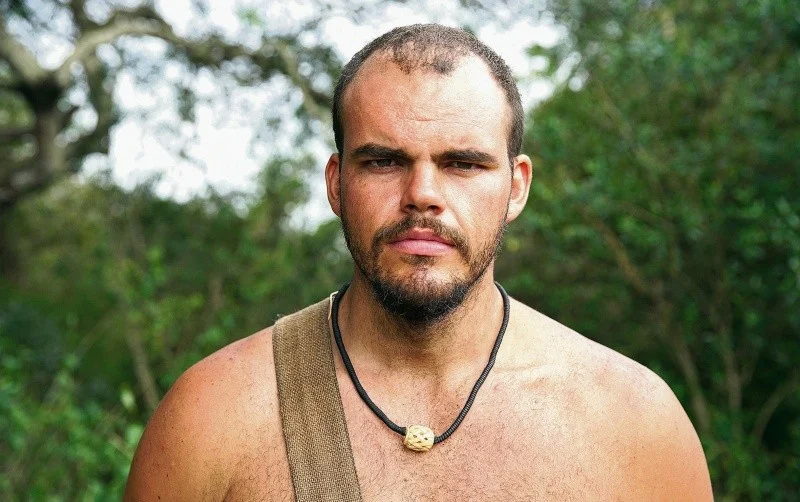
After weeks enduring the extreme, unforgiving conditions of the South African savanna, Mexican survivalists Fernanda Pérez and Pablo Melin have returned with a compelling revelation: the true essence of survival transcends mere physical strength, beginning and ending with the resilience of the human mind. Pérez, a marine biologist from Sonora, and Melin, a seasoned participant from Durango, represented Mexico in the highly anticipated new edition of “Naked and Afraid: Global Edition” (Supervivencia al desnudo: Conquista Mundial), broadcast on Discovery and HBO Max. Their journey through the wild, marked by sleeping on animal hides, drinking river water, hunting with bows, and coexisting with formidable wildlife, underscored that the demarcation between perseverance and surrender rarely hinged on muscular fortitude.
The Global Arena: A New Dimension of Survival
“Naked and Afraid: Global Edition” marked a significant evolution for the popular survival franchise. For the first time, the show brought together veteran survivalists from various countries, pooling their diverse experiences into a single, amplified international challenge. This format introduced not only the traditional perils of the wilderness but also the added complexities of team dynamics under immense pressure, cultural differences, and the heightened stakes of global competition. Participants, stripped of modern amenities and often their clothing, were tasked with surviving for weeks in some of the planet’s most hostile environments, relying solely on their primitive skills, mental grit, and the support of their teammates.
The South African savanna, a landscape renowned for its breathtaking beauty and formidable dangers, served as the crucible for this global test. Here, contestants faced scorching diurnal temperatures, plummeting nocturnal cold, a constant scarcity of potable water and sustenance, and the omnipresent threat of apex predators suchibilities as lions, leopards, and hyenas, alongside the formidable presence of elephants, rhinos, and buffalo. These factors collectively create a scenario where physical endurance is undoubtedly critical, but psychological fortitude often proves to be the ultimate determinant of success.
A Chronicle of Resilience: Weeks in the Wild
From the outset, the challenge presented an immediate and visceral confrontation with primal existence. The initial days were a brutal exercise in adaptation, as Pérez and Melin, like their international counterparts, grappled with the shock of exposure, the urgency of locating water sources, and the construction of rudimentary shelters. The absence of modern comforts forces an acute awareness of basic human needs, magnifying every sensation—from the pangs of hunger to the discomfort of insect bites and the pervasive sense of vulnerability.
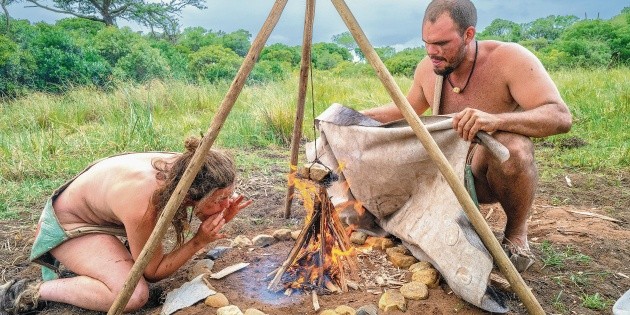
Pablo Melin, drawing upon his innate composure, approached the ordeal with a strategic mindset centered on maintaining emotional equilibrium. In an interview with EL INFORMADOR, Melin articulated his philosophy: "The most important thing is to keep a cool head. You have to know where you stand, recognize what you can contribute, and draw on everything you’ve learned." He emphasized his personal trait of remaining calm in crises, preferring clear-headed decision-making over impulsive reactions. This steadfast approach proved invaluable, particularly when confronting early adversity. Melin battled an infection stemming from multiple tick bites, an affliction that, while unseen by television audiences, posed a significant physiological challenge. Despite this, he asserted that it never swayed his mental resolve. "The most difficult part was the hunger. After so many days without eating and living completely exposed to the environment, one might think desperation would set in, but in my case, it never did. I always tried to maintain calm." His ability to compartmentalize discomfort and maintain focus on the overarching goal exemplifies the profound power of psychological resilience in extreme circumstances.
Fernanda Pérez echoed Melin’s sentiments, further elaborating on the critical role of emotional intelligence. For Pérez, the competition vividly illustrated how even technically superior teams faltered when personal conflicts or emotional instability eroded their collective strength. "The psychological aspect and emotional management are fundamental," she shared with EL INFORMADOR. "In our case, we faced primitive survival conditions, a severe caloric deficit, and the pressure of competing." She observed that "technically strongest teams begin to fail when personal conflicts arise or when they lose emotional control. I believe one of our strengths was knowing each other very well and mutually helping to manage those crises." This mutual support and self-awareness became their bedrock, enabling them to navigate the mental and emotional labyrinth of the challenge.
The mid-point of the competition, around day 25, tested their resolve to its core. Pérez succumbed to a debilitating fever, a direct consequence of the cumulative physical strain and weeks of irregular, insufficient nourishment. This period marked not only physical exhaustion but also profound emotional depletion. "It’s no longer just physical tiredness that appears. Emotional exhaustion also arrives. You start to question why you’re still there," Pérez recounted. In such moments, the ability to reconnect with one’s initial objectives becomes a vital lifeline. "Then you need to remember what your goal was from the beginning. That helps you find the strength to keep going. We were never a team that thought about giving up." This steadfast commitment to their purpose, fueled by their mental resilience, allowed them to push through moments of profound doubt and physical breakdown.
Beyond the mental battles, the extreme conditions also unveiled latent physical capacities. Melin marvelled at the speed with which a deep wound sustained on the first day miraculously healed, showcasing the body’s innate regenerative power when pushed to its limits. Pérez, meanwhile, discovered an astonishing level of endurance she never knew she possessed. "We were the last to set out because our raft got stuck. When we finally started, the other teams were already far ahead. Even so, I ended up being the first woman to complete the course," she proudly recalled. This feat, achieved around day 20 when caloric intake was minimal, underscored the remarkable reserves the human body can tap into under duress. "I knew I was strong, but I didn’t imagine I could paddle at that speed. Moreover, that happened around day twenty, when we had already spent many days with very little food," she explained.
The Savanna Classroom: Nature, Science, and Indigenous Wisdom
For Fernanda Pérez, her background as a marine biologist lent a unique lens to her survival experience. Accustomed to the meticulous observations and controlled environments of scientific research, she discovered that direct immersion in nature offered an education unattainable in any laboratory. "Scientific training greatly develops critical thinking and observation, but when you go out and live with nature in such a direct way, you understand that there is still so much to learn," she reflected. This profound realization deepened her admiration for traditional and indigenous knowledge systems, recognizing their inherent richness and depth that often predate and sometimes even surpass modern scientific understanding. "There is enormous wealth in that experience that science often only begins to comprehend."
Amidst the relentless hunger, arduous treks, and elimination challenges, there were also moments of profound awe. Both participants vividly recalled the intense emotional impact of encountering African wildlife up close, creatures previously confined to documentaries or zoo enclosures. "Going out with the bow, walking for hours searching for animals and suddenly finding zebras, buffalo, wildebeest, rhinoceroses, or giraffes was breathtaking," Pérez described. For her, the experience was a childhood dream come true. "I’ve been a fan of ‘The Lion King’ since I was a child. Being able to encounter these animals in freedom was like entering the movie I watched over and over when I was eight years old. More than fulfilling an adult dream, I felt I was fulfilling a dream of the child I once was."
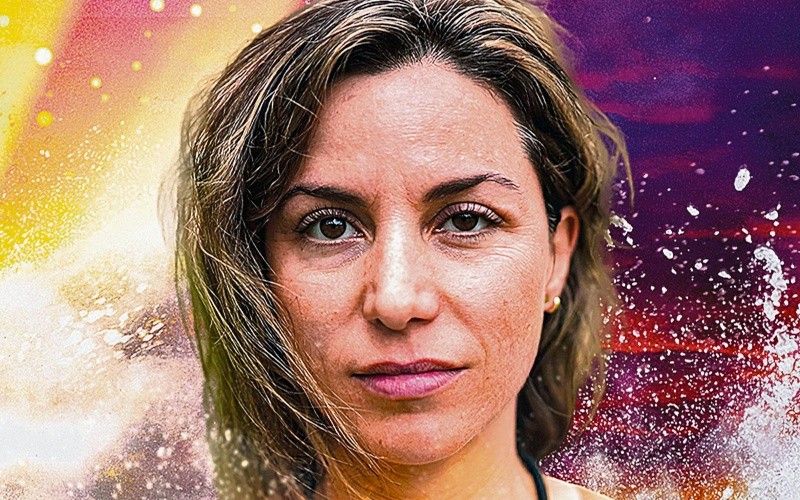
Pablo Melin, too, found the nocturnal experiences in the savanna etched into his memory. "Having giraffes or rhinos just a few meters away completely changes one’s perception of them," he noted. Even animals he once considered unappealing, like hyenas, took on a new dimension. "Hyenas, for example, always seemed ugly animals to me, but listening to them at night was an incredible experience. Of course, it was scary, but in the end, you understood that you were in Africa and that this was these animals’ place, not ours." This humbling realization of humanity’s place within the vast, untamed ecosystem profoundly impacted both participants.
Beyond the Lens: The Enduring Impact of Extreme Survival
The competition concluded on July 30th with the transmission of the final episode, but for Fernanda Pérez and Pablo Melin, the experience left an indelible transformation far beyond what could be captured on screen. Their weeks in the wild sparked a profound re-evaluation of societal norms and personal needs.
"We live surrounded by objects and customs that we believe are necessary. We think we can’t sleep without a certain mattress or pillow, or that we need many comforts to enjoy life," Pérez mused. "When you spend several weeks surviving, all that changes. Drinking water from the river, getting your own food, sleeping under the stars in the middle of the savanna ends up being enough." This stripping away of perceived necessities leads to a profound shift in perspective. "One returns transformed into a much more grateful person. You also regain something that is normally lost with the years: the ability to feel happy with very little."
Their journey offers compelling insights into human resilience and the profound impact of reconnecting with primal existence. In an increasingly complex and consumer-driven world, the stories of individuals like Pérez and Melin serve as powerful reminders of our intrinsic capacity for adaptation, endurance, and finding joy in the most fundamental aspects of life. Their experience underscores that true survival is not merely about physical stamina but about the unwavering strength of the human spirit, the clarity of a calm mind, and the profound gratitude for the simple gift of existence. The lessons learned in the heart of the South African savanna resonate far beyond the confines of a television screen, inspiring a re-evaluation of what truly constitutes necessity and happiness in the modern human experience.

0 Comments