
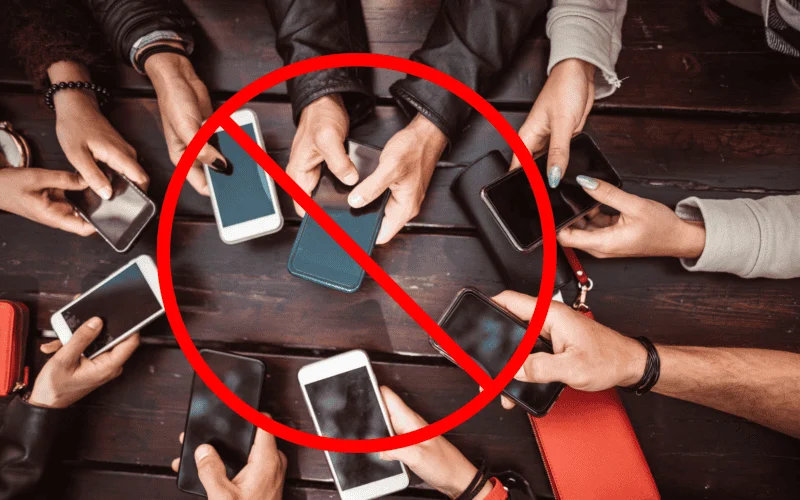
Remaining more than two months without a cell phone, social media, or news can seem an impossible challenge for many in today’s hyper-connected world. While scientific evidence does not suggest that such an experience fundamentally alters personality, studies on smartphone usage and psychological adaptation indicate it can significantly, albeit temporarily, influence emotions, attention spans, and an individual’s approach to conflict resolution. This phenomenon is vividly demonstrated within the confines of reality television programs like "La Casa de los Famosos México," which serves as a compelling, albeit controlled, social experiment on digital deprivation and intense interpersonal dynamics.
The Social Experiment: "La Casa de los Famosos México"
For a period of 10 weeks, participants in "La Casa de los Famosos México" are subjected to a profound isolation from the external world. The rules are stringent: no access to mobile phones, social media platforms, current news, or routine contact with family members. Interactions with loved ones are strictly limited to specific, production-authorized dynamics, transforming the contestants’ lives into a microcosm observed by millions. This format, echoing the global "Big Brother" phenomenon that originated in the Netherlands in 1999 and has since spread to over 60 countries, positions the show as a unique laboratory for behavioral observation. Globally, such programs have captivated audiences by placing ordinary individuals under extraordinary conditions, stripping away modern comforts and exposing raw human interaction. "La Casa de los Famosos México," in particular, leverages the allure of celebrity and the inherent drama of forced cohabitation, consistently drawing high viewership ratings in the Mexican market, with millions tuning in daily to witness the unfolding drama.
This meticulously constructed environment provides a fascinating stage to observe human adaptability when confronted with a lifestyle drastically divergent from daily norms. However, psychological specialists are quick to clarify that this experience does not equate to extreme social isolation. Unlike solitary confinement or the involuntary isolation many faced during the COVID-19 pandemic, residents of "La Casa de los Famosos México" are in constant, indeed inescapable, social proximity. They engage in daily activities, participate in competitive challenges, and benefit from continuous medical and production supervision. The presence of other contestants, a structured routine, and external oversight fundamentally differentiate this experience from genuine social deprivation, which is often characterized by loneliness, lack of meaningful interaction, and a sense of abandonment. Nevertheless, the pronounced absence of personal technology and the radical disruption of established routines invariably induce temporary shifts in how participants perceive their surroundings and manage their emotional states.
The Digital Detox: Unpacking the Smartphone’s Absence
For a vast majority of the global population, the smartphone has become an indispensable extension of daily life. It functions as a primary tool for communication, scheduling, information retrieval, entertainment, and even the archiving of personal memories. Research consistently highlights the pervasive integration of these devices into modern existence. A 2023 study by Statista revealed that the average daily screen time for smartphone users worldwide exceeded 3 hours and 30 minutes, with some demographics spending upwards of 5-6 hours. In Mexico, smartphone penetration reached over 80% of the population in 2023, underscoring its central role.
Numerous investigations into smartphone usage have uncovered that frequent interaction with mobile devices activates specific neural circuits associated with reward processing in the brain. This process significantly involves dopamine, a neurotransmitter crucially linked to motivation, pleasure, and learning. The constant stream of notifications, likes, messages, and new content provides intermittent reinforcement, akin to a slot machine, which can be highly addictive. This neurological response helps explain the compulsive checking behavior many exhibit. While the concept of "smartphone addiction" remains an active area of scientific inquiry and debate, with experts often preferring terms like "problematic smartphone use" or "digital overuse," the physiological and psychological mechanisms at play are well-documented.
Consequently, the abrupt cessation of access to a smartphone, as experienced by the contestants, typically initiates an initial period of considerable discomfort. During the first few days, individuals commonly report a range of symptoms indicative of withdrawal. These often include:
- Increased anxiety and agitation: A feeling of unease or restlessness stemming from the sudden disconnection.
- Irritability: A lowered tolerance for minor annoyances or frustrations.
- Difficulty concentrating on new tasks: A struggle to shift focus from the absent digital world to the immediate environment.
- Phantom vibrations: The sensation that one’s phone is vibrating or ringing when it is not, a testament to the brain’s conditioned anticipation.
- Fear of Missing Out (FOMO): A pervasive apprehension that one might be missing important social interactions, news, or events occurring elsewhere.
- Feelings of emptiness or boredom: A struggle to fill the void left by the constant digital stimulation.
However, once this initial adaptation phase is navigated, studies have also demonstrated the positive effects of limiting smartphone use. Participants in digital detox experiments often report a significant decrease in distractions, fostering enhanced concentration, improved focus on present activities, and a greater capacity for sustained attention. This transition underscores the brain’s remarkable neuroplasticity and its ability to reorient its focus when external stimuli are removed.
Intensified Social Dynamics and Conflict
One of the most profound psychological shifts within "La Casa de los Famosos México" extends far beyond the mere absence of a mobile phone. The environment systematically eliminates a vast array of daily activities that typically fragment and distribute an individual’s attention. The familiar demands of work, the distractions of commuting, the constant influx of news, and routine interactions with people outside one’s immediate circle all vanish. From a psychological perspective, when these external stimuli diminish, interpersonal relationships and social dynamics within the confined group acquire an exponentially greater salience and importance.
In this intensified social vacuum, the most minor comments, subtle differences of opinion, or trivial disagreements can be perceived as significantly more impactful and weighty than they would be in everyday life. The cognitive load, usually distributed across numerous external responsibilities and digital interactions, is now almost entirely concentrated on the immediate social environment. This phenomenon helps to explain why conflicts within reality shows frequently escalate with surprising rapidity and intensity. Without the usual outlets for distraction or external validation, participants often become hyper-attentive to the nuances of group dynamics, leading to magnified reactions to perceived slights or challenges. This does not necessarily imply a permanent alteration of the participants’ core personality traits, but rather a behavioral response to an acutely unique and demanding social context. Sociological theories such as "social comparison theory" (where individuals evaluate themselves by comparing to others) and "groupthink" (where the desire for harmony results in irrational decision-making) become highly relevant in understanding these intensified dynamics. The constant proximity also removes the natural buffering zones of personal space and time alone, which are crucial for processing interactions and regulating emotions in typical social settings.
Stress, Adaptation, and Resilience
The experience inside "La Casa de los Famosos México" is inherently stressful due to multiple converging factors. It involves living 24 hours a day with the same group of individuals, often strangers, participating in relentless competitions, and crucially, being aware that every action, every word, and every emotional reaction is under constant scrutiny by millions of viewers. These elements, compounded by the profound disconnection from the outside world, inevitably escalate stress levels and emotional burden. The psychological pressure of performing for an unseen audience, combined with the lack of private space and the inability to escape interpersonal tensions, creates a unique crucible for psychological resilience.
During the COVID-19 pandemic, numerous global studies extensively documented that severe disruptions to routine and various forms of isolation were associated with an increased risk of anxiety, sleep disturbances, and heightened irritability, particularly among vulnerable populations. The pandemic provided an involuntary, large-scale experiment in forced societal change and restricted social interaction. However, specialists caution against directly equating those research findings with the experience of a reality show. The conditions are fundamentally distinct. Pandemic isolation often entailed genuine solitude, fear of illness, economic uncertainty, and a lack of structured social interaction. In contrast, "La Casa de los Famosos México" participants are never truly alone; they are immersed in permanent social interaction, albeit with a limited group, and are provided with structured activities, a safe environment, and medical oversight. The stress, therefore, is not primarily from loneliness but from the intensity of social interaction, competition, and public performance.
Nevertheless, the human brain possesses a remarkable capacity for adaptation. After several days or weeks, many individuals gradually cease their obsessive thoughts about their phones and begin to reorganize their habits and cognitive frameworks to align with the new environment. In the context of "La Casa de los Famosos México," attention typically refocuses on the intrinsic elements of the program itself. This includes:
- Strategic gameplay: Devising alliances, nominations, and competition tactics.
- Interpersonal relationships: Navigating friendships, rivalries, and romantic interests within the house.
- Daily routines within the house: Adapting to shared chores, meal times, and communal living.
- The pursuit of weekly challenges: Focusing on tasks that offer rewards or immunity.
- Audience perception: An awareness, albeit indirect, of how their actions might be perceived by the viewers.
This process, known as psychological adaptation, elucidates why a situation initially perceived as uncomfortable, disorienting, or even distressing can, over time, become the new "normal." The brain reallocates its resources, creating new neural pathways and behavioral patterns to efficiently function within the novel constraints. This adaptive flexibility is a testament to human resilience in the face of environmental change.
The Return to Reality: Post-Show Reintegration
The conclusion of the program marks an abrupt and often overwhelming re-entry into the digital world. Within hours, participants are barraged with thousands of messages, social media posts, interview requests, videos, and public opinions, both positive and negative. This sudden deluge of information and external validation (or criticism) can be emotionally taxing. After weeks of limited input and controlled interaction, the sheer volume of external data and public scrutiny can be profoundly disorienting.
Psychological specialists emphasize that this abrupt transition can be emotionally demanding for some individuals, though the specific manner in which it is navigated is highly contingent on a multitude of individual factors. These include:
- Personality traits: Introverted individuals, for instance, might find the sudden public exposure more overwhelming than extroverted ones.
- Prior experience with fame: Contestants who were already public figures before the show might be better equipped to handle the spotlight.
- Coping strategies for stress: An individual’s pre-existing mechanisms for managing high-pressure situations.
- Available social support: The presence of a strong support network of family and friends can significantly buffer the impact of post-show challenges.
- The nature of their public image: Whether they emerged as a hero, villain, or somewhere in between.
There is no scientific evidence to suggest that all participants experience this transition uniformly. Some may thrive on the renewed attention, while others may struggle with the intensity and potential negativity, requiring significant time and support to fully reintegrate and process their newfound public identity. Mental health support for reality TV contestants, both during and after their participation, has become an increasingly important ethical consideration within the entertainment industry, reflecting the potential psychological toll of such experiences.
Personality vs. Situational Behavior
To date, robust scientific evidence does not support the notion that a period spent in a reality television show fundamentally alters an individual’s personality in a permanent way. Personality, defined as a stable set of traits, behaviors, and patterns that influence how an individual adapts to the world, is largely considered resilient to such acute, time-limited experiences. What does occur, however, is that the unique and extreme context of the show can strongly favor or amplify certain behaviors and emotional responses that might otherwise remain latent or less pronounced in everyday life.
The constant stress, the inherent competitive nature, the incessant cohabitation, and the palpable sensation of being perpetually evaluated by a global audience can lead to emotional reactions that are far more visible and intense than usual. This does not mean the person "is different" at a fundamental level; rather, they are responding to extraordinary circumstances. When placed under immense pressure, individuals may exhibit behaviors that reflect their coping mechanisms, vulnerabilities, or strategic choices within that specific environment. These are often situational adaptations rather than enduring personality shifts. The "performance" aspect of reality TV also plays a significant role, as contestants are often acutely aware of the cameras and the public’s perception, which can influence their actions and expressions.
The enduring popularity and success of "La Casa de los Famosos México" also compel a broader societal reflection on the profound role technology plays in contemporary life. The smartphone is far more than just a communication device; it organizes our routines, provides instant access to information, and serves as a primary conduit for social interaction and identity formation. Observing how diverse individuals react to being deprived of this ubiquitous tool for several weeks offers invaluable insights into the extent to which digital habits have become interwoven into the fabric of our daily existence. It also powerfully demonstrates the remarkable adaptability of the human brain when these deeply ingrained habits are suddenly altered or removed.
In conclusion, "La Casa de los Famosos México" stands as a captivating, albeit controlled, social experiment. It is not equivalent to extreme isolation, as participants maintain constant social interaction and benefit from comprehensive supervision throughout the competition. While scientific evidence does not indicate that such an experience permanently reshapes an individual’s core personality, it undeniably exerts a significant, temporary influence on behavior, emotional regulation, and cognitive focus. The show provides a unique lens through which to examine our digital dependencies, the complexities of human interaction under pressure, and the enduring capacity for psychological adaptation.
READ MORE: La Casa de los Famosos México: name, age and partners of the 18 inhabitants
READ MORE: La Casa de los Famosos México starts with an infiltrator, a nominee and tears from its first night
Stay up to date with the news, join our WhatsApp channel
https://www.whatsapp.com/channel/0029VaAf9Pu9hXF1EJ561i03

0 Comments