
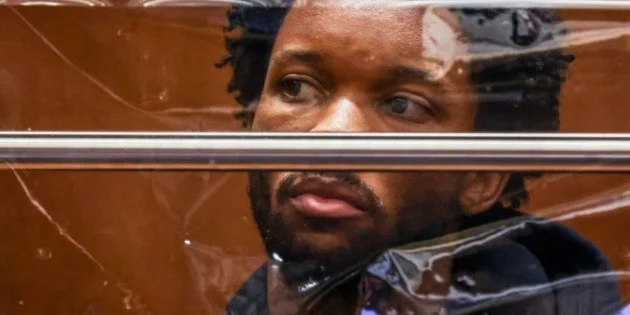
A Los Angeles judge ruled on Monday that there is sufficient evidence to proceed to trial against recording artist D4vd, whose real name is David Burke, for the alleged murder and dismemberment of 14-year-old Celeste Rivas Hernandez. Authorities assert that the tragic events unfolded after Rivas Hernandez reportedly threatened to expose her relationship with Burke and potentially derail his burgeoning career. This decision marks a critical turning point in a high-profile case that has sent shockwaves through the music industry and garnered significant public attention.
Los Angeles Superior Court Judge Charlaine Olmedo, following a rigorous five-day preliminary hearing, concluded that the prosecution had presented ample probable cause to support charges of murder, continuous sexual abuse of a minor under 14 years of age, and unlawful mutilation of human remains. The gravity of these charges underscores the severe allegations faced by the 21-year-old artist, who had been on a steep ascent in the music world prior to his arrest. Despite the judge’s ruling, Burke has maintained his plea of not guilty to all accusations.
"The prosecuting parties have met their burden," Judge Olmedo stated, emphasizing the lower legal standard of probable cause required for a preliminary hearing compared to the "beyond a reasonable doubt" threshold necessary for a conviction at trial. Consequently, the judge ordered Burke to remain detained without bail, signaling the court’s assessment of the seriousness of the charges and the potential flight risk. The defense team declined to offer comments outside the courtroom following the decision, preserving their strategy for the upcoming trial.
Deputy District Attorney Beth Silverman articulated the prosecution’s confidence in their case, asserting, "Based on the mountains of evidence presented, all allegations have been demonstrated well above the required standard." This statement reflects the thoroughness of the investigation and the perceived strength of the evidence gathered against Burke. The artist, present in court, exhibited no visible reaction as the judge delivered her decision, maintaining a stoic demeanor throughout the proceedings.
The Accused: David Burke, a Rising Star
David Burke, professionally known as D4vd, had rapidly established himself as a compelling new voice in the music scene. His distinctive style and growing fanbase positioned him as an artist on the verge of mainstream breakthrough. The sudden and severe nature of the charges against him has abruptly halted his career trajectory, transforming his public image from a rising talent to a defendant in a harrowing criminal trial. The potential implications for his future, regardless of the trial’s outcome, are profound, raising questions about accountability in the entertainment industry and the swift downfall that can accompany grave accusations. His plea of not guilty sets the stage for a protracted legal battle where both sides will present their arguments and evidence rigorously.
Chronology of a Tragic Night: April 23, 2025
The preliminary hearing delved into a meticulous, minute-by-minute account of Celeste Rivas Hernandez’s final hours, presented by the prosecution to establish a timeline leading to her alleged murder. The narrative painted a chilling picture, beginning with a chain of text messages exchanged between Rivas Hernandez and Burke, culminating in the abrupt cessation of her phone activity upon her arrival at his Hollywood residence.
According to police and prosecution testimony, on the morning of April 23, 2025, Rivas Hernandez was en route to Burke’s home in an Uber that he had reportedly dispatched for her. Shortly before 10:00 AM, as she neared the destination, she sent her last recorded message: "girly pop i’m almost there open ur door if ur home." Prosecutors allege that immediately after she crossed the threshold into Burke’s home, she was fatally stabbed. This precise timeline, built upon digital forensics and communication records, forms a cornerstone of the prosecution’s case, aiming to demonstrate the sequence of events and Burke’s alleged involvement.
The Alleged Motive: Threats and Exposure
Central to the prosecution’s theory of motive are a series of heated text message exchanges between Burke and Rivas Hernandez the night before her death. The dispute reportedly centered on Burke’s relationship with another woman, a detail that allegedly ignited Rivas Hernandez’s fury. In a barrage of expletive-laden messages, she purportedly threatened to fabricate damaging lies about Burke to her father and vowed to "end your career and your life."
Detective Corey Farrell of the Los Angeles Police Department, testifying under direct examination by the prosecution, read aloud these incriminating messages. These communications were obtained through court orders targeting Burke’s iPhone and iCloud accounts, providing what prosecutors believe is clear evidence of a significant conflict and a potential motive for murder. The content of these messages suggests a volatile dynamic between the two, with Rivas Hernandez allegedly possessing information or intending to act in a way that Burke perceived as a severe threat to his burgeoning public image and personal life.
The Defense’s Stance: Insufficient Evidence of Intent
Following the conclusion of the prosecution’s presentation, Burke’s defense attorney, Marilyn Bednarski, argued forcefully that the evidence presented was insufficient to sustain the murder charge and that it should be dismissed. Bednarski contended that the prosecution had failed to establish a deliberate intent to kill on the part of her client.
"There is no evidence that Mr. Burke harbored a deliberate intent to kill Ms. Hernandez," Bednarski asserted, directly challenging the element of malice aforethought required for a murder conviction. She further emphasized that the communications between Burke and Rivas Hernandez, despite their contentious nature, showed "no threat, no evidence of a history of violence," and that Burke harbored "the opposite of homicidal malice" towards her. The defense’s strategy appears to focus on discrediting the notion of premeditation or intent, potentially suggesting an alternative narrative such as an act of self-defense, an accidental death, or a lack of direct involvement in the killing, although specific alternative theories were not detailed in the preliminary hearing report. The legal battle ahead will largely hinge on whether the prosecution can definitively prove Burke’s intent and direct responsibility for the victim’s death.
Unlawful Mutilation and Discovery
While the original article focuses heavily on the murder charge, the inclusion of "unlawful mutilation of human remains" among the charges, alongside public information from associated news reports (such as the linked YouTube video titled "Identifican el cuerpo de Celeste Rivas en un Tesla, propiedad del rapero D4vd"), points to a particularly gruesome aspect of the case. Although specific details regarding the dismemberment were not fully elaborated in the provided text, the charge itself suggests that after Rivas Hernandez’s death, her body was allegedly subjected to mutilation. Furthermore, the reported discovery of her body in Burke’s Tesla vehicle, as implied by news reports, adds another layer of disturbing detail to the allegations, indicating an attempt to conceal the crime. This element significantly elevates the severity of the charges and the potential penalties, as it speaks to a conscious effort to obscure the evidence and disrespect the deceased. The prosecution will likely present forensic evidence related to the dismemberment and the location of the body as part of its case to establish the full extent of the alleged crimes.
The Road Ahead: Legal Proceedings and Implications
With Judge Olmedo’s decision, the case against David Burke now moves from the preliminary hearing phase to a full criminal trial. This transition signifies that the court believes there is enough evidence to warrant a jury’s consideration of Burke’s guilt or innocence. The trial process will be extensive, involving jury selection, opening statements, the presentation of evidence by both the prosecution and the defense, cross-examinations, closing arguments, and ultimately, jury deliberation.
Given the charges, particularly murder with special circumstances (if any are applied, such as involving a minor or sexual assault), Burke faces the possibility of a life sentence without parole, or even the death penalty, as indicated by earlier reports of the District Attorney’s office evaluating such a request. The legal implications are immense, not only for Burke but also for the victim’s family, who seek justice for Celeste Rivas Hernandez.
The case has drawn considerable media attention, highlighting broader societal concerns regarding violence against minors, the alleged exploitation of young individuals by those in positions of power or influence, and the accountability of public figures. The music industry, often under scrutiny for the conduct of its artists, will undoubtedly watch the proceedings closely, as the outcome could have lasting repercussions on D4vd’s legacy and the industry’s approach to allegations of serious criminal behavior. The trial will be a test of the justice system, with both sides preparing for what is expected to be a contentious and emotionally charged legal battle.

0 Comments