
The international perfumery landscape converged in Florence in September 2025 for Pitti Fragranze, one of the most prestigious global trade fairs dedicated to artistic and niche scents. Amidst the technological innovations and avant-garde olfactory compositions showcased at the Stazione Leopolda, the historical weight of Florence’s perfume heritage remained a central draw for industry professionals and enthusiasts alike. Central to this heritage is the Officina Profumo-Farmaceutica di Santa Maria Novella, a brand that represents over eight centuries of continuous production. For visitors attending the 2025 summit, the pilgrimage to the pharmacy’s flagship location at Via della Scala 16 has become an essential component of the Florentine experience, offering a tangible connection between contemporary luxury and medieval apothecary traditions.
The enduring popularity of the institution is evidenced by the consistent queues forming outside its historic doors, where staff members frequently offer lemon sorbets to patrons—a gesture that mirrors the hospitality and sensory focus of the brand. Inside, the space functions as a hybrid between a museum, a historical pharmacy, and a ducal palace, with frescoed ceilings and aromatic displays that justify its reputation as a global landmark of olfactory culture. While the brand has expanded its global footprint, its identity remains inextricably linked to the specific geography and history of Florence, particularly through its "Firenze 1221" collection, which commemorates various milestones in the city’s and the pharmacy’s shared timeline.
Eight Centuries of Apothecary Excellence: A Historical Chronology
The history of Santa Maria Novella is a testament to the longevity of monastic science and the evolution of European cosmetics. The institution’s origins date back to 1221, when twelve Dominican friars arrived in Florence and established a monastery outside the city walls. These friars began cultivating a "Garden of Simples" (hortus conclusus), growing medicinal herbs and plants to prepare medications, balms, and ointments for the convent’s infirmary.

By 1334, the reputation of the Dominican friars’ remedies had reached the Florentine elite, following the documented healing of a prominent merchant, Dardano Acciaioli. In gratitude, Acciaioli funded the construction of the Chapel of San Niccolò, which today serves as the pharmacy’s main sales hall, the Sala dei Principi. The first documented instance of the friars selling aromatic waters dates to 1381, a period when rose water was utilized both as a perfume and a disinfectant during the bubonic plague.
The pharmacy’s transition into a globally recognized perfume house was accelerated in 1533, when a young Catherine de’ Medici commissioned a special fragrance for her wedding to Henry II of France. This citrus-based scent, known as Acqua della Regina (Water of the Queen), is still produced today and is credited with introducing the Italian style of perfumery to the French court. The pharmacy officially opened its doors to the public in 1612 under the direction of Fra Angiolo Marchissi, and in 1866, following the suppression of religious orders in Italy, the management passed to the Stefani family, who have preserved the brand’s artisanal ethos into the 21st century.
The 1966 Flood and the "Mud Angels" Legacy
The creation of the fragrance Angeli di Firenze (Angels of Florence) is rooted in one of the most devastating chapters of modern Florentine history. On November 4, 1966, following a period of intense rainfall, the Arno River breached its embankments, submerging the city in mud and water. The flood reached depths of over six meters in some areas, causing catastrophic damage to Florence’s incomparable artistic and literary heritage. Thousands of Renaissance paintings, rare manuscripts in the National Library, and historical structures were threatened with permanent destruction.
In the immediate aftermath, an unprecedented international movement saw thousands of young volunteers from across Italy and the world travel to Florence at their own expense. These volunteers, who spent weeks working in freezing conditions to salvage mud-soaked books and artworks, were affectionately dubbed the Angeli del Fango (Mud Angels). Their efforts were instrumental in saving the Cimabue Crucifix and millions of volumes in the Biblioteca Nazionale Centrale.

In 2006, marking the 40th anniversary of the flood and the heroic efforts of these volunteers, Santa Maria Novella launched Angeli di Firenze. The fragrance was designed not as a somber memorial, but as a vibrant tribute to the spirit of solidarity and the youthful energy that helped restore the city. It serves as a symbolic bridge between the city’s past trauma and its enduring beauty.
Olfactory Profile and Technical Analysis of Angeli di Firenze
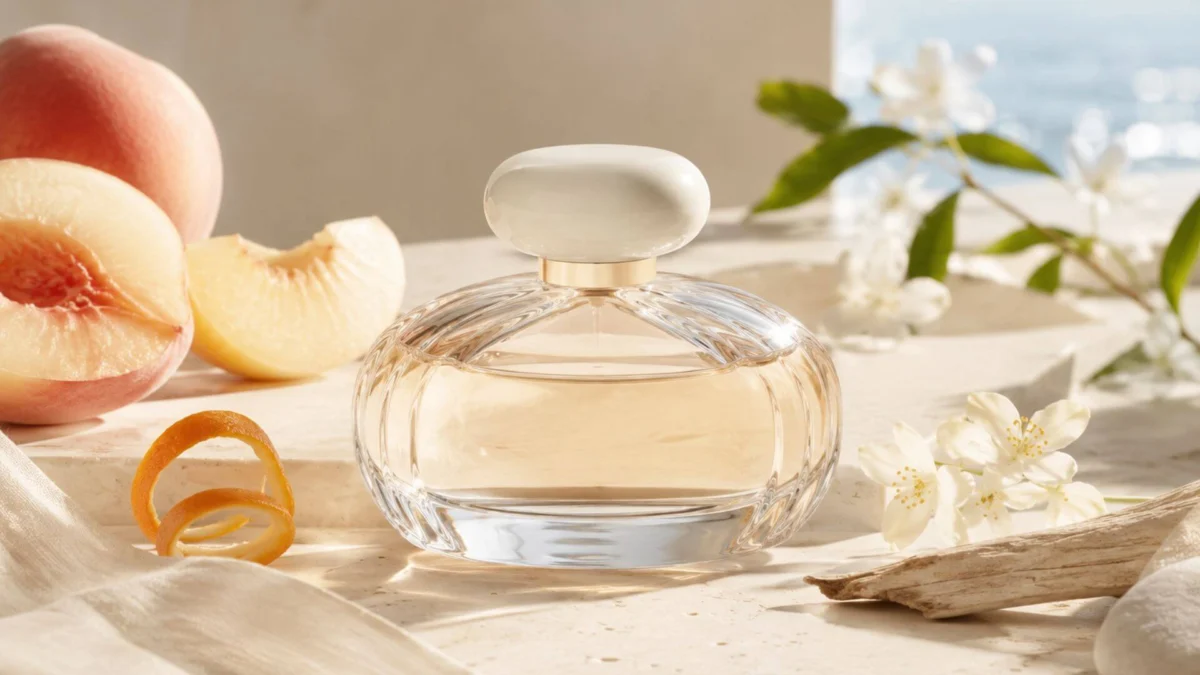
Angeli di Firenze is categorized as a fruity-marine fragrance, though it diverges from the heavy, ozone-heavy compositions typical of the 1990s. Industry experts describe the scent as a "clean skin" fragrance, characterized by its transparency and soft texture. On the skin, the opening is dominated by a piquant blend of peach and orange. Unlike the sugary, synthetic fruit notes found in mass-market perfumery, the peach note in Angeli di Firenze mimics the velvet-like skin of a white peach, providing a subtle, natural sweetness.
The heart of the fragrance introduces aquatic notes that provide a sense of lightness and fluidity, likely a nod to the water-based history of the "Mud Angels" narrative. These are complemented by jasmine, which remains diffused rather than indolic, adding a floral creaminess without overpowering the composition. The base notes consist of sandalwood and musk, which anchor the lighter top notes and provide a slightly powdery finish. This "talcum" effect is a signature of many historical Italian colognes, evoking a sense of traditional grooming and cleanliness.
Retailing at approximately 95 euros for a 50 ml Eau de Cologne, the fragrance occupies a premium niche segment. Its popularity in the summer months is attributed to its low sillage and high evaporation rate, making it suitable for high-temperature environments where heavier, resinous perfumes might become cloying.

The Rise of Discovery Kits and Sampling Culture
The modern perfume consumer, as observed during the 2025 Pitti Fragranze, increasingly favors "discovery sets" over immediate full-bottle purchases. Santa Maria Novella’s Firenze 1221 Discovery Kit, priced at 25 euros, includes 2 ml vials of eight flagship scents: Acqua della Regina, Angeli di Firenze, Fresia, Melograno, Pot Pourri, Rosa Gardenia, Rosa Novella, and Tabacco Toscano.
Market analysts suggest that this trend is driven by a desire for "olfactory wardrobes"—where consumers rotate scents based on season, mood, or occasion. For instance, while Tabacco Toscano or Melograno are often preferred during the autumn and winter months for their warm, spicy, and resinous qualities, Angeli di Firenze and Fresia see a surge in demand during the spring and summer. This shift in consumer behavior reflects a more educated and cautious buyer who seeks to test a fragrance’s longevity and dry-down on their specific skin chemistry before committing to a luxury investment.
Comparative Traditions: Acqua di Genova and the Italian Style
The tradition of the "Colonia Classica" is a cornerstone of the Italian fragrance industry, and Santa Maria Novella is part of a broader lineage of historic houses. A notable contemporary to the Florentine tradition is Acqua di Genova, founded in 1853 by the famous perfumer Stefano Frecceri. Created originally for the Royal House of Savoy, Acqua di Genova Colonia Classica remains a benchmark for the genre.
While Angeli di Firenze leans toward a fruity-aquatic profile, Acqua di Genova adheres to the citrus-aromatic structure typical of the 19th century, featuring bergamota, neroli, lavender, and rosemary. The comparison highlights the diversity within Italian heritage perfumery: one side representing the citrus-heavy apothecary roots (Genova), and the other exploring more emotive, narrative-driven compositions (Santa Maria Novella). Both brands, however, share a commitment to using high-quality natural essences and maintaining historical bottle designs, which appeal to a demographic looking for authenticity in an increasingly digitized world.

Broader Implications for the Global Niche Fragrance Market
The continued success of heritage brands like Santa Maria Novella indicates a broader shift in the global fragrance market, which is valued at over $50 billion. Niche perfumery, once a small fraction of the industry, is now the fastest-growing sector. Consumers are increasingly rejecting "celebrity" scents and mass-marketed "designer" fragrances in favor of brands with genuine historical narratives and artisanal production methods.
The case of Angeli di Firenze demonstrates how a fragrance can transcend its olfactory function to become a piece of cultural storytelling. By linking a product to a significant historical event like the 1966 flood, Santa Maria Novella creates an emotional resonance that purely commercial brands struggle to replicate. Furthermore, the integration of physical locations—such as the Via della Scala pharmacy—into the brand experience provides a level of "experiential retail" that is highly resilient to the rise of e-commerce.
As the industry looks toward the late 2020s, the intersection of history, craftsmanship, and regional identity remains the most potent formula for luxury brands. Santa Maria Novella’s ability to maintain its 13th-century roots while remaining relevant in the 2025 market serves as a blueprint for the preservation of cultural heritage through commercial excellence. The "Mud Angels" may have saved the art of Florence decades ago, but today, it is the olfactory tributes to their spirit that continue to carry the essence of the city to a global audience.

0 Comments