
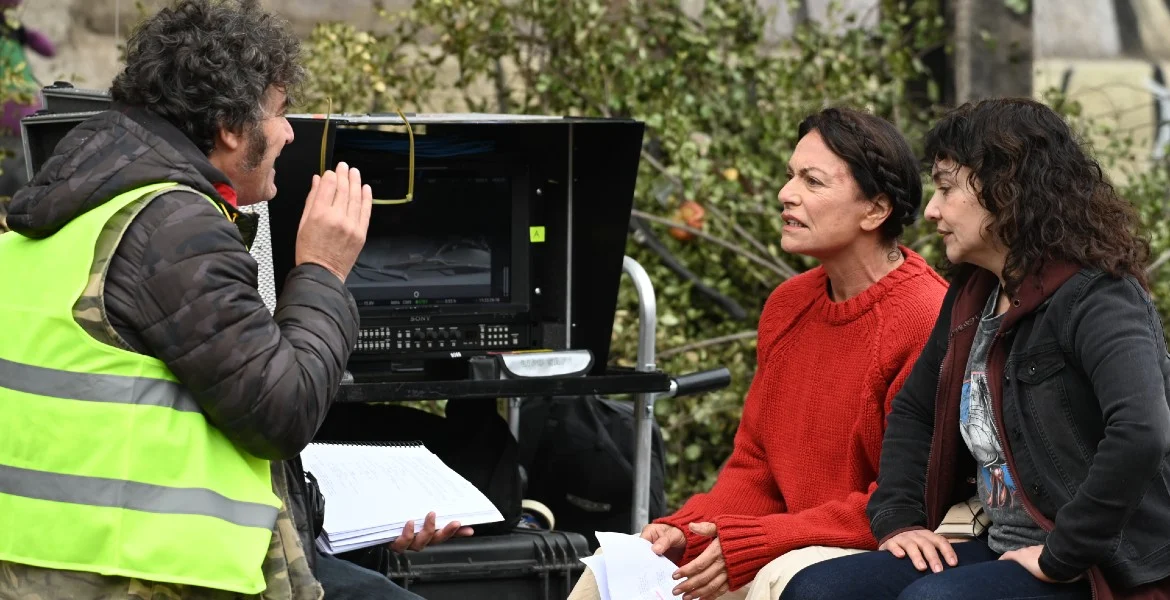
The Chilean film industry has reached a new milestone with the commencement of principal photography for "La puta vida," the latest feature film from acclaimed director Sebastián Araya Serrano. Filming officially began on July 13, marking the start of an ambitious production schedule that will span several weeks across the diverse landscapes of Chile. The project, which is a co-production involving entities from Chile, Colombia, Germany, and Spain, represents a significant international effort to bring a uniquely South American narrative to a global audience.
The production is currently divided between the urban environment of Santiago and the rugged, evocative terrains of the Antofagasta Region. Specific filming locations include Chiu Chiu, Baquedano, Pedro de Valdivia, and Mejillones—areas known for their stark beauty and industrial heritage. According to the production team at AFRO Films, these locations are not merely backdrops but are central to the film’s narrative arc. The Atacama Desert, with its vast horizons and isolated towns, serves as a visual metaphor for the internal transformation of the protagonists. The filming phase is scheduled to conclude on August 20, followed by a lengthy post-production period that will take place across two continents.
Narrative Core and Historical Context
"La puta vida" follows the journey of Emma, a woman who discovers the harrowing truth about her past: she was stolen from her biological parents and raised within the confines of Colonia Dignidad. This historical backdrop adds a layer of profound gravity to the film. Colonia Dignidad, founded in 1961 by German fugitive Paul Schäfer, was a notorious cult-like settlement in southern Chile that became a site of systematic human rights abuses, including child exploitation and the torture of political prisoners during the dictatorship of Augusto Pinochet.
By rooting Emma’s identity in this dark chapter of Chilean history, Araya Serrano explores the lasting trauma of the "disappeared" and the stolen children of the era. Emma’s quest for her origins leads her to the Atacama Desert, where she crosses paths with Olga, a charismatic con artist on the run from a ruthless hitman named Jairo. The interaction between these two women—one seeking a past she never knew, the other fleeing a present she cannot escape—forms the emotional backbone of the story.
A Subversion of the Road Movie Genre
While the film utilizes the structural beats of a traditional road movie, director Sebastián Araya Serrano is quick to distinguish his vision from the genre’s classic tropes. In traditional American cinema, the road movie often symbolizes freedom, rebellion, and the pursuit of the "American Dream." However, in "La puta vida," the road represents something far more precarious.
"The highway does not represent the freedom associated with the classic genre, but rather an uncertain, vulnerable, and precarious space," Araya Serrano explained in a statement regarding the film’s narrative proposal. "The protagonists move forward because they have no other choice. The journey does not symbolize adventure, but survival."
This thematic shift is reflected in the director’s notes, which describe the desert as a "monumental blank canvas" where characters transition from aridity to a form of emotional flowering. The extreme conditions of the Atacama—its heat, its silence, and its unforgiving scale—force the characters to strip away their facades. For Emma, Olga, and even the pursuer Jairo, the journey offers a rare, albeit dangerous, second chance: the possibility of finding a family, stopping the cycle of flight, or ceasing the violence that has defined their lives.
International Cast and Creative Leadership
The film features a high-profile international cast, led by Chilean actress Tamara Acosta. Acosta is a titan of Chilean cinema and television, perhaps best known for her role in the long-running series "Los 80," which chronicled the lives of a Chilean family during the military dictatorship. Her involvement brings a level of gravitas and local authenticity to the role of Emma.
Joining her is German actress Christine Neubauer, a household name in her home country with a career spanning several decades. Neubauer’s filmography includes notable titles such as "Löwengrube," "Im Tal des Schweigens," and "Hannas Entscheidung." Her presence in the film underscores the project’s international ambitions and its connection to the German-Chilean history inherent in the Colonia Dignidad subplot. The trio is rounded out by Colombian actor Claudio Cataño, who brings a menacing presence to the role of Jairo, the hitman.
The technical team is equally distinguished. Jorge González serves as the Director of Photography, tasked with capturing the immense scale of the northern Chilean desert. The production design is led by Bernardita Baeza, whose work is essential in recreating the distinct atmospheres of the various towns and industrial spaces the characters traverse.
Production Timeline and Global Strategy
The production of "La puta vida" is a complex logistical undertaking. Following the completion of the five-week shoot in August, the film will move into a multi-stage post-production phase. While the initial editing and montage will take place in Chile, the entirety of the technical post-production—including sound design, color grading, and visual effects—will be handled in Colombia by Red Collision Studios.
This collaborative model is a strategic choice by AFRO Films, the production house founded by Araya Serrano. By partnering with Red Collision Studios (Colombia), Santiago Film (Germany), Viringo Media (Spain), and the international holding Faro Hub, the project secures both financial stability and a clear pathway to European and Latin American markets.
Producer Alejandro Ugarte emphasized the importance of this international structure. "We are currently working on the incorporation of an international sales agent to accompany the film’s journey and enhance the possibilities offered by its co-production structure, its cast, and the universal nature of the story," Ugarte stated. The production team aims for a high-profile festival run before a wide theatrical release, which is currently projected for the first semester of 2027.
The Significance of the Atacama Desert in Cinema
The choice of the Antofagasta Region as a primary filming location highlights the growing importance of northern Chile as a global filming hub. The Atacama Desert is the driest non-polar place on Earth, offering a unique geological aesthetic that has attracted major Hollywood productions in the past, including the James Bond film "Quantum of Solace."
However, for "La puta vida," the desert is not just a visual spectacle. The towns of Chiu Chiu and Baquedano provide a sense of "suspended time," reflecting the characters’ state of being between their past lives and an uncertain future. The industrial sites in Pedro de Valdivia and the coastal atmosphere of Mejillones add layers of texture that ground the film in the specific socio-economic reality of northern Chile, where the mining industry and maritime trade intersect with ancestral traditions.
Background on Director Sebastián Araya Serrano
Sebastián Araya Serrano brings over twenty years of experience to this project. His career began in Spain, where he initially worked as an actor before relocating to Chile to pursue directing, screenwriting, and producing. His previous feature films, including "Azul y Blanco" (2004), "El lenguaje del tiempo" (2011), and "La salamandra" (2018), have established him as a filmmaker interested in the intersections of personal identity and social forces.
With "La puta vida," Araya Serrano appears to be synthesizing his previous interests—the gritty realism of his early work and the more contemplative, philosophical nature of his later films—into a narrative that is both a high-stakes thriller and a deep psychological study.
Implications for the Chilean Film Industry
The production of "La puta vida" arrives at a time when Chilean cinema is enjoying unprecedented international success. Following the Academy Award wins for "A Fantastic Woman" and "The Bear Story," as well as the critical acclaim of directors like Pablo Larraín and Maite Alberdi, the Chilean industry has shifted its focus toward sustainable international co-productions.
"La puta vida" exemplifies this trend. By blending local historical trauma with a genre-bending narrative and a multinational cast, the film seeks to transcend borders. The inclusion of German and Spanish partners suggests a move to secure "Eurimages" style support and European distribution early in the process.
Furthermore, the decision to schedule the release for 2027 indicates a commitment to a high-quality post-production phase. In an era of rapid content turnover, the three-year window from production to release suggests that the filmmakers are prioritizing the "festival circuit" model, aiming for A-list festivals such as Berlinale, Cannes, or San Sebastián to build the necessary prestige for global sales.
Analysis of Broader Impacts
The film’s exploration of the Colonia Dignidad legacy is particularly timely. As Chile continues to grapple with the reconciliation of its past, cinema remains a vital tool for public memory. By placing a fictional narrative within this factual context, "La puta vida" contributes to a broader cultural dialogue about justice, identity, and the rights of those whose lives were altered by the sect.
The professionalization of the Antofagasta region as a filming location also has economic implications. The local government and organizations like the Antofagasta Film Commission have been working to provide incentives for filmmakers, recognizing that high-profile productions bring jobs, tourism, and infrastructure development to the region.
As filming continues through the winter months of the Southern Hemisphere, the industry will be watching closely. "La puta vida" is more than just a road movie; it is a testament to the evolving sophistication of South American cinema and its ability to turn the "precariousness" of the road into a powerful statement on human resilience.

0 Comments