
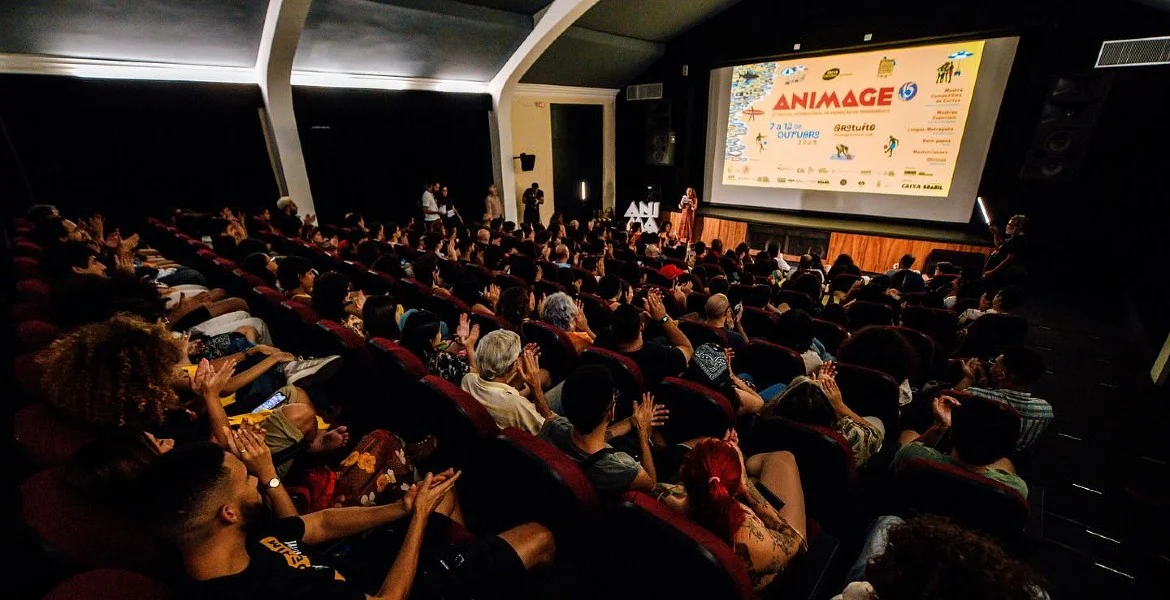
The international animation landscape is currently witnessing a significant structural evolution as major festivals in Latin America and Europe pivot toward more robust industry-centric models. This shift is exemplified by the recent announcement from the Pernambuco International Animation Festival (ANIMAGE) in Brazil, which is set to launch its inaugural industry wing, ANIMAGE Conecta. This development coincides with a broader regional push for professionalization, mirrored by the upcoming seventh edition of APA LAB in Argentina and a high-profile strategic alliance between the Sitges International Fantastic Film Festival and Weird Market in Spain. These initiatives collectively signal a maturing sector that seeks to bridge the gap between creative talent and global capital, fostering an environment where independent projects can find the necessary pathways to international distribution and co-production.
The Evolution of ANIMAGE: From Exhibition to Market Engine
For over fifteen years, the Pernambuco International Animation Festival, commonly known as ANIMAGE, has served as a vital cultural beacon for the Brazilian animation community. Based in Recife, a city renowned for its vibrant creative economy and technological hubs, the festival has built a reputation for showcasing cutting-edge techniques and diverse narratives. However, the introduction of ANIMAGE Conecta marks a historic turning point for the event. Scheduled to take place from November 20 to 23, 2024, during the 16th edition of the festival, Conecta is designed specifically to address the professional needs of the sector, focusing on training, professional exchange, and tangible business opportunities.
Antonio Gutiérrez, widely known as Gutie and the co-director of the festival, emphasizes that this move is a natural progression of the event’s mission. After a decade and a half of consolidating its status as a premier reference for animation in Brazil, the festival is now leaning into the "market" aspect of the industry. According to Gutiérrez, ANIMAGE Conecta will serve as a multifaceted platform featuring project presentations, professional encounters, business rounds, and panels. The primary objective is to facilitate a high-level exchange between Brazilian professionals and their international counterparts. The festival organizers anticipate that this initiative will catalyze new alliances, facilitate co-productions, and open doors for distribution and financing that were previously difficult to access for independent regional creators.
The cornerstone of this new industry space will be the Pitching Sessions. The call for entries is currently open to animation projects in various stages of development or pre-production. Unlike more restrictive markets, ANIMAGE Conecta is inviting a broad spectrum of formats, including short films, feature-length movies, and series destined for television or digital platforms. This inclusivity extends to animation techniques, welcoming everything from traditional 2D and 3D CGI to stop-motion and experimental hybrid forms. Selected participants will gain direct access to a curated pool of producers, distributors, representatives from streaming platforms, television channels, and investment funds. This direct line to decision-makers is intended to propel projects from the conceptual phase into active production and global circulation.
Strengthening the Argentine Creative Corridor: APA LAB and Professional Linkage
While Brazil expands its industry footprint in the Northeast, Argentina continues to solidify its position as an animation powerhouse through the Association of Animation Producers of Córdoba (APA). The upcoming seventh edition of APA LAB, an animation development laboratory, has officially opened its call for "Speed Dates"—a professional networking format designed to maximize efficiency in project pitching and service offering. These sessions are scheduled to occur on August 4 and 5 in the city of Córdoba, which has emerged as a critical secondary hub for Argentine animation, often challenging the traditional dominance of Buenos Aires.
The Speed Dates initiative targets a wide array of industry stakeholders, including directors, producers, visual artists, and animation studios. Participants are encouraged to present not only projects in development but also "reels" and service portfolios to a panel of representatives from television networks, established production houses, and distribution firms. By offering free registration, APA LAB lowers the barrier to entry for emerging talents, ensuring that the next generation of Argentine animators can interface with institutional actors and potential international partners.
This focus on professional linkage is crucial for the Argentine sector, which has historically faced economic volatility. By fostering "Speed Dates," APA LAB provides a structured environment for "reels" to be vetted by experts, allowing studios to secure service contracts that provide the financial stability needed to develop original intellectual property. The integration of institutions and distributors into these rounds suggests a holistic approach to the industry, where the entire lifecycle of an animated work—from its initial sketch to its eventual broadcast—is considered within a single professional framework.
Trans-Atlantic Synergies: The Sitges and Weird Market Alliance
The trend of industry integration extends across the Atlantic to Spain, where two of the most influential entities in the Spanish-speaking creative world have announced a strategic partnership. The Sitges International Fantastic Film Festival of Catalonia, a world leader in genre cinema, has joined forces with Weird Market, the preeminent Spanish market for animation, video games, and new media. This collaboration will see the integration of Weird Market into the "Sitges Industry" section, creating a powerhouse of professional activity that blurs the lines between fantastic cinema and digital animation.
On October 16, a special edition of Weird Market will be held within the framework of the Sitges Festival. This event will feature a curated program of conferences and networking activities designed to bring together the animation and gaming sectors with the broader film industry. This alliance is particularly significant as it recognizes the growing convergence of technologies—such as real-time rendering and virtual production—that are common to both high-end animation and modern fantastic cinema.
The full programming for this special edition is expected to be unveiled in the coming weeks, but the implications are already clear: Spain is positioning itself as a central node for the "new media" economy. By embedding a specialized animation market into a world-class film festival like Sitges, the organizers are creating a unique ecosystem where "genre" creators can find the technical and industrial support of the animation world, and vice versa.
Data and Economic Context: The Growth of Global Animation
The expansion of these industry spaces is supported by compelling economic data. According to various market research reports, the global animation market size was valued at approximately USD 391 billion in 2022 and is projected to reach over USD 580 billion by 2030. This growth is driven by the insatiable demand for content from streaming giants like Netflix, Disney+, and Amazon Prime, as well as the increasing integration of animation in the gaming and advertising sectors.
In Latin America, the animation sector has become a vital part of the "Orange Economy" (creative economy). In Brazil, the animation industry has benefited from public policies and quotas for local content on cable television, which helped build the foundation for the current boom. However, as the industry moves toward a post-quota reality, the focus has shifted toward international co-production. This is where markets like ANIMAGE Conecta become essential. By aligning Brazilian talent with international financing, the sector can maintain its growth trajectory even in a shifting domestic regulatory environment.
Similarly, in Spain, the animation sector contributes significantly to the national GDP. The "Libro Blanco de la Animación" (White Paper on Animation) consistently highlights that animation is a high-quality employer, with a large percentage of permanent contracts and a highly skilled workforce. The partnership between Sitges and Weird Market is a strategic move to ensure that Spanish animation remains competitive on a global scale by leveraging the prestige of the Sitges brand.
Broader Implications and Industry Outlook
The synchronization of these events across Brazil, Argentina, and Spain points toward a more interconnected "Ibero-American" animation circuit. For a producer in Recife, the path to success may now lead through a pitch at ANIMAGE Conecta, a follow-up meeting at APA LAB in Córdoba, and a final distribution deal finalized at Weird Market in Spain. This pipeline is essential for the survival of independent studios that lack the massive marketing budgets of major Hollywood conglomerates.
Furthermore, these industry spaces are increasingly focusing on the "transmedia" nature of modern storytelling. The inclusion of video games and new media in the Sitges/Weird Market alliance, and the openness to digital platforms at ANIMAGE, reflects a reality where a single intellectual property must exist across multiple formats to be viable.
The professionalization of these festivals also serves a pedagogical purpose. By providing panels and training sessions, they are upskilling the workforce, teaching creators how to navigate complex legal frameworks, co-production treaties (such as the Ibermedia program), and international tax incentives. This knowledge transfer is what transforms a community of artists into a sustainable industry.
As the 16th edition of ANIMAGE approaches in November, and as the professional rounds in Córdoba and Sitges take shape, the animation world will be watching closely. These platforms are no longer just places to watch films; they are the engine rooms of the creative economy, where the future of global storytelling is being negotiated, financed, and built. The success of ANIMAGE Conecta, APA LAB, and the Sitges-Weird Market alliance will likely serve as a blueprint for other regional festivals seeking to provide value in an increasingly competitive and commercialized global market.

0 Comments