
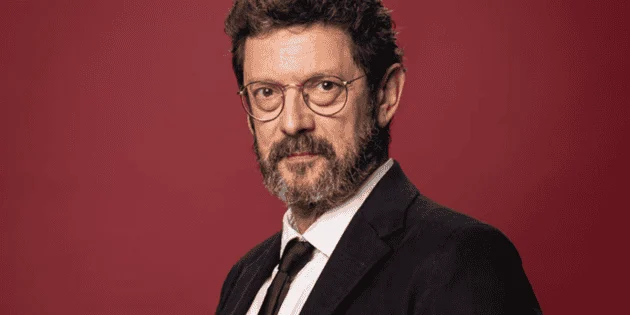
The news of Manolo Solo’s passing at the age of 62 sent a wave of profound sadness across the Spanish cultural landscape and beyond, marking the untimely departure of an actor widely revered for his extraordinary versatility, compelling presence, and unwavering commitment to his art. Born Manuel Fernández Serrano on April 25, 1964, in Algeciras, Cádiz, Solo forged a formidable career spanning over four decades, leaving an indelible mark on Spanish cinema, television, and theatre. His death leaves a significant void, not only for his colleagues and collaborators but also for the countless audiences who admired his capacity to imbue every character with depth, nuance, and unforgettable humanity.
Early Life and Artistic Foundations
Manolo Solo’s journey into the performing arts began in his native Andalusia, a region renowned for its rich cultural heritage and vibrant artistic traditions. While specific details of his early training are not widely publicized, it is understood that Solo honed his craft through rigorous dedication, likely starting in local theatre circuits before transitioning to more formal acting studies. This formative period allowed him to develop the foundational skills that would later define his robust and adaptable acting style. His early experiences instilled in him a profound respect for the text, a deep understanding of character psychology, and an intuitive grasp of stage presence, qualities that would become hallmarks of his illustrious career.
His early career saw him navigating the challenging waters of the performing arts, often taking on diverse roles in independent productions and short films. These initial experiences were crucial in shaping his unique approach to acting, allowing him to experiment with various genres and character types, and to develop the chameleonic ability for which he would later become so celebrated. It was during this period that Solo began to garner attention for his intense dedication and his innate ability to transform himself, effortlessly inhabiting roles that ranged from the subtly menacing to the deeply empathetic.
The Rise of a Character Actor Par Excellence
Manolo Solo truly solidified his reputation as one of the most solid and versatile actors in Spanish cinema in the early 2000s, though his presence had been felt for many years prior. He possessed that rare quality of being able to elevate any scene, regardless of the size of his role. Directors sought him out for his capacity to deliver performances that were both meticulously crafted and viscerally authentic. He became known as an "actor’s actor," someone who understood the intricacies of storytelling and character development, often stealing scenes with a single look, gesture, or perfectly delivered line.
His adaptability to distinct roles was a cornerstone of his career. From the chilling villain to the beleaguered everyman, from the wise mentor to the tormented soul, Solo navigated a vast spectrum of human experience with remarkable ease. This versatility was not merely a stylistic choice but a testament to his profound understanding of human nature and his tireless work ethic in preparing for each part. He meticulously researched his characters, delving into their motivations and inner lives, ensuring that even the most fleeting appearance left a lasting impression. This dedication cemented his status as one of the most respected and sought-after supporting actors in contemporary Spanish cinema.
A Distinguished Filmography: Pillars of a Legacy
Solo’s extensive filmography is a testament to his prolific output and his significant contribution to Spanish cinema. While the original article alluded to "titles of great relevance," a deeper dive into his most iconic works reveals the breadth of his talent and the impact he had on numerous critically acclaimed productions.
One of his most memorable early roles was in "La Isla Mínima" (Marshland) (2014), directed by Alberto Rodríguez. In this atmospheric and intense thriller, Solo played the character of the police chief, a figure whose presence added layers of tension and moral ambiguity to the film’s gritty narrative. His performance contributed significantly to the film’s widespread critical acclaim, which included ten Goya Awards, solidifying his position as an indispensable talent in Spanish thrillers.
His collaboration with director Raúl Arévalo in "Tarde para la ira" (The Fury of a Patient Man) (2016) proved to be a career-defining moment. In this raw and unflinching revenge thriller, Solo delivered a tour-de-force performance as Triana, a man consumed by vengeance. His portrayal was lauded for its intensity, psychological depth, and visceral power, earning him the coveted Goya Award for Best Supporting Actor, arguably the pinnacle of his career achievements. This role showcased his ability to carry complex emotional weight and to command the screen with a potent, understated force. The film itself was a critical darling, winning four Goya Awards, including Best Film.
Solo continued to impress with his role in "B, la película" (B, The Movie) (2015), a dramatic thriller directed by David Ilundain, based on the court testimony of Luis Bárcenas, the former treasurer of the People’s Party, regarding a major corruption scandal. Solo’s portrayal in this politically charged film earned him one of his four Goya nominations, highlighting his capacity to tackle sensitive and contemporary themes with gravitas.
In Oriol Paulo’s acclaimed thriller "Contratiempo" (The Invisible Guest) (2016), Solo played a key supporting role, demonstrating his knack for intricate narratives and suspense. His presence added credibility and tension to the film, which achieved international success and further cemented his reputation in the thriller genre.
He reunited with Alberto Rodríguez for "El hombre de las mil caras" (Smoke & Mirrors) (2016), a spy thriller based on real events, where Solo once again delivered a compelling performance, reinforcing his status as a go-to actor for complex, character-driven narratives.
His collaboration with Javier Bardem in Fernando León de Aranoa’s satirical black comedy "El buen patrón" (The Good Boss) (2021) was another highlight. Solo played Miralles, a disgruntled and increasingly unstable manager whose downward spiral provides both dark humor and poignant commentary on corporate ethics. His nuanced performance earned him another Goya nomination, underscoring his ability to blend comedic timing with dramatic depth. The film was a critical and commercial success, sweeping six Goya Awards, including Best Film.
In Víctor Erice’s long-awaited return to feature filmmaking, "Cerrar los ojos" (Close Your Eyes) (2023), Solo played Miguel Garay, a detective investigating the disappearance of a famous actor. His performance in this contemplative and melancholic drama, which premiered at the Cannes Film Festival, garnered him another Goya nomination, showcasing his enduring appeal and his ability to work with legendary directors on profound, artistic projects.
Another notable mention is "Una quinta portuguesa," for which he also received a Goya nomination, further cementing his consistent recognition by the Spanish Film Academy across diverse projects and directorial visions.
Beyond these acclaimed titles, Solo’s filmography includes numerous other significant contributions, each demonstrating his commitment to his craft and his ability to transform. He often worked with some of Spain’s most celebrated directors, including Pedro Almodóvar in "Dolor y Gloria" (Pain and Glory) (2019), where even a brief appearance left an impression, and in "Sevillanas de Triana" (1992), an early work showcasing his roots and versatility. His roles were never mere background fillers; they were integral components that enriched the narrative and provided invaluable texture to the cinematic tapestry.
Beyond the Big Screen: Television and Theatre Contributions
While celebrated primarily for his film work, Manolo Solo’s artistic footprint extended significantly into television and theatre, areas where he also left an indelible mark. His television appearances were diverse, ranging from historical dramas to contemporary series, showcasing his ability to adapt to different storytelling formats and production demands.
In television, Solo was known for his roles in popular series that captivated Spanish audiences. He often played complex characters in critically acclaimed productions, bringing the same intensity and authenticity he displayed on the big screen. While a comprehensive list is extensive, his presence in series such as "La Peste" (The Plague) (2018-2019), a historical thriller set in 16th-century Seville, allowed him to delve into rich period narratives and explore characters shaped by challenging socio-political landscapes. His work in other prominent Spanish series further demonstrated his range and solidified his status as a beloved figure across all media.
On stage, Solo’s roots in theatre provided the foundation for his formidable acting technique. The immediacy and demands of live performance honed his ability to connect directly with an audience, to sustain complex character arcs over extended periods, and to master the intricacies of vocal and physical expression. Although specific theatre productions he starred in are less frequently highlighted in general news reports compared to his film work, his colleagues often spoke of his profound respect for the stage and his dedication to theatrical craft. This dedication informed his film and television performances, giving them a grounded, almost theatrical gravitas that was uniquely his own. His consistent presence across these three platforms underscores his dedication to the performing arts in their entirety.
Awards and Critical Acclaim: A Testament to Talent
Manolo Solo’s talent was not only recognized by audiences and critics but also by the most prestigious institutions in the Spanish film industry. His most significant achievement was undoubtedly the Premio Goya a Mejor Actor de Reparto (Goya Award for Best Supporting Actor) for his exceptional performance in Raúl Arévalo’s "Tarde para la ira" (The Fury of a Patient Man) in 2017. This award, often considered the equivalent of an Academy Award in Spain, was a resounding affirmation of his profound acting prowess and his ability to inhabit a character with unsettling authenticity and raw emotion.
Beyond this crowning achievement, Solo received an impressive four additional nominations for the Goya Awards, a testament to his consistent excellence and the high regard in which he was held by the Spanish Film Academy. These nominations included:
- "B, la película" (B, The Movie) (2015): For his role in the politically charged drama.
- "El buen patrón" (The Good Boss) (2021): For his nuanced portrayal of the disgruntled manager Miralles.
- "Cerrar los ojos" (Close Your Eyes) (2023): For his work in Víctor Erice’s much-anticipated return to filmmaking.
- "Una quinta portuguesa": Further recognizing his impactful supporting roles.
These multiple nominations across various years and genres underscore his sustained relevance and his capacity to deliver consistently strong performances that resonated with critics and industry peers alike.
His critical acclaim extended beyond the Goya Awards. He also garnered several galardones de la Unión de Actores y Actrices (Awards from the Union of Actors and Actresses), an organization that recognizes excellence in performance across film, television, and theatre, voted upon by his peers. These awards carry particular significance as they represent the appreciation and respect of fellow professionals in the industry. Furthermore, he received a Premio Carmen, an award specific to Andalusian cinema, celebrating his contributions from his home region.
In addition to competitive awards, Solo was honored with various homenajes (tributes) at film festivals and industry events throughout his career. These accolades were not merely for individual performances but for his overall contribution to the audiovisual industry, recognizing his integrity, his mentorship to younger actors, and his enduring legacy as a performer who consistently elevated the quality of Spanish productions. These recognitions collectively paint a picture of an actor deeply admired for his craft, his humility, and his profound impact on the cultural landscape.
A Legacy Enduring: Four Decades of Artistic Brilliance
With more than four decades dedicated to his craft, Manolo Solo left an indelible mark on Spanish cinema, theatre, and television. His passing marks the end of an era for many who watched him evolve from a promising talent into an undisputed master of his art. He became a benchmark for quality in performance, lauded for his ability to excel in both leading and supporting roles. What set him apart was not just his versatility but his unique capacity to make every character, no matter how minor, feel integral and fully realized.
Solo’s influence extended beyond his own performances. He served as an inspiration to younger generations of actors, demonstrating through his work the importance of dedication, continuous learning, and an unwavering commitment to authenticity. His presence in a cast list often signaled a project of quality, a testament to the trust directors and producers placed in his talent to deliver memorable and impactful portrayals.
His legacy is not merely a collection of awards and film titles; it is embedded in the rich tapestry of Spanish storytelling, in the nuanced characters he brought to life, and in the profound emotional connections he forged with audiences. He was an artist who embodied the very essence of acting: the transformative power of embodying another life, revealing truths about the human condition, and enriching the cultural dialogue. Manolo Solo will be remembered not only as a Goya winner but as an actor whose profound artistry and humble dedication illuminated the screen and stage, leaving behind a body of work that will continue to inspire and resonate for generations to come. His profound contribution to Spanish arts and culture ensures that his memory and his work will endure as a testament to a truly exceptional talent.

0 Comments