
The Latin American audiovisual industry is currently undergoing a significant period of transformation, characterized by executive realignments and structural reorganizations among some of the region’s most influential production and service entities. Secuoya Studios, EFD Studios, and Rhayuela have each announced major strategic changes designed to capitalize on the growing global demand for Spanish-language content and to strengthen the bridge between Latin American talent and international markets. These moves reflect a broader trend in the entertainment sector, where regional autonomy, technical excellence, and strategic co-productions have become the primary pillars for sustainable growth in a competitive streaming and theatrical environment.
Secuoya Studios: Decentralization and the Pursuit of Regional Autonomy
Secuoya Studios, a division of the Spanish media giant Secuoya Content Group, has initiated a comprehensive reorganization of its Latin American operations. The primary objective of this restructuring is to grant its regional studio a higher degree of independence, allowing for more agile development and production of original content tailored specifically to local audiences while maintaining a high ceiling for international appeal.
Under the new structure, Daniel Hernández Bocanegra will remain at the helm of the Latin American operation as Managing Director. His continued leadership is seen as a stabilizing force, ensuring continuity in the studio’s ongoing projects across Mexico and Colombia. However, the most notable addition to the leadership team is Pierluigi Gazzolo, the founder of Farniente Media and former high-ranking executive at TelevisaUnivision and ViacomCBS. Gazzolo joins Secuoya Studios as a strategic advisor, a role that will see him leveraging his extensive industry network to identify new talent, foster commercial relationships, and guide the development of high-impact intellectual property.
This shift toward autonomy is a response to the evolving nature of the "US Hispanic" and Latin American markets. Historically, Spanish-language content was often managed through centralized hubs in Europe or through rigid licensing deals. By empowering the Latin American branch, Secuoya is positioning itself to react faster to market trends in Mexico and Colombia—two of the most prolific production hubs in the world—while simultaneously targeting the 63 million Hispanic residents in the United States, whose purchasing power and demand for culturally relevant content continue to rise.
EFD Studios Mexico: Bridging Public Policy and Private Infrastructure
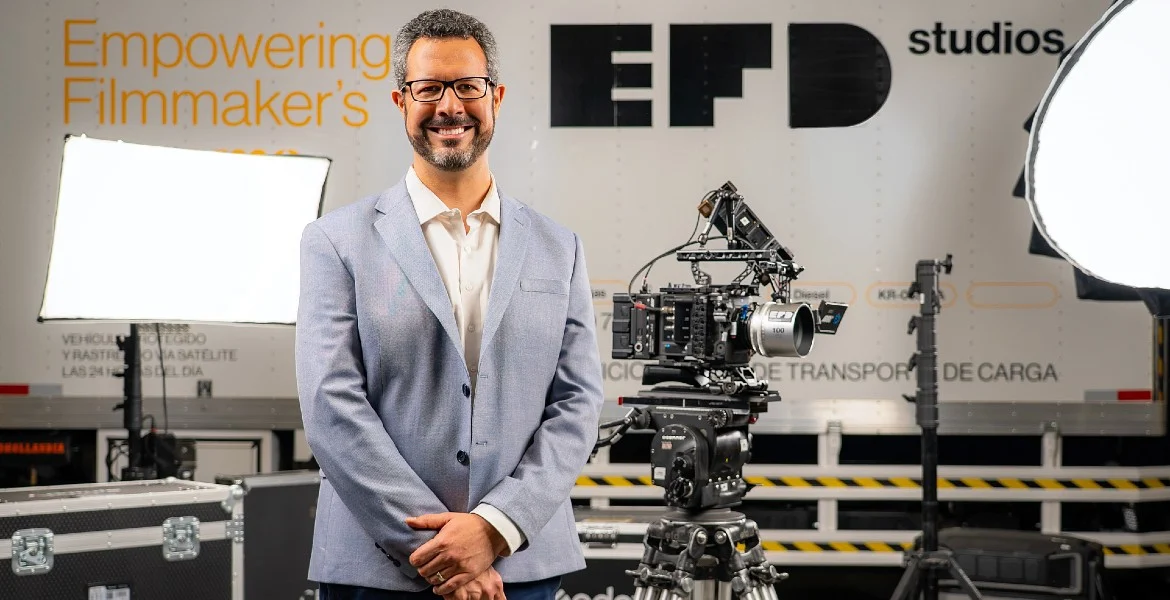
Parallel to the shifts at Secuoya, EFD Studios Mexico—a cornerstone of the region’s technical infrastructure—has announced the appointment of José Miguel Álvarez Ibargüengoitia as its new General Director. This appointment is particularly significant due to Álvarez Ibargüengoitia’s extensive background in the public sector, most notably his recent tenure at the Mexican Institute of Cinematography (IMCINE).
During his time at IMCINE, Álvarez Ibargüengoitia was instrumental in coordinating support programs for film production and promoting Mexican cinema in prestigious international festivals and markets. His transition from a regulatory and promotional role in the government to a leadership position in a private equipment and services firm signals a strategic move by EFD Studios to harmonize technical service delivery with the bureaucratic and financial realities of modern filmmaking.
EFD Studios, which operates in Spain, Colombia, Mexico, and the United States, is the backbone for many high-end productions, providing essential gear, virtual production stages, and logistics. By bringing in an executive with deep roots in UNESCO, TV UNAM, and Radio Educación, EFD is not only strengthening its operational capacity in Mexico but also enhancing its ability to facilitate cross-border collaborations between Latin America and Europe. Industry analysts suggest that this appointment will help EFD navigate the complex landscape of international tax incentives and co-production treaties, which are vital for the financing of large-scale projects.
Rhayuela: A New Strategic Vision for Colombian Storytelling
In Colombia, the independent production powerhouse Rhayuela is also entering a new era of leadership. The company has named Catherine Villareal and Ana María Tarazona to lead its strategic direction. This move is complemented by the addition of director Danniela Castro Valencia, who joins as a content consultant to sharpen the company’s creative and editorial line.
Rhayuela has long been a respected name in the "New Colombian Cinema" movement, known for producing works that balance artistic integrity with commercial viability. The new leadership team is tasked with expanding the company’s international co-production network and ensuring that its editorial output remains globally competitive.
The company’s current portfolio highlights its commitment to diverse storytelling. Projects such as Del otro lado, the fifth feature film by acclaimed director José Luis Rugeles, and the documentary La forma de los árboles, directed by Danniela Castro and supported by the Ford Foundation’s JustFilms program, underscore Rhayuela’s focus on socially relevant and visually compelling narratives. The involvement of the Ford Foundation is particularly noteworthy, as it indicates a trend of independent Latin American producers seeking non-traditional funding sources to tell stories that resonate with global human rights and environmental themes.
The Broader Economic Context: Latin America as a Global Production Hub
The timing of these leadership changes is not coincidental. The Latin American audiovisual sector has seen an unprecedented influx of investment over the last five years. According to recent industry reports, the combined investment from global streaming platforms in Latin American content is estimated to exceed $7 billion annually.
Mexico and Colombia have emerged as the primary beneficiaries of this investment due to several factors:
- Tax Incentives: Colombia’s CINA (Certificates of Investment in Audiovisual Projects) provides a 40% tax credit for foreign productions, while Mexico’s EFICINE remains a vital tool for local filmmakers.
- Infrastructure: The presence of companies like EFD Studios allows for Hollywood-level production quality at a fraction of the cost of filming in Los Angeles or London.
- Talent Pool: The region boasts a deep well of experienced directors, cinematographers, and actors who are increasingly finding success in the "North American" market.
The reorganization at Secuoya Studios and the leadership changes at EFD and Rhayuela are proactive responses to this "Golden Age of Content." These companies are no longer content with being service providers or regional players; they are positioning themselves as global entities that happen to be headquartered or focused on the Spanish-speaking world.
Chronology of Strategic Evolution
The current wave of restructuring follows a clear timeline of regional growth:
- 2021-2022: Post-pandemic production surge leads to a shortage of studio space and equipment in Mexico City and Bogotá. Secuoya and EFD begin aggressive expansion plans.
- Early 2023: Secuoya Studios announces its "Content City" initiatives in Madrid, signaling a desire to replicate the hub model in the Americas.
- Late 2023: Major streamers (Netflix, Amazon, Disney+) pivot toward "quality over quantity," demanding higher production values and more sophisticated scripts from regional partners.
- Present Day: The appointments of Gazzolo (Secuoya), Álvarez Ibargüengoitia (EFD), and the new team at Rhayuela represent the "professionalization" phase, where veteran executives with global experience are brought in to scale operations.
Industry Reactions and Strategic Implications
While official statements from the companies emphasize growth and "strengthening ties," the underlying implication is a move toward vertical integration and creative control. For Secuoya, bringing in Pierluigi Gazzolo is a clear signal to the US market that the studio is ready to compete for the attention of the American viewer.
Industry experts suggest that the integration of public sector expertise into private service firms, as seen with EFD Mexico, will likely result in a more streamlined process for international producers looking to film in Mexico. "Having someone who understands the nuances of IMCINE and international festivals at the head of an equipment house is a game-changer for co-productions," noted one regional analyst.
For Rhayuela, the transition to a female-led strategic team reflects a broader industry shift toward diversity in leadership. By focusing on an "editorial line oriented toward stories with global projection," the company is moving away from purely local "costumbrista" dramas toward universal themes that can travel across borders via platforms like MUBI, Netflix, or HBO.
Conclusion: A Maturing Ecosystem
The reorganization of Secuoya Studios, the leadership transition at EFD Studios Mexico, and the strategic refresh at Rhayuela collectively point to a maturing audiovisual ecosystem in Latin America. The region is moving beyond its traditional role as a source of low-cost labor and locations, evolving instead into a sophisticated hub of intellectual property development and technical innovation.
As these companies implement their new strategies, the focus will remain on the "Spanish-language advantage"—the ability to create content that serves a domestic audience of hundreds of millions while simultaneously capturing the imagination of the global market. With experienced leadership now in place across the production, service, and strategic sectors, the Latin American film and television industry is well-positioned to navigate the challenges of the mid-2020s and beyond.

0 Comments