
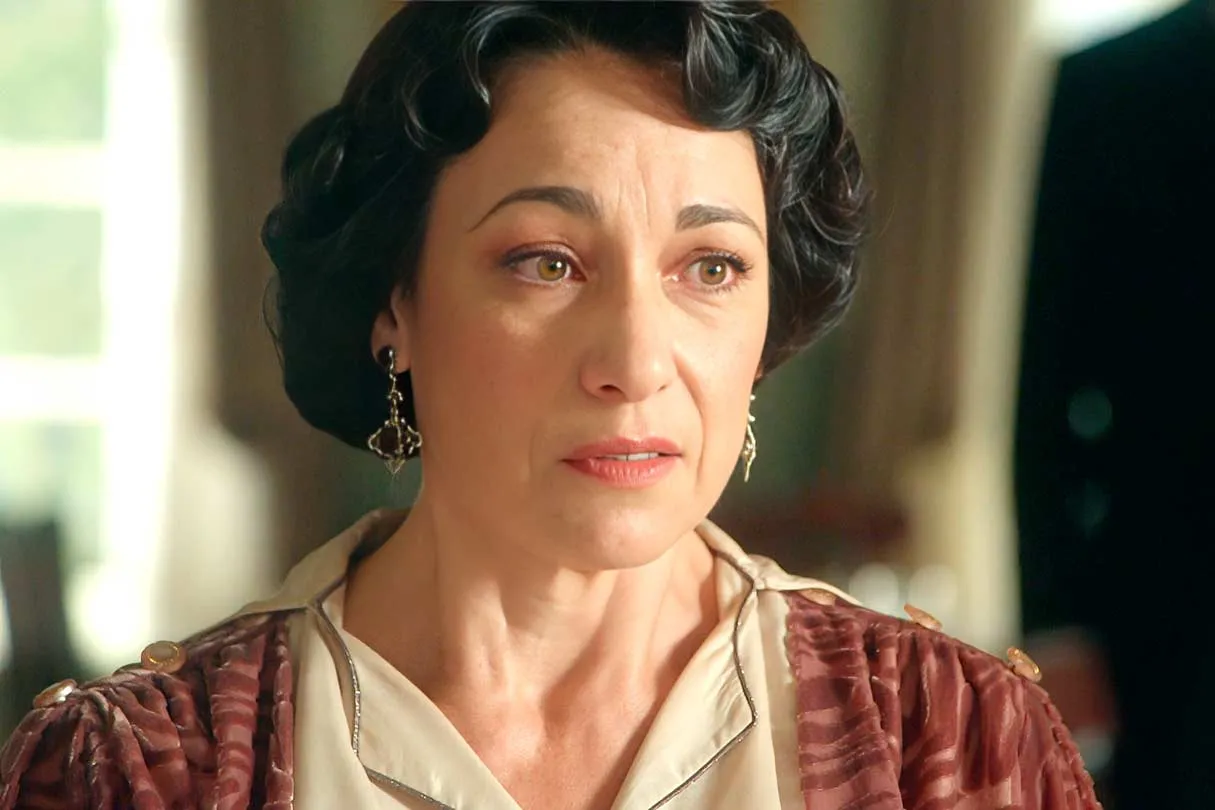
The period between August 3rd and August 7th proved to be a pivotal juncture for the residents and stakeholders of "La Promesa," marked by a series of dramatic revelations and consequential decisions. The return of Ángela, her parentage revealed to be none other than Máximo de Buenaventura, sent shockwaves through the estate. This revelation was closely followed by Leocadia’s deeply personal and historically significant confession regarding her past entanglement with Cruz and Rómulo. Compounding these seismic events, Máximo de Buenaventura made the definitive and deeply controversial decision to publicly disavow his newly discovered daughter, Ángela, setting the stage for a cascade of future conflicts and emotional turmoil within the prestigious Buenaventura household.
Beyond the central drama surrounding Ángela and Máximo, the week was characterized by simmering tensions and escalating power plays. The departure of Ángela, initially a cause for widespread concern and investigation within the palace, ultimately served as a catalyst for renewed internal strife. Power struggles intensified not only within the immediate family but also within the burgeoning aeronautical enterprise of Manuel de Luján. Concurrently, the animosity between Julio and the kitchen staff reached a boiling point, the complicated romantic entanglement between Carlo and María continued to grapple with unresolved future uncertainties, and Ciro, in league with Lorenzo, made significant strides in their clandestine plan to seize control of the company.
Ángela’s Reappearance and Leocadia’s Unveiling of a Hidden Past
The most pressing mystery of the week, the disappearance of young Ángela, was finally resolved with her unexpected reappearance. The palace staff and family members had been in a state of heightened anxiety following her sudden departure. Ángela, after a period of intense deliberation and emotional distress, explained that her flight was precipitated by the shocking discovery that Máximo de Buenaventura, a figure of significant social and economic standing, was, in fact, her biological father. This revelation immediately cast a long shadow over the established narrative of the Buenaventura family’s lineage and reputation.
Faced with the undeniable truth and the imminent confrontation with her daughter, Leocadia found herself compelled to recount the true nature of her past relationship with the Duke. While Leocadia provided her account, Máximo, ever the master manipulator, presented a starkly contrasting version of events to Alonso de Luján, portraying Leocadia as a woman driven by financial motives rather than genuine affection. This conflicting testimony immediately created a rift of distrust and suspicion, setting the stage for further investigations and potential legal ramifications.
However, the true bombshell was yet to detonate. Having endured Máximo’s calculated falsehoods and the subsequent emotional fallout, Leocadia, pushed to her absolute limit, made a confession that would irrevocably alter the perceptions of those present. She revealed that Cruz de Luján, the matriarch of the family, had, under duress and at the explicit behest of Máximo, ordered her assassination. The revelation further detailed that Rómulo, a man of principle and integrity, had defied Cruz’s command, ultimately sparing Leocadia’s life and demonstrating an act of profound moral courage. This confession left Alonso, Curro, and the assembled members of the Buenaventura and Luján families in a state of profound shock and disbelief, forcing them to re-evaluate long-held assumptions and loyalties.
Despite considerable pressure from the Marquis, who advocated for the immediate public acknowledgment of Ángela as his daughter, Máximo de Buenaventura ultimately solidified his position. In a decision that reverberated with disappointment and further fractured familial bonds, he declared his unwavering intention not to recognize Ángela as his legitimate heir. This resolute stance, made in defiance of both familial expectations and moral obligations, is poised to have far-reaching consequences for the succession and inheritance within the Buenaventura estate. The legal implications of such a disavowal, particularly in light of the revealed paternity, are complex and could involve protracted legal battles and the potential disinheritance of other heirs.
Ciro and Lorenzo Advance Their Strategic Coup Against Manuel
While the Buenaventura family grappled with the fallout from the deeply personal revelations concerning Ángela’s parentage, Ciro and Lorenzo continued to meticulously advance their alliance and their shared objective: the acquisition of control over Manuel de Luján’s aeronautical enterprise. Their strategic maneuvers began to yield tangible results as they successfully persuaded Manuel to agree to the sale of the aircraft repair manual, a document of critical importance to the company’s intellectual property and future development.
Julieta, Manuel’s wife and a keen observer of the company’s financial health and strategic direction, viewed this concession as a significant misstep, marking what she perceived as the heir’s initial major business blunder. She attempted to impress upon Manuel the gravity of his decision, warning him that continued concessions to Ciro would inevitably lead to the complete loss of the company. Her foresight, unfortunately, proved to be alarmingly accurate.
Emboldened by Lorenzo’s continued support and strategic guidance, Ciro proceeded to execute the first unauthorized sale of the repair manual. This clandestine transaction served to solidify his growing influence within the aeronautical firm and marked a significant step towards achieving their overarching goal of corporate dominance. The implications of this unauthorized sale are substantial, potentially exposing the company to intellectual property theft and regulatory scrutiny.

The escalating tensions were also palpable within Manuel and Julieta’s marriage. Julieta, increasingly disillusioned with Ciro’s underhanded tactics, refused to participate in his machinations, leading to further confrontations between the couple. Manuel, caught between his growing business pressures and his unwavering commitment to his wife, publicly reiterated that his primary concern remained Julieta’s safety and well-being, even above the demands of their expanding business ventures. This declaration, while demonstrating his loyalty, may prove insufficient to counter the relentless machinations of Ciro and Lorenzo.
The Escalating Conflict Between Julio and the Kitchen Staff
The simmering animosity between Julio and the domestic staff of "La Promesa" reached an unprecedented level of intensity during this period. Following an incident involving a series of pranks centered on the vegetables intended for the household’s meals, Julio, seeking retribution, devised a retaliatory scheme. He deliberately replaced the salt with sugar in a dish prepared for the gentry, resulting in a culinary disaster during a formal meal. The unintended consequence of Julio’s actions was a severe reprimand directed at Simona and Candela, two of the principal cooks, for an error that was not of their making.
Candela, recognizing the malicious intent behind the incident, understood that Julio had officially declared war on the kitchen staff. Simultaneously, the complex and unsettling relationship between Tomasa and Petra continued to unfold. Tomasa persisted in her attempts to blackmail Petra, compelling her to defend Tomasa’s actions to the rest of the household. This behavior began to arouse suspicion and concern among Teresa and their colleagues, who started to suspect that a deeply troubling and potentially dangerous dynamic was at play between the two sisters. The unresolved nature of this conflict suggests a potential for further unrest and exposure of hidden secrets within the domestic staff.
Carlo’s Marriage Proposal Meets María’s Lingering Doubts
The romantic relationship between Carlo and María continued its trajectory, though a significant divergence in their emotional pacing and desires began to surface. Carlo, increasingly committed to the relationship, openly expressed his aspiration for marriage and initiated a subtle campaign to persuade María, particularly capitalizing on the occasion of the infant Jana’s baptism. He received support in his endeavors from Teresa, Pía, and even Carlo’s own mother, all of whom attempted to sway María towards his proposal.
However, María, in a moment of candid honesty, articulated her reservations. While she affirmed her affection for Carlo, she clarified that her feelings were not characterized by passionate intensity but rather by a gradual and evolving sentiment that had developed over time. This disparity in their respective timelines for romantic progression continued to fuel uncertainty and hesitation for both parties involved.
Adding another layer of complexity to their dynamic, Carlo continued to experience silent anguish over the evident closeness between María and Samuel. In a move to assert his position and perhaps out of a sense of protective jealousy, Carlo made the decision to prevent Samuel, the priest, from officiating the baptism of the child. This action, while seemingly minor, underscores the underlying tensions and unspoken rivalries that continue to shape the romantic entanglements at "La Promesa."
Martina and Adriano’s Happiness Threatened by Jacobo’s Return
The burgeoning romance between Martina and Adriano experienced a week of fluctuating emotions, marked by both promising developments and unforeseen challenges. Adriano received encouraging news regarding the potential recovery of his eyesight, sparking optimism and plans for a romantic getaway for the couple. However, this period of budding happiness was abruptly interrupted by the unexpected reappearance of Jacobo, a figure whose presence immediately disrupted their carefully laid plans and introduced a significant element of complication.
The situation escalated into a deeply emotional and ethically fraught encounter when Jacobo confided in Adriano, expressing the profound extent to which he had missed both Martina and Adriano himself. Jacobo continued to regard Adriano as one of his closest friends, a sentiment that weighed heavily on Adriano, who was acutely aware of the secret nature of his romantic involvement with Martina, Jacobo’s fiancée. This confession by Jacobo instilled a profound sense of guilt in Adriano, highlighting the precariousness of his clandestine relationship and the potential for devastating betrayal. The implications of this secret are far-reaching, potentially leading to a severe breakdown of friendships and familial trust.
A Week of Confessions Reshaping the Future of "La Promesa"
The recent episodes of "La Promesa" have undeniably set in motion a series of pivotal narrative arcs, leaving numerous storylines poised for significant development. Leocadia’s courageous revelation that Rómulo’s intervention was the sole reason for her continued survival has effectively dismantled Máximo’s carefully constructed narrative of their past. Ángela, now armed with the truth about her paternal lineage, must also confront the stark reality that her father, Máximo de Buenaventura, has definitively refused to acknowledge her publicly.
In parallel, Ciro and Lorenzo’s strategic machinations continue to erode Manuel’s control over his company, while the simmering conflict between Julio and the kitchen staff threatens to erupt into open warfare. Furthermore, Martina and Adriano are increasingly facing the daunting prospect of the escalating difficulty in sustaining their illicit love affair. The cumulative impact of these unfolding events suggests a future fraught with conflict, betrayal, and profound emotional upheaval for the inhabitants of "La Promesa." The intricate web of secrets, lies, and unfulfilled desires is rapidly unraveling, promising a dramatic and unpredictable trajectory for the series.

0 Comments