
 Julia Chirkova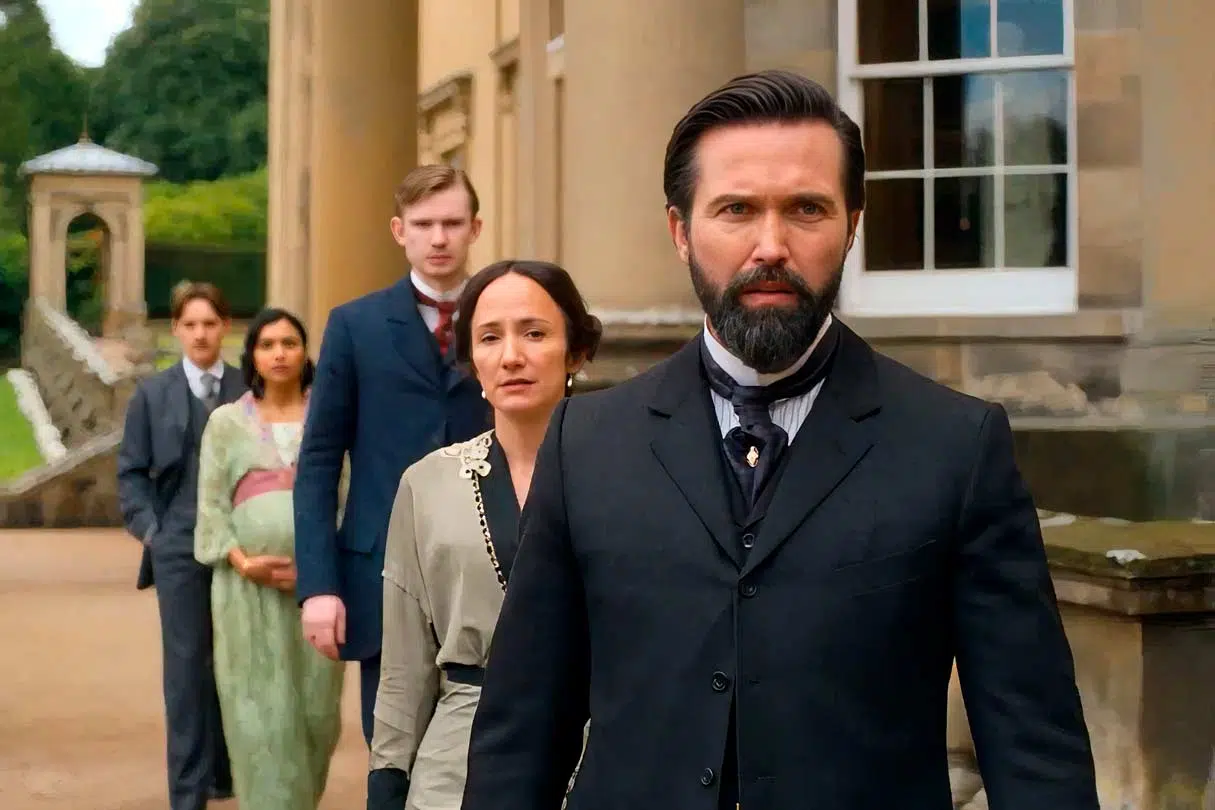
RTVE is poised to introduce a compelling new historical drama series, "Toda una mujer" (A Woman of Substance), to its flagship channel, La 1. This acquisition aligns with RTVE’s successful "Historias que hacen historia" (Stories that Make History) brand, a banner under which the broadcaster has championed its most impactful period dramas. The miniseries, a British production based on Barbara Taylor Bradford’s iconic 1979 novel, promises to deliver the rich narratives and emotional depth that have resonated with Spanish viewers, particularly those who have followed the popular daily dramas "La Promesa" and "Valle salvaje." While specific broadcast dates and times are yet to be officially announced, the initial promotion and the nature of the series strongly suggest a prime-time slot, signaling RTVE’s strategic intent to bolster its evening programming with high-quality, limited-run historical content.
The decision to integrate "Toda una mujer" into the "Historias que hacen historia" umbrella is a calculated move by RTVE. This branding initiative was initially conceived to unify the popular afternoon slot featuring "Valle salvaje" and "La Promesa," both of which have achieved significant audience engagement and solidified La 1’s position in the competitive daytime television landscape. Over time, RTVE has strategically expanded the use of "Historias que hacen historia" to encompass its broader spectrum of prestigious historical productions, effectively creating a recognizable mark of quality for period pieces. This approach aims to attract and retain a dedicated viewership drawn to narratives exploring significant historical periods and character-driven stories. The inclusion of "Toda una mujer" under this banner clearly signals RTVE’s commitment to catering to an audience that has demonstrated a strong preference for historical fiction, a genre that has become a cornerstone of La 1’s current identity.
"Toda una mujer" is an eight-part miniseries that adapts Barbara Taylor Bradford’s celebrated novel, "A Woman of Substance." This acclaimed literary work previously received a television adaptation in the 1980s, and this new production represents a contemporary reimagining, promising a fresh perspective while remaining faithful to the source material’s core themes and narrative arc. The series boasts a distinguished cast, with Brenda Blethyn and Jessica Reynolds taking on the dual role of Emma Harte, portraying her at different pivotal stages of her life. The production premiered in the United Kingdom on Channel 4 in March 2026, and RTVE subsequently confirmed its acquisition for broadcast in Spain, underscoring the cross-border appeal of compelling historical dramas.
The narrative of "Toda una mujer" is set to captivate audiences familiar with the intricate storytelling of RTVE’s successful period dramas. The story commences in the early 20th century, charting the extraordinary journey of Emma, a young housemaid from Yorkshire. Beginning from humble origins, Emma embarks on a remarkable ascent, ultimately transforming into a formidable and influential businesswoman. Her path is fraught with challenges, including betrayal by her aristocratic lover, which results in her expulsion after becoming pregnant. This tumultuous event marks the beginning of a decades-long odyssey, spanning over sixty years, characterized by both personal growth and professional ambition. The series intricately weaves together themes of class struggle, the dynamics of influential families, profound betrayals, passionate romances, and evocative settings. These elements are expected to resonate deeply with viewers who currently follow "La Promesa" and "Valle salvaje" on a daily basis, offering a similar blend of historical immersion and dramatic conflict.
The strategic decision by RTVE to incorporate "Toda una mujer" into its programming lineup, particularly under the established "Historias que hacen historia" brand, is not merely about acquiring new content; it reflects a broader programming strategy aimed at diversifying and strengthening its schedule. The "Historias que hacen historia" initiative has proven effective in building a loyal audience base. Its initial success was intrinsically linked to the consolidation of RTVE’s afternoon programming, where "Valle salvaje" and "La Promesa" became a formidable block. The network has even referred to these two series collectively as a singular programming entity under this banner, highlighting their symbiotic relationship in capturing audience attention. As the brand evolved, RTVE expanded its application to other significant historical productions, solidifying its reputation as a purveyor of high-quality period dramas.

A significant precedent for "Toda una mujer" can be found in RTVE’s previous broadcast of "Ena. La reina Victoria Eugenia" (Ena. Queen Victoria Eugenia). This biographical drama was also integrated into the "Historias que hacen historia" framework. However, unlike the anticipated placement of "Toda una mujer," "Ena" was scheduled for prime time, a strategic decision that yielded considerable success. The premiere of "Ena" was promoted as part of a special event, "La gran noche de ENA: Historias que hacen Historia" (The Big Night of ENA: Stories that Make History), and the broadcast itself achieved impressive ratings, leading its timeslot with a 17.1% audience share for the entire special. This precedent strongly suggests that RTVE views "Toda una mujer" as a prime-time contender, leveraging its limited-run format and compelling narrative to attract a broad audience during peak viewing hours.
The format of "Toda una mujer" as a self-contained miniseries of eight episodes makes its placement within the daily programming block of "Valle salvaje" and "La Promesa highly improbable. These Spanish-produced series are designed as long-running daily dramas with hundreds of episodes planned, catering to a different viewing habit. In contrast, "Toda una mujer," with its finite narrative arc, is far better suited for a weekly broadcast during prime time. This approach mirrors the successful strategy employed with "Ena," where a limited series was positioned to maximize its impact within a concentrated broadcast window. RTVE’s announcement of "Toda una mujer" alongside four other European period miniseries, all featuring female protagonists who challenge societal norms, further reinforces this programming direction. This indicates a deliberate effort to curate a distinct line-up of compelling, character-driven historical narratives that extend beyond the scope of their ongoing daily serials.
While RTVE has yet to officially confirm the precise premiere date and time for "Toda una mujer," the commencement of its promotional campaign signifies an imminent launch. The decision to align it with the "Historias que hacen historia" brand leaves little doubt about RTVE’s target demographic: the same audience that has propelled historical fiction to become a defining characteristic of La 1’s current programming identity. The series promises a rich tapestry of aristocratic intrigue, stark social disparities, grand estates, passionate romances, deeply guarded family secrets, and a protagonist who must navigate a society rigidly defined by class structures. These elements are considered more than sufficient to position "Toda una mujer" as a significant upcoming event for the dedicated viewers of "La Promesa" and "Valle salvaje," albeit one likely to be experienced during the evening hours. The anticipation is palpable, as Spanish audiences prepare to be drawn into another compelling chapter of history, brought to life by RTVE’s commitment to quality historical storytelling.
The broadcast of "Toda una mujer" on La 1 is expected to be more than just an addition to the schedule; it represents a strategic investment in a genre that has proven its enduring appeal and profitability. By leveraging the established "Historias que hacen historia" brand, RTVE is capitalizing on existing audience recognition and loyalty. The miniseries format allows for a concentrated viewing experience, generating buzz and discussion over a shorter period, a stark contrast to the sustained, daily engagement required by soap operas. This strategy is particularly relevant in a media landscape increasingly fragmented by streaming services and diverse content platforms. Limited-run series, when executed with high production values and compelling narratives, can create significant cultural moments and drive viewership to traditional broadcast channels.
Furthermore, the thematic content of "Toda una mujer" – a woman’s rise against societal constraints, her resilience in the face of adversity, and the exploration of social stratification – aligns with contemporary audience interests. These themes often resonate deeply, sparking conversations about gender roles, social mobility, and the enduring impact of historical contexts on individual lives. The dual casting of Brenda Blethyn and Jessica Reynolds to portray Emma Harte across different life stages suggests a nuanced exploration of character development, offering viewers a chance to witness the evolution of a remarkable individual. The series’ origin as a literary adaptation also lends it a pre-existing foundation of critical acclaim and reader engagement, providing a strong starting point for its television translation.
The implications of "Toda una mujer’s" successful integration into RTVE’s primetime schedule could extend beyond immediate ratings. A strong performance could encourage further acquisitions of similar high-quality international miniseries, diversifying La 1’s offerings and reinforcing its position as a destination for sophisticated historical drama. It also presents an opportunity for RTVE to engage with a broader demographic, potentially attracting viewers who may not regularly tune into their daily soap operas but are drawn to the prestige and narrative depth of limited series. The broadcaster’s track record with "Ena" demonstrates its capability to market and broadcast such productions effectively, achieving both critical acclaim and significant audience reach. As RTVE continues to navigate the evolving television landscape, strategic acquisitions like "Toda una mujer" are crucial for maintaining its competitive edge and fulfilling its public service remit of providing diverse, high-quality programming for all audiences. The upcoming broadcast is anticipated with considerable interest, promising a captivating journey through history and human resilience.


 Eva Lovia
 Julia Prastini
 Jia Lissa
 admin
admin
 Raisa Andriana