
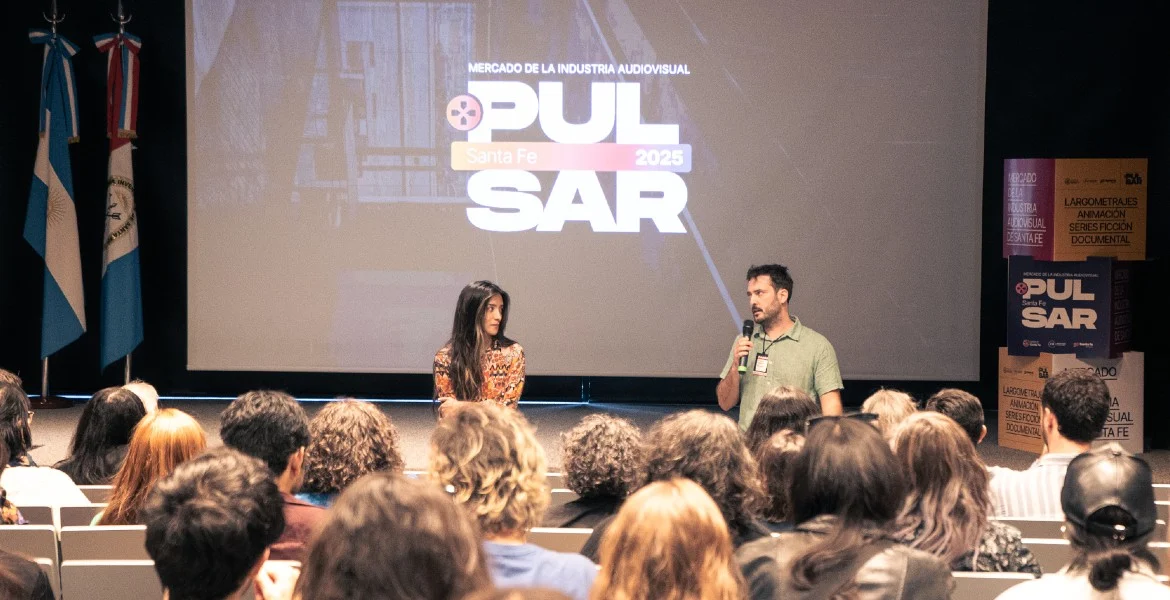
The city of Rosario is set to become the epicenter of South American regional filmmaking as it hosts the sixth edition of Mercado Pulsar Santa Fe from September 2 to 5. This annual gathering, organized by the Government of Santa Fe with the strategic collaboration of the Misiones Institute of Audiovisual Arts (IAAVIM) and the Cinema and Audiovisual Agency of Uruguay (ACAU), marks a significant expansion of its geographical and industrial footprint. By integrating producers and projects from various Argentine provinces and neighboring Uruguay, the market aims to solidify a collaborative network that transcends traditional centralized production models. The event arrives at a critical juncture for the Argentine film industry, serving as both a marketplace for creative content and a forum for institutional stability during a period of transition in national cultural funding.
Strategic Decentralization in the Argentine Audiovisual Landscape
The primary objective of the sixth edition of Pulsar Santa Fe is the decentralization of the audiovisual industry. For decades, the majority of Argentine film production and financing remained concentrated in the city of Buenos Aires. However, the emergence of regional markets has begun to shift this paradigm. Ariadna Solis, the General Producer of Pulsar Santa Fe, emphasized to LatAm cinema that these regional hubs are consolidating as vital points of encounter. These spaces facilitate alliances between projects, production companies, investment funds, and institutions that might otherwise never intersect within the traditional industry circuits.
This movement toward regionalism is not merely a matter of geography but a strategic response to the current socio-political climate. Solis highlighted that these spaces are essential for strengthening regional value chains, particularly given the "uncertainty regarding national public policies." As the National Institute of Cinema and Audiovisual Arts (INCAA) undergoes structural changes and budgetary re-evaluations under the current national administration, provincial governments and cross-border partners like Uruguay are stepping in to ensure that the "engine" of the industry does not stall.
A Diverse Slate: Selected Projects for the 2024 Edition
The selection for this year’s market reflects a broad spectrum of genres, formats, and stages of production. The diversity of the projects underscores the talent pool existing outside the capital city and the growing interest in co-production between Argentine provinces and international partners.
Fiction Feature Films in Development
In the fiction category, the selection is dominated by Santa Fe-based talent, though it includes significant representation from Misiones. The selected projects include:
- Ramona by Lisa Caligaris (Santa Fe)
- Cómo se nombra una tormenta by Carla Scolari (Santa Fe)
- Apartado del Camino by Miler Blasco (Santa Fe)
- De lo que antes era by Gisela Maioli (Santa Fe)
- Érase una vez en las misiones rebeldes by Leonel Benítez (Misiones)
These selections highlight a focus on narrative storytelling that often draws from local landscapes and historical contexts, providing a unique regional perspective that is increasingly sought after by international festivals and streaming platforms.
Documentaries, Animation, and Series
The market also recognizes the strength of non-fiction and specialized formats. From Córdoba, the documentary project Para saber cómo es la soledad, la historia de Alcira Luengas, directed by Rodrigo Francisco Alabart, was selected, showcasing the inter-provincial cooperation that Pulsar fosters.
In the realm of animation, a genre that has seen significant growth in Argentina due to its high export potential, the Santa Fe project Underground by Virginia Tassone stands out. Furthermore, the market is nurturing episodic content with two fiction series in development: Gol Gana by Damián Andreoli and La ira de las mariposas by Erica Rozek, both originating from Santa Fe.
Post-Production and the "Work in Progress" Showcase
Recognizing that the final stages of filmmaking are often the most difficult to fund, Pulsar Santa Fe has dedicated a significant portion of its programming to projects in post-production. This "Work in Progress" (WIP) segment allows filmmakers to present nearly completed films to distributors and sales agents.
Five projects were selected for this category:
- Chejov en Rosario (Fiction, Santa Fe) – Directed by the veteran filmmaker Gustavo Postiglione, whose work has long been synonymous with the Rosario film scene.
- Al amanecer, el mal entró por el oeste (Fiction, Santa Fe) – Directed by Arturo Castro Godoy.
- Maltrato animal (Fiction, Uruguay) – Directed by José Dell’Acqua Postiglione, representing the growing collaboration with the Uruguayan industry.
- La Liberación de Kshamenk (Documentary, Santa Fe) – Directed by Ana Paula Rosillo, a project that touches on environmental and animal rights themes.
- La amiga de Zulema (Documentary, Uruguay) – Directed by Juana Mauri.
The inclusion of two Uruguayan projects in the post-production stage is a direct result of the partnership with ACAU, illustrating a successful model of binational cooperation that shares resources and expertise.
The Audience Laboratory: A New Paradigm for Financing
One of the most innovative components of the 2024 market is the "Laboratorio de Audiencias" (Audience Laboratory). This initiative reflects a modern understanding of the film industry, where creating a film is only half the battle; finding and engaging an audience is equally critical.
Agustín del Carpio, the Coordinator of the Industry Area for the event, explained that the laboratory aims to provide practical tools and training, including a master class on audience design. According to del Carpio, the industry must evolve past its reliance on a single source of income. "We seek to open the possibility of thinking about new tools for production and circulation, as well as mixed financing schemes," he stated.
This mixed model suggests a combination of:
- Public Provincial Funds: Maintaining the role of the state at a local level.
- Private Investment: Encouraging local businesses to invest in cultural capital.
- International Co-production: Leveraging treaties with countries like Uruguay and Brazil.
- Alternative Sources: Including crowdfunding, pre-sales to platforms, and sponsorship.
Del Carpio noted that the "Audience Laboratory" is designed to ensure projects are robust from their earliest stages. By understanding "new consumption patterns and formats," filmmakers can tailor their production and marketing strategies to the actual habits of modern viewers, whether they are watching in traditional cinemas or on mobile devices.
Building a Regional Network of Markets
Pulsar Santa Fe does not operate in isolation. Its success is part of a larger, interconnected web of regional film markets across Latin America. Over the years, Pulsar has established formal and informal links with prestigious events such as:
- Ventana Sur: The largest audiovisual market in Latin America, organized by the INCAA and the Marché du Film (Cannes).
- FIDBA LINK: The industry wing of the International Documentary Film Festival of Buenos Aires.
- Bolivia Lab: An essential platform for Ibero-American film development.
- SANFIC (Santiago International Film Festival): A key player in the Chilean and regional market.
- FICER (Entre Ríos International Film Festival): A neighboring provincial festival that shares similar goals of regional empowerment.
- FOCUS Córdoba: The industry market of the province of Córdoba.
By integrating into this network, Pulsar Santa Fe ensures that the projects presented in Rosario have a clear pathway to other markets, increasing their visibility and their chances of securing international distribution. This "circuit" of markets acts as an incubator for Latin American talent, providing multiple touchpoints for a project to gain traction.
Institutional Support and the Role of IAAVIM and ACAU
The collaboration with IAAVIM (Misiones) and ACAU (Uruguay) is more than symbolic. Misiones has been a pioneer in regional film legislation in Argentina, establishing its own provincial film law and institute (IAAVIM) which has served as a model for other provinces, including Santa Fe. The participation of Misiones projects in Pulsar strengthens the "North-Central" corridor of Argentine production.
Uruguay’s involvement via ACAU is equally significant. Uruguay has become an attractive destination for audiovisual production due to its tax incentives (Cash Rebate) and highly skilled workforce. By partnering with Santa Fe, Uruguay expands its co-production opportunities, while Santa Fe filmmakers gain access to the Uruguayan market and its connections to European and North American distributors.
Conclusion: The Path Forward for Regional Cinema
As the sixth edition of Mercado Pulsar Santa Fe approaches, it stands as a testament to the resilience of the regional audiovisual sector. In a time of national economic challenges and shifting cultural priorities, the event provides a blueprint for how provincial industries can thrive through collaboration, innovation in financing, and a deep commitment to understanding their audiences.
The 2024 edition is not just a four-day event in Rosario; it is a manifestation of a long-term strategy to ensure that the stories of Santa Fe, Misiones, Córdoba, and Uruguay continue to be told. By focusing on professionalization and the strengthening of the regional value chain, Pulsar Santa Fe is helping to build an industry that is more diverse, more sustainable, and better equipped to navigate the complexities of the global media landscape. The results of the sessions held between September 2 and 5 will likely be seen on screens across the region and at international festivals in the years to come, confirming Rosario’s role as a vital hub in the Latin American cinematic ecosystem.

0 Comments