

The 2004 cult classic Eternal Sunshine of the Spotless Mind has achieved a rare distinction in cinematic history, being named the only science fiction film to secure a place within the top ten of The New York Times’ definitive ranking of the 100 best films of the 21st century. In a comprehensive survey conducted in 2025, which aggregated the perspectives of more than 500 actors, directors, critics, and industry luminaries, the film directed by Michel Gondry and written by Charlie Kaufman was ranked seventh overall. This placement positions the film alongside modern masterpieces such as Bong Joon-ho’s Parasite, Paul Thomas Anderson’s There Will Be Blood, and David Lynch’s Mulholland Drive, underscoring its enduring relevance and its unique ability to blend high-concept speculative technology with the raw, intimate complexities of human emotion.
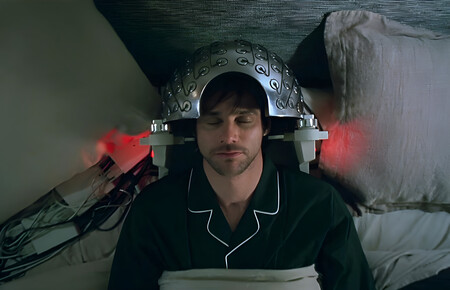
The film, which stars Jim Carrey and Kate Winslet in career-defining roles, has long been celebrated for its non-linear narrative and its "lo-fi" approach to the science fiction genre. Unlike contemporary sci-fi epics that rely heavily on interstellar travel or futuristic warfare, Eternal Sunshine of the Spotless Mind focuses on the internal landscape of the human mind. The narrative follows Joel Barish (Carrey) as he discovers that his ex-girlfriend, Clementine Kruczynski (Winslet), has undergone a medical procedure to erase all memories of their turbulent relationship. In a fit of desperation and heartbreak, Joel undergoes the same procedure, only to realize mid-process—while trapped inside his own dissolving memories—that he wishes to preserve the very experiences he sought to destroy.
The Methodology and Context of the New York Times Ranking
The New York Times’ 2025 retrospective represents one of the most ambitious attempts to codify the cinematic canon of the current millennium. By polling a diverse cross-section of over 500 creative professionals, the publication sought to identify films that have not only achieved critical acclaim but have also exerted a lasting influence on the craft of filmmaking. The inclusion of Eternal Sunshine of the Spotless Mind at the seventh spot is particularly noteworthy given the sheer volume of high-budget science fiction released since 2000, including works by Christopher Nolan, Denis Villeneuve, and Alfonso Cuarón.

Industry analysts suggest that the film’s high ranking stems from its emotional accessibility. While films like Inception or Children of Men utilize science fiction to explore grander societal or metaphysical themes, Gondry’s work uses the premise of memory erasure—facilitated by the fictional Lacuna Inc.—as a surgical tool to dissect the anatomy of a breakup. This human-centric focus has allowed the film to age with a grace that many CGI-heavy features lack, maintaining a 92% approval rating on Rotten Tomatoes and a persistent presence in academic discussions regarding psychology and cinema.
Narrative Origins and the Influence of Alexander Pope
The intellectual pedigree of the film extends back to the 18th century. The title itself is derived from the 1717 poem "Eloisa to Abelard" by Alexander Pope, which explores the tragic history of two lovers who were forced into religious seclusion. The specific verse—"How happy is the blameless vestal’s lot! / The world forgetting, by the world forgot. / Eternal sunshine of the spotless mind! / Each pray’r accepted, and each wish resign’d"—serves as a thematic anchor for the film. It questions whether true happiness can be found in ignorance or if the pain of memory is a necessary component of the human soul.
Charlie Kaufman, the film’s screenwriter, utilized this poetic foundation to construct a screenplay that challenged traditional Hollywood structures. Kaufman, already known for his surrealist work on Being John Malkovich and Adaptation, sought to create a story that felt as chaotic and fragmented as memory itself. The resulting script won the Academy Award for Best Original Screenplay in 2005, a victory that signaled the industry’s burgeoning acceptance of "brainy" sci-fi that prioritized psychological depth over spectacle.
A Chronology of Production and Casting Innovations
The production of Eternal Sunshine of the Spotless Mind was marked by a series of unconventional choices that contributed to its distinct atmosphere. Director Michel Gondry, a veteran of music videos for artists like Björk and Radiohead, insisted on using practical, in-camera effects to depict the disintegration of Joel’s memories. Rather than relying on digital transitions, Gondry employed forced perspective, specialized lighting, and physical set deconstruction to simulate the feeling of a world disappearing from within.

The casting was equally subversive for its time. Jim Carrey, then primarily known as a high-energy comedic actor through hits like Ace Ventura and The Mask, was cast as the quiet, introverted Joel Barish. Gondry reportedly instructed Carrey not to be "funny," forcing the actor to tap into a reservoir of vulnerability that surprised critics and audiences alike. Conversely, Kate Winslet, who had become a global icon of period-drama elegance following Titanic, was cast as the impulsive, "manic" Clementine. Winslet’s performance, characterized by her frequently changing hair colors—Blue Ruin, Red Menace, Yellow Fever—earned her an Academy Award nomination and redefined her career trajectory.
The supporting cast also featured actors who would go on to become central figures in 21st-century cinema. Mark Ruffalo and Kirsten Dunst played the technicians at Lacuna Inc., while Elijah Wood portrayed a younger employee who uses Joel’s stolen memories to woo Clementine. This subplot added a layer of ethical complexity to the film, illustrating the potential for technological abuse in the most private sectors of human life.
Psychological Implications and Scientific Resonance
Beyond its artistic merits, the film has been frequently cited in psychological and neurological studies. The concept of "selective lacunar amnesia" presented in the film—where specific memories are targeted for deletion while leaving the rest of the personality intact—predated real-world debates about the use of beta-blockers like propranolol to treat Post-Traumatic Stress Disorder (PTSD) by dampening the emotional impact of traumatic memories.
Film scholars argue that the movie’s "tragedy" lies in the realization that memories are not just data points but the very fabric of identity. When Joel attempts to hide Clementine in memories where she doesn’t belong—such as his childhood fears or moments of deep-seated shame—the film suggests that our relationships are inextricably linked to every facet of our history. The "sci-fi" element of the film thus serves as a metaphor for the universal human desire to avoid pain, and the subsequent realization that pain and joy are often intertwined.
Broader Impact on the Science Fiction Genre
The success of Eternal Sunshine of the Spotless Mind paved the way for a sub-genre often referred to as "soft science fiction" or "philosophical sci-fi." It proved that a film could be classified within the genre without featuring robots, aliens, or dystopias. Its influence can be seen in later works like Her (2013), Ex Machina (2014), and Arrival (2016), all of which prioritize the exploration of human consciousness and connection through a speculative lens.
The New York Times ranking serves as a formal acknowledgment of this shift in the genre’s hierarchy. By placing Gondry’s film above more traditional sci-fi blockbusters, the panel of experts highlighted a preference for narratives that use technology to reflect on the human condition rather than to escape from it. The film’s seventh-place finish is a testament to its ability to remain "modern" despite being over two decades old, as its central question—would you erase the person you loved to stop the hurting?—remains as poignant today as it was in 2004.
Current Availability and Cultural Endurance
As of 2025, Eternal Sunshine of the Spotless Mind continues to find new audiences through streaming platforms, most notably on Max (formerly HBO Max), where it remains a staple of the "critically acclaimed" and "sci-fi" categories. Its presence on these platforms has ensured that younger generations, who were not yet born during its initial theatrical run, can experience its non-linear storytelling and emotional depth.
The film’s legacy is also maintained through its visual iconography. The image of Joel and Clementine lying on the cracked ice of the Charles River has become a shorthand for the fragility of modern romance. As the film approaches its quarter-century anniversary, its status as a "sole survivor" of its genre in the top ten of the 21st century’s greatest films confirms that while technology and special effects may age, the exploration of the human heart is timeless.

In a cinematic landscape often dominated by franchises and intellectual property, the ascent of a standalone, original story like Eternal Sunshine of the Spotless Mind to the upper echelons of critical rankings provides a clear indicator of the qualities that define a lasting masterpiece: a perfect synchronization of direction, writing, and performance, all aimed at the most fundamental aspects of the human experience. For those seeking a narrative that challenges the intellect while simultaneously breaking the heart, the film remains the definitive recommendation of its era.

0 Comments