
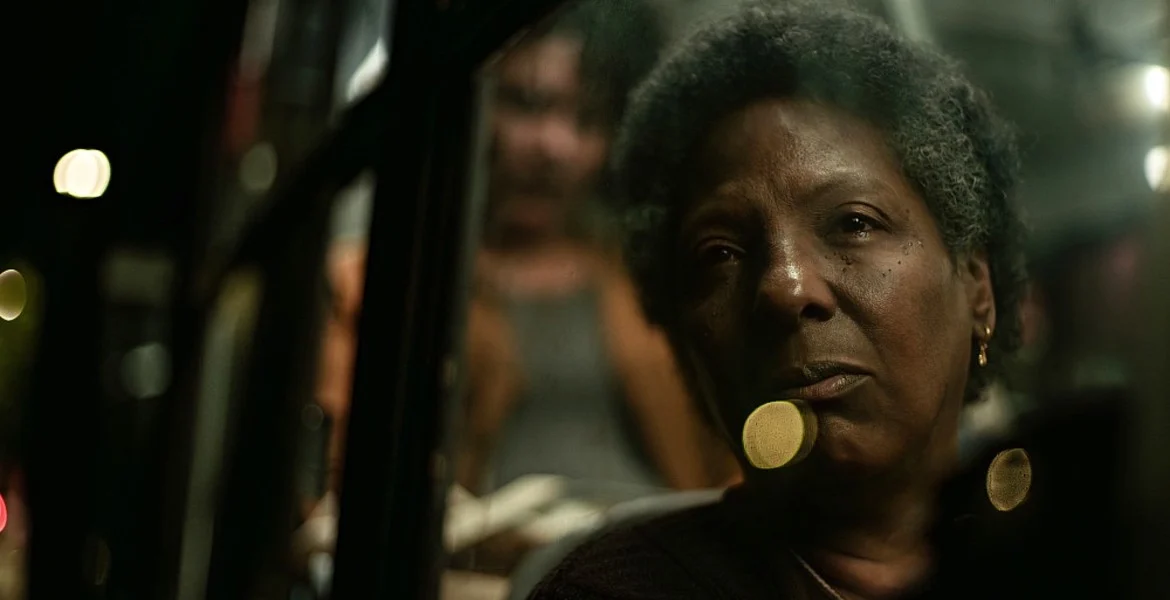
The San Sebastian International Film Festival (SSIFF) has officially expanded its competitive lineup for the upcoming 72nd edition, announcing the addition of six new titles to its prestigious Official Selection. This update brings the total number of films vying for the Golden Shell (Concha de Oro) to 16, solidifying the festival’s reputation as a premier destination for global auteur cinema. Among the newly announced competitors, the spotlight shines on Brazilian filmmaker Gabriel Martins, whose latest work, "Vicentina pede desculpas," stands as the sole Latin American representative in this final batch of additions to the main competition.
Beyond the race for the Golden Shell, the festival also unveiled the complete lineup for the Zabaltegi-Tabakalera section, a category known for its commitment to formal experimentation and boundary-pushing narratives. This year, the section will feature 22 titles, with a notably heavy emphasis on Argentine cinema. The inclusion of three Argentine feature films, a short film, and an audiovisual performance comes at a critical juncture for the South American nation’s film industry, which is currently navigating a period of severe economic austerity and institutional restructuring.
The Official Selection: A Platform for Gabriel Martins and Brazilian Auteurism
The inclusion of "Vicentina pede desculpas" (Vicentina Apologizes) marks a significant milestone for Gabriel Martins, a director who has rapidly ascended the ranks of contemporary Brazilian cinema. Produced by the Belo Horizonte-based collective Filmes de Plástico in collaboration with Netflix, the film explores the harrowing journey of a mother seeking redemption and forgiveness from the families of victims involved in a tragic accident caused by her son.
Martins, a prominent figure in the "mineiro" filmmaking scene from Minas Gerais, has established a consistent presence at major international festivals. His debut feature, "No coração do mundo" (In the Heart of the World, 2019), co-directed with Maurilio Martins, premiered at the International Film Festival Rotterdam. His follow-up, "Marte um" (Mars One, 2022), achieved widespread acclaim following its debut at the Sundance Film Festival and was subsequently selected as Brazil’s official entry for the Best International Feature Film category at the 95th Academy Awards.
The selection of "Vicentina pede desculpas" for San Sebastian’s Official Selection underscores the growing partnership between global streaming giants like Netflix and independent production houses focused on regional, character-driven narratives. By placing Martins’ work in competition for the Golden Shell, the festival reaffirms its role as a bridge between Latin American social realism and the broader European market.
Zabaltegi-Tabakalera: The Vanguard of Contemporary Cinema
While the Official Selection remains the festival’s centerpiece, the Zabaltegi-Tabakalera section serves as its experimental heart. Open to features, documentaries, and short films that defy traditional genre classifications, this section offers the Zabaltegi-Tabakalera Award, which carries a €20,000 prize—€6,000 for the director and €14,000 for the film’s Spanish distributor.
This year’s Zabaltegi-Tabakalera lineup is defined by its diversity and its willingness to confront contemporary political and historical themes. It will be inaugurated by the world premiere of "Pedro en el país" (Pedro in the Country), a non-fiction feature co-directed by the acclaimed Argentine duo María Alché and Benjamín Naishtat. Alché and Naishtat are no strangers to San Sebastian; their previous collaboration, the philosophical comedy "Puan," was a major highlight of the 2023 edition, winning Best Screenplay and Best Leading Performance.
"Pedro en el país" follows the life of Pedro Catella, a figure whose personal history serves as a lens through which to view the tumultuous political landscape of 20th-century Latin America. The film is a complex international co-production involving Argentina’s Bucarelli Cine, Mexico’s Pimienta Films, and Norway’s Staer, reflecting the increasingly globalized nature of high-end documentary filmmaking.
The Argentine Contingent: Resilience Amid Industry Uncertainty
The 72nd edition of the San Sebastian International Film Festival arrives at a moment of profound crisis for Argentine cinema. Following significant budget cuts and the reorganization of the National Institute of Cinema and Audiovisual Arts (INCAA) under the current administration of President Javier Milei, the industry has faced existential threats to its production capabilities. In this context, the festival’s decision to program five distinct Argentine works in Zabaltegi-Tabakalera is viewed by industry analysts as a deliberate gesture of institutional solidarity.
In addition to the Alché-Naishtat project, the section features "A veces me entra tristeza, otras veces rebelión" (Sometimes I feel sadness, other times rebellion) by María Aparicio. The film, which recently premiered in the Giornate degli Autori section of the Venice Film Festival, tells the story of Eva, an Argentine woman in Madrid who encounters a historian researching Juan Bialet Massé, a pivotal figure in Argentine labor history. The film is a multifaceted collaboration between Argentine production houses La buena hora and Las Flores and a consortium of Spanish producers, illustrating the vital importance of trans-Atlantic partnerships in sustaining independent cinema.
Another significant Argentine entry is "El fantasma" (The Ghost), the feature-length debut of David Lamelas and Ignacio Masllorens. Also coming from the Venice Giornate degli Autori, the film adopts a meta-narrative approach, following two producers tasked with creating a documentary about an elusive figure from the 1960s Argentine avant-garde. The project features Lamelas himself, a legendary conceptual artist, blurring the lines between fiction, documentary, and art history. The film was produced by El Pampero Cine, the collective responsible for the epic "La Flor" and "Trenque Lauquen," further cementing their reputation for innovative storytelling.
Short Films and Performance Art: Expanding the Narrative Scope
The Argentine presence extends into the short film category with "Para los contrincantes" (For the Opponents) by Federico Luis. This selection arrives in San Sebastian with significant momentum, having already secured the Short Film Palme d’Or at the 77th Cannes Film Festival. The film follows a young Mexican man aspiring to become a boxing champion, and its production involves a wide network of international partners, including companies from Chile, Mexico, the United Kingdom, and France.
Rounding out the regional participation is a unique audiovisual performance titled "Cine vivo: un artefacto" (Live Cinema: An Artifact) by the prominent Argentine filmmaker and writer Albertina Carri. Presented out of competition, this work combines the reading of texts from Carri’s book "Cine vivo" with an immersive display of images and sounds. Carri’s work often explores memory, the archive, and the ethics of the image, and this performance serves as a theoretical and artistic reflection on the medium of cinema itself.
Chronology of Selection and Industry Context
The announcement of these 16 titles and the Zabaltegi-Tabakalera lineup follows a rigorous selection process that began earlier this year. Historically, San Sebastian has served as the final major stop in the "Big Four" European festival circuit (alongside Berlin, Cannes, and Venice), often providing a launchpad for films entering the awards season.
The timeline for the 72nd edition highlights a strategic focus on inclusivity and international cooperation:
- May 2024: Initial calls for entries and preliminary screenings at the Cannes Film Market.
- July 2024: Announcement of the first ten titles in the Official Selection, featuring prominent European and Asian directors.
- August 2024: Reveal of the final six titles, including the pivotal entry from Gabriel Martins.
- Late August 2024: Full disclosure of the Zabaltegi-Tabakalera and Perlak sections, emphasizing the festival’s role in showcasing award-winners from earlier festivals.
Implications for the Global Film Market
The heavy representation of Latin American cinema, particularly from Brazil and Argentina, suggests that despite local economic headwinds, the region’s creative output remains highly valued on the international stage. For Gabriel Martins, a strong showing in the Official Selection could lead to increased distribution deals in Europe and North America, building on the momentum he established with "Marte um."
For the Argentine industry, the San Sebastian platform offers more than just prestige; it provides a vital lifeline. By showcasing these films, the festival ensures that Argentine voices remain audible in the global cultural conversation, potentially encouraging future co-production treaties and private investment at a time when state support is diminishing.
The financial structure of the Zabaltegi-Tabakalera prize also incentivizes Spanish distributors to take risks on non-traditional films. By allocating €14,000 specifically for distribution, the festival actively facilitates the commercial life of experimental cinema, ensuring that these works reach audiences beyond the festival circuit.
As the 72nd San Sebastian International Film Festival prepares to open its doors, the focus remains on the intersection of art and resilience. The inclusion of these 16 competitive titles and the diverse Zabaltegi-Tabakalera lineup underscores a commitment to cinematic excellence that transcends national borders and economic challenges, reinforcing San Sebastian’s status as a cornerstone of the global film community.

0 Comments