
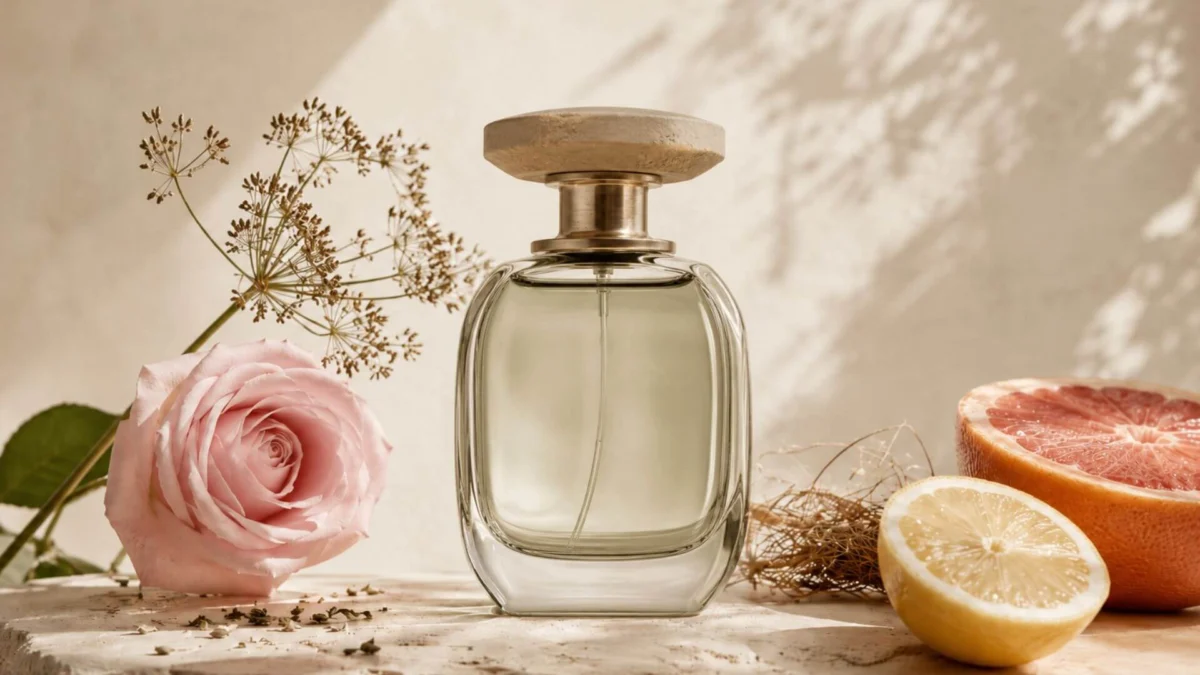
The olfactory transition from the height of summer to the cooling temperatures of autumn represents one of the most complex challenges for the global fragrance industry. Traditionally, the fragrance calendar has been divided into a binary system: bright, volatile citruses for the heat, and heavy, resinous ambers or woods for the cold. However, contemporary perfumery is increasingly leaning into the "entre-temps" or transition period, utilizing a sophisticated chemical bridge between the acidity of the lemon and the smoky depth of vetiver. This combination allows the vibrancy of citrus to persist even as the landscape shifts toward the muted tones of September and October.
At the heart of this movement is the strategic layering of raw materials that possess disparate evaporation rates. Lemon, known for its immediate but fleeting impact, serves as the "top note" or "tête," providing an instant psychological lift. To anchor this brightness against the dampening humidity of autumn, perfumers turn to vetiver—a complex root that provides a structural "base" or "fond." The resulting compositions are not merely refreshing; they are grounded, offering a narrative arc that begins with the sharpness of a sun-drenched grove and concludes in the earthy, wood-inflected atmosphere of a forest floor.
The Botanical Heritage and Science of Citrus Limon
To understand why lemon remains a cornerstone of perfumery, one must look at its genetic complexity. According to research from Kew Science, the common lemon (Citrus limon) is not a primary species but an ancient hybrid of the citron, the pomelo, and the mandarin. This lineage explains the multifaceted nature of its scent profile, which contains elements of bitterness, sweetness, and floralcy.

The essential oil used in high-end perfumery is primarily extracted through a process called expression, or cold-pressing, of the fruit’s peel. Unlike steam distillation, which can alter the delicate molecules of the fruit, cold-pressing preserves the zest’s "living" aroma. Chemically, the oil is dominated by limonene, a terpene that is highly volatile. This volatility is what gives a perfume its "spark"—the immediate burst of energy felt upon the first spray. However, because limonene evaporates quickly, it requires a fixative or a complementary heavy molecule to remain perceptible for more than a few minutes. In the context of autumn, where the air is denser and less prone to carrying light molecules, the lemon must be paired with ingredients that possess a lower vapor pressure.
Vetiver: The Earthbound Anchor of the Tropics
If lemon represents the sky, vetiver represents the earth. A perennial bunchgrass native to India, Chrysopogon zizanioides is now cultivated extensively in Haiti, Indonesia, and Reunion Island. Unlike many fragrance ingredients derived from flowers or leaves, the treasure of vetiver lies beneath the soil. Its roots can grow up to two meters deep, creating a complex underground network that is as beneficial for soil erosion prevention as it is for scent.
The extraction of vetiver is a labor-intensive process. The roots must be unearthed, washed, dried, and then steam-distilled for over 24 hours to yield a thick, amber-colored essential oil. The resulting scent is famously difficult to categorize, sitting at the intersection of damp earth, dried wood, smoke, and even nuttiness. Global fragrance house Givaudan notes that Haitian vetiver, in particular, often carries a "grapefruit-like" facet, which provides a natural olfactory link to citrus top notes. This shared chemical bridge is why the combination of lemon and vetiver feels so seamless; they share a molecular language that allows the fragrance to evolve rather than simply vanish.
Case Study: The Balanced Architecture of Diptyque’s Vetyverio
A premier example of this seasonal bridging is Vetyverio Eau de Toilette, composed by the late master perfumer Olivier Pescheux for Diptyque in 2010. The fragrance is designed specifically to challenge the notion that vetiver must be heavy or overly masculine. Pescheux utilized a high concentration of citrus in the opening—specifically lemon and grapefruit—to create a "luminous" entry point.

The chronology of Vetyverio on the skin illustrates the transition of the seasons. Within the first ten minutes, the citrus is dominant, providing a clean, airy sensation. As the heart notes emerge, a bouquet of Damascus rose and carrot seed begins to soften the transition. The carrot seed is a particularly clever inclusion; it possesses an earthy, powdery quality that prepares the nose for the arrival of the vetiver. By the two-hour mark, the citrus has receded into a background glow, and the Haitian vetiver takes center stage, supported by cedar and white musk. This progression mirrors the experience of an August afternoon fading into a cool September evening, making it a staple for those who resist the move toward heavy, syrupy autumnal scents.
Sustainability and the Global Supply Chain
The shift toward these natural, complex pairings has also brought the industry’s sourcing practices into the spotlight. The production of vetiver is central to the economy of Haiti, specifically in the region of Les Cayos. However, the crop is sensitive to both political instability and climate change. To ensure a steady supply of high-quality vetiver for fragrances like Vetyverio, major houses have entered into long-term partnerships with local farming cooperatives.
Diptyque, through its collaboration with Givaudan, participates in the "Sourcing for Shared Value" program in Haiti. This initiative focuses on the communities of Massey, Foucault, and Bazelais, providing support for infrastructure and ensuring fair wages for the farmers who harvest the roots after the rainy season. For the consumer, the "wood and smoke" finish of an autumnal citrus fragrance is not just an aesthetic choice; it is the end product of a global supply chain that links the luxury boutiques of Europe to the volcanic soils of the Caribbean.
The Evolution of Freshness: Chanel No. 5 L’Eau
Another significant entry in the citrus-vetiver category is Chanel No. 5 L’Eau, created by Olivier Polge. Released as a modern reimagining of the 1921 classic, L’Eau strips away the heavy balsams of the original to focus on "transparency." The fragrance opens with a vibrant citrus accord of lemon, mandarin, and orange, heightened by the signature use of aldehydes—synthetic molecules that add a metallic, "fizzing" quality to the natural oils.

As the fragrance settles, it relies on a base of vetiver and cedar to provide longevity. While the original No. 5 is often reserved for formal winter settings, L’Eau occupies the transitional space. The inclusion of vetiver allows the citrus to feel "crisp" rather than "sweet," aligning with the aesthetic of early autumn fashion—the period when light linens are replaced by structured cottons and light wools. Market data suggests that L’Eau has successfully captured a younger demographic that favors "clean" scent profiles but requires more staying power than a traditional summer cologne can provide.
Market Trends and the Rise of "Seasonless" Fragrance
The popularity of lemon-vetiver blends reflects a broader shift in consumer behavior toward "seasonless" or "genderless" fragrances. According to industry reports from 2023 and 2024, the niche fragrance market has seen a 15% increase in demand for "woody-citrus" profiles. Consumers are increasingly moving away from the "sugar-bomb" gourmand scents that dominated the early 2000s, seeking instead compositions that feel "natural" and "authentic."
Psychologically, the combination of citrus and wood serves a dual purpose. Citrus is known in aromatherapy for its ability to reduce cortisol levels and improve mood—a necessary boost during the "back-to-school" stress of September. Conversely, the woody, smoky notes of vetiver are associated with grounding and stability. In an era of economic and environmental uncertainty, the "luminous yet grounded" profile of these fragrances offers a form of olfactory comfort.
Technical Analysis: The Fixation of Volatile Molecules
From a technical standpoint, the success of an autumnal citrus depends on the perfumer’s ability to use vetiver as a fixative. In chemistry, a fixative is a substance used to equalise the vapor pressures, and thus the volatilities, of the raw materials in a perfume. Vetiver, being composed of heavy sesquiterpenes like vetivone and khusimol, has a very low rate of evaporation.

When lemon oil is blended with vetiver, the larger vetiver molecules physically slow down the escape of the smaller limonene molecules. This doesn’t just make the fragrance last longer; it changes the character of the citrus itself. Instead of a "juicy" lemon, the wearer experiences a "dry" or "smoked" lemon. This subtle shift in texture is what makes the scent appropriate for the transition into cooler weather, where a bright, sugary citrus might feel out of place against a backdrop of falling leaves and grey skies.
Conclusion: A New Olfactory Standard for the Entre-Temps
As the fragrance industry continues to evolve, the reliance on traditional seasonal boundaries is fading. The pairing of lemon and vetiver represents a sophisticated solution to the problem of "seasonal lag," providing a scent profile that is as dynamic as the weather it accompanies. By combining the historical prestige of Mediterranean citrus with the ethical and botanical complexity of Haitian vetiver, perfumers have created a new standard for autumnal elegance.
Whether it is the artisanal approach of Diptyque or the structured luxury of Chanel, the message is clear: the end of summer does not require the abandonment of freshness. Instead, it invites a deeper, more resonant version of it—one that starts with the zest of a lemon and ends in the quiet, smoky strength of the earth. As we look toward future trends, the "citrus-woody" family is poised to remain a dominant force, offering a timeless bridge between the heat of the past and the chill of the future.

0 Comments