
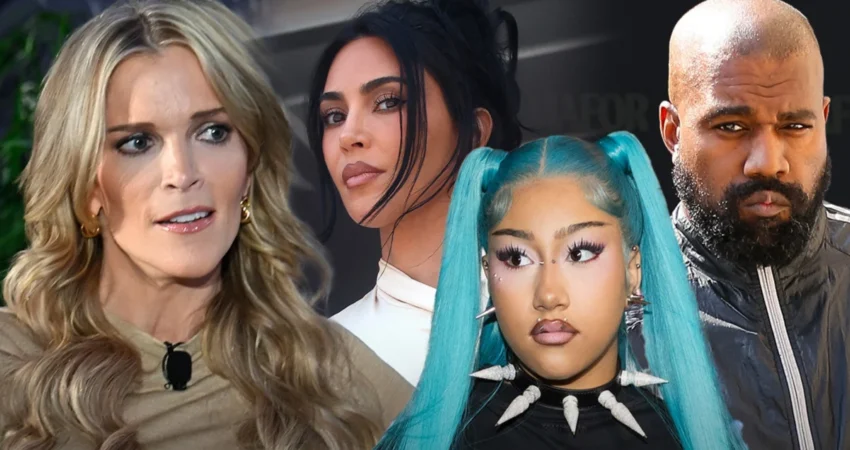
In a recent and widely discussed segment, veteran journalist and popular podcaster Megyn Kelly, alongside Dr. Drew Pinsky, levied significant criticism against reality television star Kim Kardashian and Grammy-winning musician Kanye West regarding their parenting choices for their 13-year-old daughter, North West. The pointed remarks, broadcast on the August 26, 2026, episode of "The Megyn Kelly Show," focused on what Kelly and Pinsky perceive as an premature and potentially detrimental thrust into intense public life for the young teenager, citing recent high-profile appearances and career endeavors. The discussion has ignited a broader conversation about the complexities of child celebrity, parental influence, and the unique pressures faced by children born into mega-famous families.
The Catalyst: A Public Profile Under Scrutiny
The core of Kelly and Pinsky’s critique revolved around North West’s increasingly prominent and often unconventional public persona. Kelly initiated the discussion by specifically referencing North’s recent cover feature for Dazed Magazine. The imagery in question depicted North with strikingly stylized aesthetics, including what Kelly described as "false teeth, blue hair, and facial piercings." Dazed Magazine, known for its avant-garde fashion and culture commentary, often pushes boundaries with its editorial choices. While such artistic expression is common for the publication, Kelly questioned the appropriateness of these choices for a 13-year-old, suggesting it signifies a premature immersion into a highly curated and potentially image-driven world.
Beyond the visual stylings, Kelly also highlighted North’s burgeoning music career, noting her efforts in releasing a rap album and performing on stage. North West has indeed been seen performing alongside her father, Kanye West, at various high-profile events, including listening parties for his albums and fashion shows. Her announced debut album, reportedly titled Elementary School Dropout—a clear homage to her father’s seminal The College Dropout—signals a concerted effort to establish her own artistic identity within the music industry. Kelly expressed concern that Kim and Kanye are "rushing" to mold their daughter into a star without adequately considering the long-term psychological and developmental repercussions of such early celebrity.
Dr. Drew Pinsky’s Clinical Perspective and Speculation
Joining Kelly in the critique, Dr. Drew Pinsky, a board-certified internist and addiction medicine specialist widely known for his media appearances, echoed and amplified Kelly’s concerns, introducing a clinical dimension to the discussion. Pinsky notably brought up the genetic predisposition to bipolar disorder within North’s family heritage, an unmistakable reference to Kanye West’s publicly documented diagnosis and struggles with the condition. While Pinsky did not offer specific evidence linking North to any mental health challenges, his mention of her "heritage" raised speculative questions about the potential vulnerability of children from families with such medical histories when exposed to high-stress environments like celebrity.
Furthermore, Pinsky made a significant assertion, claiming, without presenting direct evidence, that Kim and Kanye are "parents who have not been available" and "don’t look like they’re around all the time." This statement implies a perceived lack of consistent parental presence and engagement, suggesting that North’s public trajectory might be a consequence of absentee parenting or a strategy to fill perceived voids. He dramatically concluded his assessment by likening the situation to a "guillotine," a stark metaphor suggesting that placing North in such a public arena at a young age could lead to severe and irreparable negative consequences, potentially "cutting off" her normal development or future well-being.
The West-Kardashian Family Dynamic and Public Scrutiny
The parenting choices of Kim Kardashian and Kanye West have been under intense public scrutiny for years, a consequence of their individual superstardom and their highly publicized relationship and subsequent divorce. Kim Kardashian, a titan of reality television, fashion, and business, and Kanye West, a revolutionary but often controversial figure in music, fashion, and culture, have collectively built an empire founded on public visibility. Their four children, North, Saint, Chicago, and Psalm, have been in the spotlight since birth, a common reality for offspring of such high-profile figures.
Following their divorce, Kim and Kanye have navigated a complex co-parenting dynamic that has often played out in the public eye. While both parents have expressed a desire to protect their children, the inherent nature of their fame makes complete privacy virtually impossible. North, as the eldest, has been particularly visible, frequently appearing on her mother’s reality show, The Kardashians, and increasingly showcasing her own personality and artistic inclinations on social media platforms like TikTok, often managed or supervised by her mother. This constant exposure, coupled with her parents’ often-unconventional public lives, creates a unique environment for North’s upbringing, one that raises perennial questions about the boundaries between parental guidance, artistic freedom, and child welfare.
The Broader Implications of Child Celebrity: A Historical Context
The concerns raised by Kelly and Pinsky are not new to the discourse surrounding child celebrities. Throughout history, countless young individuals thrust into the limelight have faced immense challenges, from psychological distress and identity crises to exploitation and substance abuse. Icons like Judy Garland, Macaulay Culkin, and Britney Spears serve as cautionary tales, illustrating the potential pitfalls of growing up under the relentless glare of public attention. Studies on former child stars often highlight difficulties in forming stable identities, maintaining healthy relationships, and adapting to a "normal" life once their initial fame wanes or they transition into adulthood.
Experts in child psychology and development frequently emphasize the critical importance of a stable, private environment during formative years. Early exposure to the pressures of fame, constant judgment, and the demand to perform can disrupt normal psychological development, potentially leading to anxiety, depression, and a distorted sense of self-worth based on external validation. The digital age has amplified these risks, with social media providing an unprecedented platform for both adoration and relentless criticism, impacting a child’s self-perception in real-time. The "Kardashian effect," characterized by the blurring of lines between personal life and public entertainment, further complicates this landscape, as children in these families often become integral parts of a brand.
Ethical Considerations and Parental Responsibility
The debate surrounding North West’s public persona also touches upon profound ethical questions regarding parental responsibility in managing a child’s career. While parents are generally expected to foster their children’s talents and aspirations, there is a fine line between support and perceived exploitation or undue pressure. The financial incentives of child celebrity are substantial, creating an additional layer of complexity when parents are also managers or primary beneficiaries of their child’s fame.
The entertainment industry has, over time, attempted to implement protections for child performers, such as labor laws, trust funds (like the Coogan Law in California), and requirements for educational support. However, these regulations primarily address working conditions and financial safeguards, often leaving the psychological and developmental impacts less directly regulated. The rapid evolution of social media and influencer culture further complicates these ethical considerations, as children can become "brands" through less traditional avenues, often without the same formal protections afforded to traditional child actors. Kelly and Pinsky’s argument implicitly raises the question of whether North’s public activities are genuinely driven by her own, uncoerced desires, or if they are influenced by parental aspirations, the family brand, or the lucrative opportunities that celebrity status affords.
Official Responses and Public Discourse
As of the latest update, representatives for Kim Kardashian and Kanye West have not issued any public statements in response to Megyn Kelly and Dr. Drew Pinsky’s criticisms. This silence is not uncommon for high-profile figures who often choose to ignore or privately address media commentary, particularly when it pertains to their children. However, the absence of an immediate official response does not diminish the impact of the discussion.
The segment on "The Megyn Kelly Show" has undoubtedly sparked widespread debate across social media platforms and other news outlets. Public opinion on the matter is typically divided: some support Kelly and Pinsky’s concerns, echoing worries about the welfare of child celebrities, particularly those from such intensely scrutinized families. Others may view North’s public activities as a natural extension of her artistic inclinations, fostered by supportive parents who are simply allowing her to explore her talents in a unique environment. There is also a segment of the public that might view such critiques as unwarranted intrusions into private family matters, or as part of a broader tendency to judge celebrity parenting more harshly than that of non-famous individuals.
The ongoing conversation surrounding North West underscores the persistent societal fascination with celebrity children and the perennial struggle to balance artistic ambition with the fundamental right to a normal, protected childhood. As North West continues to grow and forge her own path in the public eye, the dialogue initiated by Megyn Kelly and Dr. Drew Pinsky will likely remain a relevant touchstone in the broader discourse on child celebrity in the modern era. The ethical and psychological implications of raising children in the full glare of the global media spotlight continue to pose complex challenges for both parents and society at large.

0 Comments