
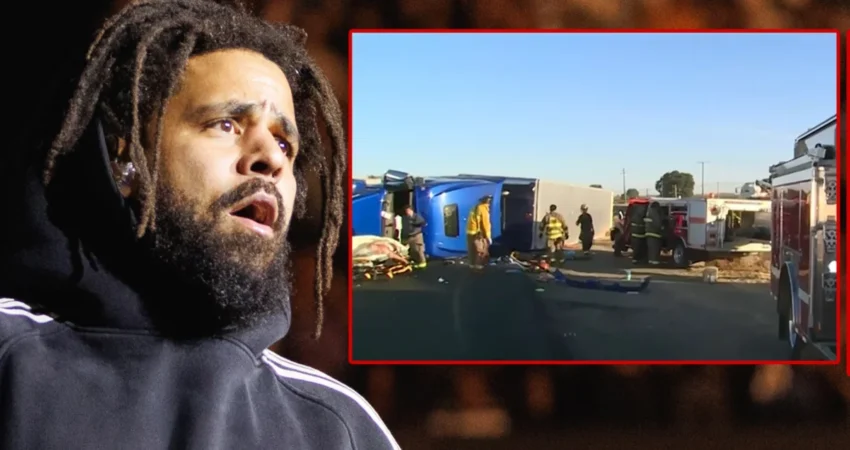
The scheduled J. Cole concert in Sacramento, California, slated for Thursday, August 27, 2026, has been abruptly canceled following the tragic death of a touring crew member in a trucking accident earlier that morning. The incident involved a commercial vehicle transporting equipment for the acclaimed rapper’s performance, highlighting the often-unseen dangers faced by the dedicated personnel who make live music events possible. The cancellation, announced late Thursday afternoon, sends ripples of disappointment through thousands of fans while simultaneously drawing somber attention to the indispensable and sometimes hazardous work of tour logistics.
Details of the Tragic Incident
The fatal accident occurred around 6:00 AM PDT on Thursday, August 27, on southbound Interstate 5 near Woodland, California, a short distance north of Sacramento. According to initial reports from the California Highway Patrol (CHP), a large commercial truck, confirmed to be hauling stage equipment for J. Cole’s upcoming concert, veered onto the right shoulder of the freeway. The driver, whose identity has not yet been publicly released, reportedly attempted to correct the vehicle’s course and steer it back onto the main lanes. During this maneuver, the big rig tragically overturned, resulting in a severe crash.
Emergency services, including the CHP and local fire departments, responded rapidly to the scene. First responders worked to extricate the driver, who was the sole occupant of the truck. A medical helicopter was reportedly dispatched to the site, underscoring the severity of the injuries sustained. Despite these immediate efforts, authorities later confirmed that the driver succumbed to their injuries at the scene. The investigation into the precise cause of the accident, including factors such as driver fatigue, mechanical failure, or road conditions, is ongoing. The closure of lanes on Interstate 5 caused significant traffic disruptions throughout the morning, serving as a stark reminder of the incident’s immediate impact on the community.
Artist’s Response and Concert Cancellation
The tragic news prompted an immediate and decisive response from J. Cole’s management. A statement released by the artist’s team on Thursday afternoon confirmed the cancellation of the concert at the Golden 1 Center in Sacramento. "Following the tragic passing of a member of the touring crew in a trucking accident this morning," the statement read, "our scheduled performance at Golden 1 Center on August 27 has been called off." The statement conveyed profound condolences, adding, "Our thoughts are with the crew member’s family and loved ones during this incredibly difficult time."
The Golden 1 Center, a state-of-the-art indoor arena with a seating capacity of over 17,500 for concerts, was set to host what was anticipated to be a sold-out or near-capacity event. The venue, known for its busy schedule of major touring acts, sporting events, and conventions, would have undertaken significant logistical preparations for a show of this magnitude. While specific details regarding ticket refunds or potential rescheduling have not yet been publicly announced by the venue or the artist’s representatives, it is standard practice for full refunds to be issued for canceled events. The decision to cancel, rather than postpone, highlights the immediate and profound impact of the tragedy on the entire touring operation, signaling a collective need to mourn and process the loss.
The Unsung Heroes of Touring Logistics
The incident casts a harsh spotlight on the vital, yet often invisible, role of touring crew members. For every major concert, dozens, sometimes hundreds, of individuals work tirelessly behind the scenes. These "roadies," as they are often colloquially known, include sound engineers, lighting technicians, stagehands, security personnel, production managers, and, crucially, the truck drivers who transport immense amounts of equipment across vast distances. Without their meticulous planning, physical labor, and unwavering commitment, large-scale live performances would simply be impossible.
Commercial truck drivers are the backbone of the entertainment industry’s touring ecosystem. They operate specialized vehicles, often navigating complex routes, tight schedules, and challenging weather conditions. These drivers are responsible for the safe transit of millions of dollars worth of sound systems, lighting rigs, video screens, musical instruments, and stage props from one city to the next, often covering hundreds or thousands of miles between shows. Their work demands extreme focus, endurance, and adherence to stringent safety regulations, including hours-of-service rules designed to combat driver fatigue. The hours are long, the pressure is immense, and the risks, as tragically demonstrated by this incident, are very real. The touring industry, while glamorous for the artists, relies heavily on the professionalism and sacrifice of these dedicated individuals who often spend weeks or months away from their homes and families.
Highway Safety and Commercial Trucking
The accident on Interstate 5 near Woodland serves as a stark reminder of the inherent risks associated with commercial trucking, particularly on busy interstate highways. Interstate 5 is one of the busiest north-south corridors on the West Coast, handling a tremendous volume of commercial traffic daily. According to the Federal Motor Carrier Safety Administration (FMCSA), large trucks were involved in 5,788 fatal crashes in the U.S. in 2021, an increase from previous years. While many factors contribute to these accidents, including passenger vehicle behavior, issues such as driver fatigue, distracted driving, speeding, and mechanical failures remain significant concerns within the trucking industry.
California’s specific regulations for commercial vehicles are among the strictest in the nation, aiming to ensure safety through rigorous inspections, licensing requirements, and enforcement of hours-of-service rules. Despite these measures, the sheer volume of truck traffic and the demanding schedules often faced by drivers mean that accidents, while statistically less frequent per mile traveled compared to passenger vehicles, can have devastating consequences due to the size and weight of the vehicles involved. This incident underscores the ongoing need for vigilance, continuous safety training, and adequate rest periods for all commercial drivers, especially those operating under the tight logistical constraints of a major concert tour.
Broader Impact and Implications
The cancellation of a major artist’s concert has multi-faceted implications beyond the immediate human tragedy. For the fans, it means disappointment and the inconvenience of managing ticket refunds. Many fans travel significant distances, book hotels, and make extensive plans to attend these events. The financial loss for them can extend beyond the ticket price.
For the Golden 1 Center and its associated vendors, the cancellation represents a significant loss of revenue, including ticket sales, concessions, merchandise, and parking fees. The operational staff, from ushers to cleaning crews, also face unexpected work disruptions. Furthermore, the entire local ecosystem that benefits from large events—restaurants, hotels, and transportation services—experiences a sudden downturn.
For J. Cole and his touring entity, the impact is profound. Beyond the immediate financial losses from a canceled show, there is the immense emotional toll on the artist, band members, and the remaining crew. The touring industry often fosters a close-knit "family" atmosphere, and the loss of a colleague can deeply affect morale and mental well-being. Logistically, such an event can also lead to a temporary halt in tour operations, requiring adjustments to schedules, equipment, and personnel. There might be discussions about enhancing existing safety protocols or reviewing logistics, although tour operations are typically already highly regulated. The artist’s decision to cancel the show immediately reflects a profound respect for the deceased crew member and an acknowledgment of the gravity of the situation, prioritizing human life and empathy over contractual obligations or financial considerations.
The Emotional Toll on the Touring Family
While the immediate focus often gravitates towards the cancellation and its logistical fallout, the profound emotional impact on the touring "family" cannot be overstated. When a crew member dies, it is not just a professional loss; it is often the loss of a friend, a colleague with whom countless hours have been spent on the road, sharing experiences, challenges, and triumphs. These individuals live and work in close quarters for extended periods, forming bonds that often transcend typical workplace relationships.
For J. Cole and his team, navigating the remainder of the tour will undoubtedly be a somber and reflective experience. The incident serves as a stark reminder of the fragility of life and the inherent risks associated with their profession. It will likely prompt moments of reflection on safety, the value of each individual’s contribution, and the personal sacrifices made by those who dedicate their lives to bringing music to audiences around the world. The act of canceling the concert, while difficult, also provides a crucial moment for collective mourning and support among the remaining members of the tour, allowing them space to process their grief before attempting to resume performances.
Moving Forward: Safety and Support
As investigations continue into the exact circumstances of the accident, the incident will undoubtedly spark renewed conversations within the music industry about road safety for touring personnel. While rigorous safety standards are already in place, every tragedy offers an opportunity to review and potentially enhance protocols, from driver rest requirements to vehicle maintenance schedules and emergency response plans.
For the immediate future, J. Cole’s team will likely focus on supporting the family of the deceased crew member and providing resources for the mental and emotional well-being of the remaining tour staff. Details regarding the rest of the tour schedule, and whether this tragedy will lead to further adjustments, remain to be seen. However, the cancellation of the Sacramento concert stands as a somber testament to the sacrifices made by the essential, often unsung, heroes who work tirelessly behind the scenes to deliver the magic of live music, reminding everyone of the human cost that can sometimes accompany the spectacle.

0 Comments