
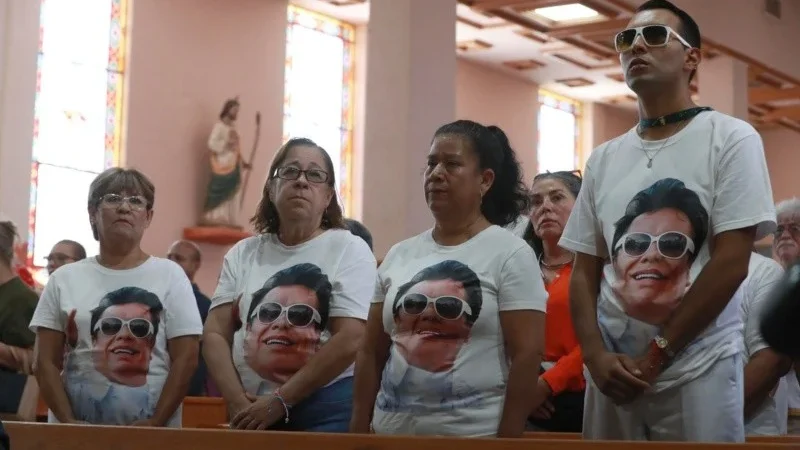
Followers from Mexico and the United States converged on Ciudad Juárez this Friday, August 28, to commemorate the enduring legacy of Juan Gabriel, affectionately known as "El Divo de Juárez," on the tenth anniversary of his passing. The border city, which played a pivotal role in the artist’s formative years and career, transformed into a vibrant hub of remembrance, drawing thousands who sought to honor the musical icon whose influence continues to resonate deeply across generations and geographical boundaries. This solemn yet celebratory gathering underscored the profound impact of Alberto Aguilera Valadez, whose songs became anthems for love, heartbreak, and resilience, cementing his status as one of Latin America’s most cherished and influential performers.
A Pilgrimage of Remembrance: The Gathering in Ciudad Juárez
The commemorative events in Ciudad Juárez were marked by an overwhelming outpouring of emotion and respect. From early morning, fans began to assemble at key locations associated with Juan Gabriel’s life, including his former home and the iconic streets he once walked. Among those who made the pilgrimage were Catalina Albardín and her father, Ramón, who traveled from Florida, United States, specifically to participate in the tributes. Albardín articulated the deep emotional connection many feel, stating, "Everything, everything about listening to him is a great emotion for me. It’s like feeling closer to Mexico, to your family, more connected with all the love." This sentiment was echoed by countless others, highlighting the personal and cultural significance Juan Gabriel’s music holds for his admirers, transcending mere entertainment to become a conduit for national identity and familial bonds.
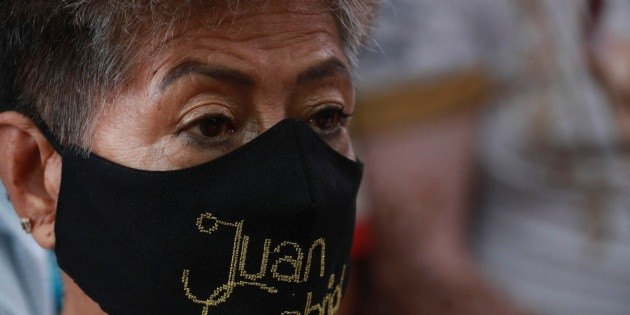
María del Socorro Núñez Domínguez, a resident of Ciudad Juárez, emphasized the artist’s undiminished presence. "For me, it represents how time flies, ten years of not having him physically, but always in our hearts, in our minds, in our daily lives," she noted, reflecting a widely held belief among fans that the Divo’s spirit continues to thrive through his extensive discography. Núñez Domínguez proudly shared that she has introduced her grandchildren to Juan Gabriel’s music, ensuring his legacy extends to new generations. She underscored the artist’s paramount importance to Ciudad Juárez, the frontier city that witnessed his growth from a struggling youth to an international superstar. "For Ciudad Juárez, he represents that he made us known internationally," she affirmed, articulating the city’s pride in its "Divo."
Conny Mendoza, who journeyed from Mexico City, made the annual trip to the border to partake in the commemorations, a testament to the ritualistic nature of these tributes. "To continue honoring everything he left us and to keep thanking you, the Juarenses, who welcome us from everywhere, with open arms. We are very happy to be here, truly. We try to be here every year to continue feeling him with us," Mendoza expressed, highlighting the sense of community and shared grief that unites fans. For Mendoza, Juan Gabriel’s songs are interwoven with personal and family experiences, forming an indelible mark that will persist for decades. "We will not forget him, I believe, never, for generations and generations," she declared, capturing the collective conviction that his artistry is timeless.
A Life in Song: The Juan Gabriel Chronology
Alberto Aguilera Valadez was born on January 7, 1950, in Parácuaro, Michoacán, a humble beginning that belied the monumental impact he would later have on the world stage. His childhood was marked by adversity; after his father’s disappearance and his mother’s struggles, he was placed in the Casa Hogar de Niños de Ciudad Juárez, an orphanage, at a young age. It was in this environment that he found solace and expression through music, learning to play various instruments and compose his first songs. This period in Ciudad Juárez was foundational, shaping his artistic identity and forging an unbreakable bond with the city that would eventually bestow upon him the moniker "El Divo de Juárez."
His early career was fraught with challenges, including stints in various venues and even a period of wrongful imprisonment in Mexico City. However, his talent was undeniable, and by the early 1970s, he began to gain recognition, adopting the stage name Juan Gabriel as a tribute to his mentor, Juan Contreras, and his father, Gabriel Aguilera. His debut album, "El Alma Joven," released in 1971, launched him into stardom with hits like "No Tengo Dinero." This marked the beginning of an extraordinary career that would span over four decades.
Throughout the 1970s and 1980s, Juan Gabriel’s popularity soared across Latin America and beyond. He released a prolific stream of albums, many of which achieved multi-platinum status. His concerts were legendary, characterized by his flamboyant stage presence, heartfelt interpretations, and direct engagement with his audience. He composed over 1,800 songs, a staggering output that included hits for more than 200 artists, cementing his reputation as one of the most prolific and successful songwriters in the Spanish-speaking world. His ability to fuse traditional Mexican genres like mariachi and ranchera with pop ballads and boleros created a unique sound that transcended musical categories and appealed to a broad demographic. Iconic songs such as "Querida," "Así Fue," "Amor Eterno," and "Hasta Que Te Conocí" became cultural touchstones, resonating with millions and often narrating stories of love, loss, and longing that were universally understood.
By the 1990s and 2000s, Juan Gabriel had become a living legend, selling over 30 million records globally and earning numerous accolades, including multiple Latin Grammy Awards and induction into the Billboard Latin Music Hall of Fame. His concerts continued to fill stadiums, including historic performances at Mexico City’s Palacio de Bellas Artes, a venue typically reserved for classical music and opera, a testament to his groundbreaking appeal and cultural significance. His life was a testament to perseverance, talent, and an unwavering connection to his roots.
On August 28, 2016, Juan Gabriel passed away at the age of 66 in Santa Monica, California, just two days after a major concert in Los Angeles. His sudden death sent shockwaves across the globe, prompting an outpouring of grief and tributes from fans, fellow artists, and political figures. The date of his passing has since become an annual occasion for reflection and celebration of his unparalleled artistic contributions.
The Divo’s Enduring Legacy: Musical Impact and Influence
Juan Gabriel’s musical legacy is immense and multifaceted. His compositions are characterized by their lyrical depth, emotional honesty, and melodic richness. He possessed a rare ability to craft songs that felt intensely personal yet universally relatable, making him a master storyteller through music. His vast catalog includes genres ranging from mariachi and ranchera to pop, rock, and disco, demonstrating his versatility and willingness to experiment. This eclecticism allowed him to appeal to diverse audiences and collaborate with a wide array of artists, from Rocío Dúrcal and Isabel Pantoja to Marc Anthony and Juanes. His influence is evident in countless contemporary Latin artists who cite him as an inspiration, both for his songwriting prowess and his captivating stage persona.
Beyond his impressive sales figures and awards, Juan Gabriel’s impact is deeply cultural. He broke barriers in a traditionally conservative society, openly embracing his identity and challenging gender norms through his flamboyant style and heartfelt expression. He became an icon for marginalized communities, particularly within the LGBTQ+ community, who saw in him a figure of authenticity and strength. His music often celebrated the complexities of love and identity in ways that resonated with those who felt unseen or unheard.
Posthumously, his popularity has only solidified. His music continues to be streamed millions of times, and new generations are discovering his work through digital platforms and contemporary artists who perform his songs. Documentaries, biopics, and tribute albums continue to emerge, further cementing his place in popular culture. The enduring commercial viability of his music highlights the timeless quality of his artistry and the continued demand for his unique sound.
Juárez: The Heart of the Divo
Ciudad Juárez was not merely a backdrop for Juan Gabriel’s early life; it was an integral part of his identity and artistic narrative. Though born in Michoacán, it was in Juárez that he found his voice, learned the intricacies of music, and began his artistic journey. He frequently referred to himself as "El Divo de Juárez," a title that proudly proclaimed his allegiance to the city that embraced him.
The city reciprocated this affection, declaring him a "Hijo Predilecto" (Favorite Son) for his contributions to music and for elevating the city’s profile internationally. Juan Gabriel consistently maintained a strong connection with Juárez throughout his life, investing in local projects, supporting charitable initiatives, and ensuring that the city remained a central theme in his public identity. His former home in Juárez has become an unofficial pilgrimage site for fans, a tangible link to the artist’s humble beginnings and eventual triumph.
The economic and cultural implications of this bond are significant. Juan Gabriel’s association with Juárez has undoubtedly boosted tourism, drawing fans who wish to connect with his roots. Local businesses often feature his image and music, and the city itself has embraced its role as the "Divo’s" spiritual home. This relationship exemplifies how a cultural icon can profoundly shape the identity and economy of a place, creating a legacy that extends far beyond the realm of music.
Official Responses and Broader Implications
While specific official statements from this year’s commemoration were not detailed in the original report, it is a consistent pattern for Ciudad Juárez authorities to actively participate in and support these annual tributes. In previous years, civic leaders have often highlighted Juan Gabriel’s role as an ambassador for the city, acknowledging his immense contribution to its global recognition. It is reasonable to infer that officials would reiterate their pride in his legacy and their commitment to preserving his memory, perhaps through cultural programs, memorials, or educational initiatives.
The broader implications of Juan Gabriel’s enduring popularity ten years after his death speak to the universal power of music and the unique connection an artist can forge with their audience. His story—a journey from poverty and hardship to international superstardom—serves as an inspiration, a testament to the transformative power of talent and perseverance. His ability to articulate complex human emotions through song has ensured his relevance across generations, providing comfort, joy, and a sense of shared experience to millions.
Furthermore, his legacy underscores the continuing importance of cultural figures in shaping national identity and pride. For Mexico, Juan Gabriel remains a symbol of resilience, creativity, and the rich tapestry of its musical heritage. For the wider Latin American community and beyond, he is a reminder of the unifying power of art, bridging divides and fostering a sense of collective belonging. The annual pilgrimage to Ciudad Juárez is not merely a memorial; it is a reaffirmation of a cultural phenomenon, a celebration of a life that continues to sing in the hearts of millions, forever "El Divo de Juárez."

0 Comments