
As the calendar turns to the final days of August, the global workforce faces one of the most psychologically challenging periods of the year: the transition from summer leisure to the structured demands of the corporate environment. For many professionals, particularly those in Europe where the traditional August holiday remains a cultural staple, the "return to the office" is met with a mixture of nostalgia for the coast and the pragmatic necessity of resuming professional duties. This transition is not merely a change in schedule but a shift in identity, often reflected most visibly in the daily choice of attire. The rigid formalwear of previous decades has largely given way to a more nuanced "business-informal" aesthetic, a trend accelerated by the recent Copenhagen Fashion Week, which has provided a blueprint for returning to work with elegance, comfort, and a lingering sense of summer freedom.

The Evolution of the Post-Summer Office Aesthetic
The concept of the "power suit" has undergone a radical transformation over the last five years. In the wake of hybrid work models and a heightened focus on employee well-being, the strict boundaries between weekend wear and office attire have blurred. According to market analysis from the Global Fashion Intersect, consumer interest in "versatile workwear"—garments that transition seamlessly from a boardroom to a social setting—has increased by 22% since 2022. This shift is particularly evident during the late-summer transition, where professionals seek to maintain the lightness of their vacation wardrobe while adhering to the expectations of a professional setting.
The influence of Copenhagen Fashion Week (CPHFW) cannot be overstated in this context. Known for its "Scandi-chic" minimalism, the event has become a primary reference point for realistic, everyday fashion. Unlike the avant-garde spectacles of Paris or Milan, Copenhagen emphasizes wearability, movement, and the clever layering of basic pieces. For the professional woman returning to the office in late August or early September, these Danish-inspired looks offer a way to navigate the "post-vacation syndrome" by focusing on textures like linen and cotton, and silhouettes that prioritize ease of movement.

Chronology of a Wardrobe Transition: From August to September
The transition period typically follows a specific chronology. In mid-August, the focus remains on high-summer garments—dresses, sandals, and sleeveless tops. By the final week of August, as "Back to School" and "Back to Office" marketing begins to dominate the retail landscape, there is a measurable shift toward "bridge pieces." These are items that carry the weight of professional expectations but retain the breathability required for the late-summer heat.
By September 1st, the psychological shift is complete. HR departments across major metropolitan hubs report that this week often sees the highest volume of internal communications regarding office attendance and performance goals for the final quarter. Consequently, the choice of dress becomes a strategic tool for professionals to re-establish their presence. Stylists note that the goal for this period is "polished informality"—a look that suggests readiness and competence without the stifling nature of traditional tailoring.

Strategic Look 1: The Luminescent Yellow Shirt and Neutral Midi Skirt
One of the most effective ways to combat the gloom of a return to the office is through the strategic use of color psychology. The yellow striped shirt, as seen on the streets of Copenhagen, serves as a bridge between the sun-drenched days of vacation and the artificial lighting of the workspace. Yellow is traditionally associated with optimism, energy, and mental clarity—traits that are essential during the first week back at a desk.
To maintain professional gravity, this vibrant piece is paired with a midi skirt in a neutral tone, such as beige, sand, or camel. The midi length provides the necessary coverage for a formal environment while allowing for the airflow that remains necessary in early September. Accessories play a crucial role here; brown leather bags and structured flats (ballerinas) ground the look, preventing it from appearing too casual. This ensemble reflects a growing trend in the "quiet luxury" sector, where high-quality basics in unexpected colors create a sophisticated, approachable professional image.

Strategic Look 2: The Masculine Blue Shirt and Tailored Bermudas
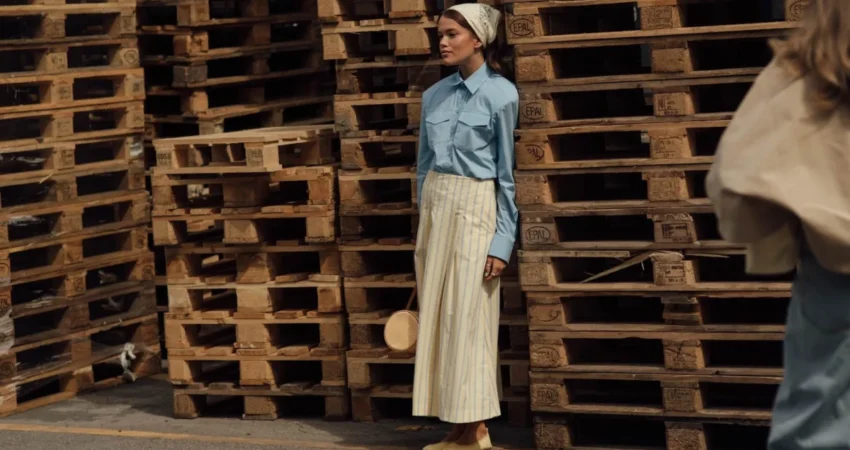
The second look focuses on the intersection of masculine tailoring and feminine ease. The classic blue button-down shirt is perhaps the most ubiquitous item in the professional wardrobe. However, for the late-summer return, it is reimagined through pairing with wide-leg, tailored bermuda shorts.
The acceptance of bermudas in the office represents a significant shift in corporate dress codes. Once confined to creative industries, the tailored bermuda—hitting just above or at the knee—is now seen as a sophisticated alternative to the full trouser or the pencil skirt. This look is often completed with black loafers and a silk scarf tied at the neck, adding a layer of "preppy" sophistication. This combination addresses the "creative professional" demographic, which, according to a 2025 survey by Workplace Trends, now makes up nearly 35% of the urban workforce. The use of a large tote bag further emphasizes the functional aspect of this look, catering to the needs of the modern professional who carries technology and personal essentials throughout the day.

Strategic Look 3: The Urban Minimalist White Tank and Wide-Leg Denim
Perhaps the most daring yet practical option for the informal office is the combination of a high-quality white tank top and wide-leg black denim. This look relies entirely on fit and the quality of materials. In a professional context, the tank top must be made of a thick, opaque rib-knit, and the denim should be a deep, unwashed black that mimics the appearance of a dress trouser.
This ensemble is elevated through structural accessories. A leather belt to define the waist and a structured blazer—kept on hand for meetings—transforms this from casual weekend wear to a sleek, urban office uniform. This look resonates with the "minimalist" movement that has dominated fashion discourse for the past decade. It prioritizes a "uniform" approach to dressing, which many executives claim reduces decision fatigue, allowing for greater focus on professional tasks during the demanding transition period.

Data Analysis: The Economic Impact of the "Return to Work" Season
The economic implications of the "Back to Office" season are substantial. Data from the National Retail Federation suggests that spending on professional apparel in late August and early September rivals the holiday shopping season for certain demographics. In 2025, apparel sales in the "Smart Casual" category saw a 14% year-over-year increase during this window.
Furthermore, the rise of "Scandi-style" has fueled a specific market for brands like Ganni, Cecilie Bahnsen, and Stine Goya, which have seen a surge in international orders during the transition months. Consumers are increasingly willing to invest in "hero pieces"—like the perfect oversized blue shirt or a well-cut midi skirt—that can be styled in multiple ways. This reflects a broader shift toward sustainable consumption, where the goal is to own fewer, more versatile items rather than a large volume of trend-heavy clothing.

Expert Reactions and Workplace Implications
Human Resources professionals and workplace psychologists have noted the link between attire and the "re-entry" process. Dr. Helena Thorne, a specialist in organizational psychology, suggests that "the act of dressing for work is a ritual that signals to the brain that the period of rest is over and the period of productivity has begun. By choosing clothes that are comfortable yet professional, employees can reduce the stress associated with the return to a controlled environment."
Many modern companies have responded by officially relaxing their dress codes. A 2026 report on corporate culture indicated that 60% of Fortune 500 companies now describe their dress code as "flexible" or "business casual." This flexibility is seen as a low-cost perk that improves employee morale. However, the challenge for the employee remains in finding the balance. The looks inspired by Copenhagen Fashion Week provide a solution to this dilemma, offering a template that respects the professional setting while acknowledging the individual’s need for comfort.

Broader Impact: Sustainability and the Future of Workwear
The move toward informal office looks is also deeply intertwined with the sustainability movement. The pieces highlighted—cotton shirts, denim, and midi skirts—are typically more durable and easier to care for than traditional suits that require frequent dry cleaning. As the fashion industry faces increasing pressure to reduce its carbon footprint, the promotion of a "versatile wardrobe" is a key strategy.
Looking ahead to 2027 and beyond, it is likely that the "office look" will continue to evolve toward a highly personalized, modular system. The rigid distinction between "work clothes" and "life clothes" is fading. As we move out of the summer of 2026, the lessons learned from the streets of Copenhagen offer more than just fashion advice; they provide a strategy for integration. By embracing color, comfort, and classic silhouettes, the modern professional can return to the office not with a sense of loss, but with a renewed sense of style and purpose. The transition may still be a "dreaded moment" for some, but with the right wardrobe, it becomes an opportunity to redefine one’s professional identity for the season ahead.

0 Comments