
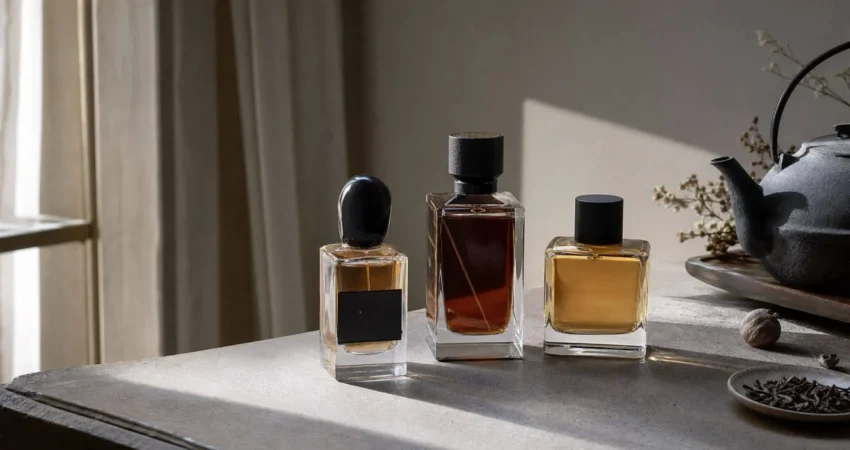
The global fragrance industry is currently witnessing a significant paradigm shift as olfactory preferences move away from the sugary, "gourmand" profiles that have dominated the market for the past decade. In their place, a more cerebral and understated category is emerging, centered around the complex and multifaceted note of black tea. Characterized by its dry, warm, and enveloping nature, black tea has become the cornerstone for a new generation of sophisticated fragrances that offer a sober alternative to traditional floral and fruit-heavy compositions. This trend reflects a broader cultural movement toward "quiet luxury" and introspective consumption, where the wearer seeks a scent that acts as a second skin rather than an aggressive olfactory statement.

According to the Academia del Perfume, the original and powerful note of black tea is utilized primarily in oriental and woody perfumes. In these compositions, it provides smoked nuances that are highly effective at enhancing leather accords. This chemical synergy allows perfumers to create scents that feel deeply textured and serene, moving away from the immediate gratification of sweetness toward something more mature and intimate. As the niche fragrance market continues to expand—with projections suggesting a compound annual growth rate of over 8% through 2030—the demand for non-linear, complex notes like black tea is at an all-time high.
The Olfactory Profile of Black Tea: Beyond the Cup
To understand the rise of black tea in perfumery, one must first look at its chemical and sensory complexity. Unlike green tea, which is prized in perfumery for its ozonic, citrusy, and fresh qualities, black tea undergoes a process of complete fermentation and oxidation. This chemical transformation results in a profile rich in tannins, which translates to a "dry" sensation in the nose. Perfumers often describe black tea as having facets of dried hay, cured tobacco, and even honeyed woods.

The sourcing of these notes often involves high-tech extraction methods such as Supercritical Fluid Extraction (SFE) using CO2, which allows for the capture of the most delicate aromatic molecules without the thermal degradation associated with traditional steam distillation. This technology has enabled brands to replicate the specific scent of regional tea varieties, from the malty depth of Assam to the floral airiness of Darjeeling and the intensely smoky character of Chinese Lapsang Souchong.
A Chronology of the Tea Movement in Niche Perfumery
The integration of tea into high-end perfumery is not entirely new, but its current iteration is far more dark and "noir" than its predecessors. The timeline of this evolution reveals a steady move toward intensity:

- The 1990s (The Green Tea Era): Led by Jean-Claude Ellena’s creation of Eau Parfumée au Thé Vert for Bvlgari in 1992, tea was initially used as a symbol of cleanliness and zen-like minimalism.
- The 2010s (The Rise of Complexity): Brands began experimenting with the darker side of the leaf. Le Labo’s release of Thé Noir 29 in 2015 marked a turning point, proving that tea could be both "dirty" and elegant.
- 2020–Present (The Introspective Era): Post-pandemic consumer behavior has favored scents that evoke comfort and complexity. Fragrances like Byredo’s Mixed Emotions (2021) and BDK’s Gris Charnel have solidified black tea as a staple of the modern "skin scent" movement.
Analysis of the Four Defining Black Tea Fragrances
Le Labo: Thé Noir 29
Released in 2015 and composed by master perfumer Frank Voelkl, Thé Noir 29 is perhaps the most iconic representation of the black tea trend. Despite its name, the fragrance does not rely solely on tea; instead, it uses a specialized black tea leaf extract to anchor a composition of 29 ingredients. The scent opens with the brightness of bergamot and fig but quickly transitions into a dry, vegetal heart of cedar wood and vetiver. The "black tea" effect is achieved through a masterful use of hay and tobacco notes, creating a fragrance that feels both nocturnal and deeply rooted in nature. It is widely considered a "masterpiece of contrast," balancing freshness with a brooding, leathery finish.
Byredo: Mixed Emotions
Byredo’s 2021 release, Mixed Emotions, was designed to reflect the fragmented and tumultuous state of the world at the time. It is a genderless fragrance that leans heavily into the aromatic properties of Maté and Ceylon black tea. The inclusion of blackcurrant at the top provides a sharp, slightly acidic entry, which is immediately tempered by the smokiness of the tea. The base notes of birch wood and papyrus give the perfume a papery, archival quality. It is a fragrance that rewards the patient wearer, evolving from a fruity-aromatic start to a deeply melancholic and sophisticated woody dry-down.

BDK Parfums: Gris Charnel
Hailing from the independent Parisian house BDK Parfums, Gris Charnel has become a viral sensation in the fragrance community. It offers a softer, more "cashmere-like" interpretation of black tea. Created by Mathilde Bijaoui, the scent centers on the interplay between black tea, cardamom, and fig. Unlike the smokier options on this list, Gris Charnel utilizes the creaminess of Indian sandalwood and the warmth of tonka bean to create a "gray" (gris) atmosphere. It is an urban fragrance, inspired by the stone bridges of Paris and the quiet intimacy of a rainy afternoon, making it an ideal choice for those who find traditional tea scents too harsh or overly smoky.
Arquiste: Indigo Smoke
Arquiste, a house known for its historical storytelling through scent, explored the origins of the tea trade with Indigo Smoke. This fragrance focuses on Lapsang Souchong, a black tea from China’s Fujian province that is traditionally dried over pinewood fires. The result is an intensely smoky, resinous aroma. Perfumer Rodrigo Flores-Roux balanced this heavy smoke with bright mandarin, apricot, and incense. Indigo Smoke is an olfactory journey that captures the transition from the fresh, green mountainsides to the industrial, smoky docks of the ancient tea-horse road. It is the most exotic and avant-garde option for enthusiasts seeking a scent with a strong narrative arc.

Market Implications and Consumer Psychology
The pivot toward black tea is also an economic indicator. As the "lipstick effect" shifts toward "fragrance as self-care," consumers are willing to invest in niche perfumes that offer longevity and uniqueness. Black tea scents, due to their molecular structure, tend to have excellent "sillage" (the trail left by a perfume) and staying power on the skin without being cloying.
Furthermore, industry analysts point to the "unisex" appeal of tea as a major driver for growth. Traditional gender boundaries in marketing are dissolving, and tea-based notes provide a neutral ground that appeals equally to all demographics. The "clean" and "natural" associations of tea also align with the growing consumer demand for transparency and botanical ingredients in beauty products.

The Future of the "Tea-Infused" Palette
As we look toward future olfactory trends, the influence of black tea is expected to expand into more experimental territory. We are likely to see perfumers pairing black tea with "cold" spices like ginger and juniper, or with unexpected gourmand elements like salted caramel to create a "smoked sweetness" that avoids the pitfalls of traditional sugary scents.
The current popularity of these four fragrances—Thé Noir 29, Mixed Emotions, Gris Charnel, and Indigo Smoke—suggests that the modern consumer is no longer satisfied with simple, one-dimensional perfumes. They are seeking complexity, history, and a sense of calm. In a world that feels increasingly loud and fast-paced, the dry, serene, and introspective aroma of black tea provides a much-needed olfactory sanctuary. Whether it is the Parisian elegance of BDK or the smoky exoticism of Arquiste, black tea has firmly established itself as the new gold standard for sophisticated, contemporary perfumery.

0 Comments