
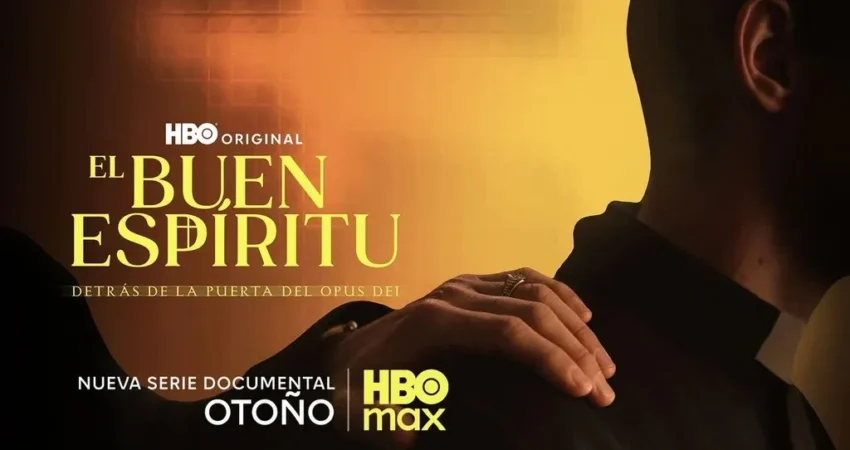
HBO Max is set to release on September 25th the highly anticipated three-episode documentary series, "El Buen Espíritu: Detrás de la Puerta del Opus Dei" (The Good Spirit: Behind the Door of Opus Dei). This new series promises to delve deeper into the inner workings of the Opus Dei, building upon the groundbreaking impact of its predecessor, "El Minuto Heroico: Yo También Dejé el Opus Dei" (The Heroic Minute: I Also Left Opus Dei). The trailer for the upcoming series is now available, offering a glimpse into the profound testimonies that will be unveiled.
This documentary is not merely a follow-up; it represents a crucial expansion of a narrative that has captivated public attention. "El Minuto Heroico," which garnered the prestigious Ondas Award for Best Documentary in 2025, brought to light the experiences of thirteen women who detailed alleged instances of labor, psychological, and spiritual abuse within the Opus Dei. The resonance of that series was undeniable, prompting a significant number of men who had also left the organization to express their own desire to share their stories and the roles they played within the institution.
The creative force behind this compelling continuation is Mònica Terribas, who returns as creator and director. Produced by The Mediapro Studio for HBO Max in Spain, the series will launch all three episodes simultaneously on Friday, September 25th, allowing viewers to immerse themselves in the unfolding narratives.
A Global Tapestry of Testimonies
At the heart of "El Buen Espíritu" are the voices of fourteen men from a diverse range of backgrounds and nationalities. These individuals hail from eleven different countries: Spain, Italy, France, Poland, Germany, England, Mexico, Guatemala, El Salvador, the United States, and Argentina. While their geographical origins vary, their accounts, according to the series, reveal a disturbingly consistent pattern, punctuated by unsettling variations that underscore the pervasive nature of their experiences.
These are not peripheral figures within the Opus Dei. Many of the featured men held positions of significant responsibility within the institution. Their roles included directorships, secretarial duties, membership in Local Councils, and service in Regional Commissions. Others dedicated their professional careers to the expansion and influence of the Opus Dei. Some were sent as numeraries, associates, or priests at a tender adolescent age, dispatched to countries from which they would ultimately never return. This breadth of experience and seniority among the interviewees is expected to provide an unprecedented level of insight into the organization’s internal structures and operations.
Unpacking the Internal Dynamics of the Opus Dei

The narratives presented in the documentary, as suggested by the production, converge on a recognizable framework. This framework reportedly includes early recruitment tactics targeting children, a perceived sense of predestination leading individuals towards life as numeraries or priests, and a sophisticated system of psychological and spiritual control that permeated every facet of their existence. The documentary aims to provide an in-depth examination of the Opus Dei’s internal functioning, exploring its financial architecture, its methods of influence, and the specific practices of spiritual direction and indoctrination applied to adolescents and young university students.
To contextualize these deeply personal testimonies, Terribas has assembled a distinguished panel of expert voices. This includes Santiago Bueno Salinas, a Professor of Canon Law, Judicial Vicar, and President of the Ecclesiastical Tribunal of Barcelona, whose legal and theological expertise will offer a crucial framework for understanding the institutional aspects. Maria Esther Fernández Mostaza, an Associate Professor of Sociology at the Autonomous University of Barcelona and author of "Els fills de l’Opus" (The Children of Opus), will bring sociological insights to bear on the group dynamics and societal impact. Dr. Vega González, a Clinical Psychologist and Director-Manager of Attention and Research in Socio-Addictions (AIS), will provide a psychological perspective on the methods of control and their impact on individuals. The investigative journalist Gareth Gore, author of "Opus," whose previous work has shed light on the organization, will contribute his research and investigative acumen. Finally, Rebecca Griffin, director of The Deep Dive Project, will offer a global perspective on the study of such institutions.
Dramatizations Enhance Narrative Reconstruction
Adding a new dimension to the documentary format, "El Buen Espíritu" incorporates dramatic recreations directed by Pere Sala. Actors Joel Bosqued, Guillem Balart, and Marc Baltà will bring the protagonists’ accounts to life, visually reconstructing experiences that have, until now, existed primarily in the spoken word of those who lived them. This decision marks a significant departure from the purely testimonial format of "El Minuto Heroico," aiming to provide a more visceral and visually engaging exploration of the deeply personal and often traumatic events described by the interviewees. These dramatizations are intended to bridge the gap between abstract accounts and concrete lived experiences, making the impact of the institution’s practices more tangible for the audience.
The executive production for The Mediapro Studio is overseen by Mònica Terribas herself, alongside Bernat Elias and Amparo Castellano. Representing HBO Max, Bibiana González serves as Director of Non-Fiction Content, with María Rubio and Zaida Serrano-Piedecasas as Executive Producers for Warner Bros Discovery.
A Continuing Public Discourse
The impact of "El Minuto Heroico" was both mediatic and societal. Beyond its Ondas Award win, the series effectively opened a public dialogue about the internal workings of the Opus Dei, a conversation that had for decades been largely confined to academic circles, isolated journalistic reports, and scattered personal testimonies. The decision by HBO Max to commission this continuation strongly suggests that the debate ignited by the first series is far from over; rather, it appears to have broadened and deepened.
The initial thirteen women who shared their experiences have now been joined by fourteen men from eleven countries. This expansion signifies a widening of the investigative scope, with testimonies now coming from individuals who occupied higher-ranking positions within the organization. This broader perspective promises to offer a more comprehensive radiography of the institution, moving beyond the experiences of those who were primarily subjected to its influence to include the perspectives of those who were instrumental in its operation and direction. The series is poised to illuminate not just the experiences of those who obeyed, but also those who commanded, providing a more nuanced and complex understanding of the Opus Dei’s enduring presence and influence. The anticipation surrounding "El Buen Espíritu: Detrás de la Puerta del Opus Dei" highlights the continued public interest in understanding the intricate realities behind closed doors.

0 Comments