
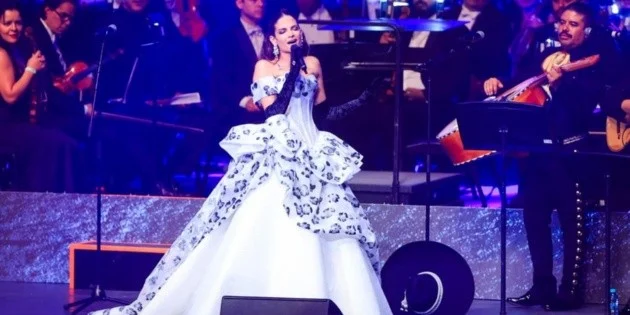
The revered traditions of mariachi and symphonic music converged with spectacular elegance this past Friday at the Auditorio Telmex, marking a pivotal moment in the XXXIII Encuentro Internacional del Mariachi y la Charrería. The evening’s centerpiece, the Concierto Magno, showcased the vibrant dynamism of Mariachi Internacional CHG alongside the majestic sounds of the Orquesta Filarmónica de Jalisco (OFJ), with the renowned Spanish-Mexican singer Natalia Jiménez as the highly anticipated special guest. This unique collaboration underscored the enduring appeal and adaptability of Mexico’s most iconic musical genre, presenting a rich tapestry of sound that resonated deeply with a diverse audience.
Background of the Encuentro Internacional del Mariachi y la Charrería
The Encuentro Internacional del Mariachi y la Charrería, held annually in Guadalajara, Jalisco, is a cornerstone event in Mexico’s cultural calendar, celebrating two of the nation’s most emblematic traditions: mariachi music and charrería, the national sport. Initiated over three decades ago, this festival has grown into a globally recognized spectacle, attracting thousands of musicians, charros, and tourists from around the world. Its primary mission is to preserve, promote, and evolve these cultural expressions, ensuring their vitality for future generations. The festival typically features a vibrant array of activities, including gala concerts at prestigious venues like the Auditorio Telmex, parades through Guadalajara’s historic streets, charrería exhibitions showcasing equestrian skills and traditional attire, and workshops designed to educate and inspire new generations of mariachi musicians and charros. The Encuentro serves not only as a celebration but also as a significant economic driver for Jalisco, boosting tourism and local commerce while reinforcing Guadalajara’s identity as the undisputed capital of mariachi music. The fusion concerts, like the one presented on Friday, are particularly significant as they demonstrate the genre’s capacity for innovation and its ability to transcend traditional boundaries, reaching new audiences and artistic heights.
A Harmonious Overture: Mariachi and Orchestra United
The much-anticipated musical journey commenced around 9:15 PM, with the stage of the Auditorio Telmex illuminated to reveal an impressive ensemble of approximately 30 musicians. This grand assembly represented the combined might of Mariachi Internacional CHG and the Orquesta Filarmónica de Jalisco, poised to embark on an ambitious program. Under the distinguished baton of maestro Enrique Radillo, the OFJ provided a lush, intricate backdrop to the raw passion and precision of Mariachi Internacional CHG. This collaboration was a testament to the versatility of both ensembles, expertly weaving classical orchestration with the distinctive sounds of mariachi trumpets, violins, vihuela, guitarrón, and guitar. The initial joint piece set a sophisticated tone, immediately captivating the audience and demonstrating the artistic potential of this cross-genre dialogue.
The repertoire for the evening was carefully curated to traverse various eras and styles of Mexican and Latin music, showcasing the depth and breadth of both traditional and contemporary influences. Mariachi Internacional CHG, known for its powerful interpretations and stage presence, initiated the night’s performance with a series of beloved classics. Their opening set included the poignant "Que se me acabe la vida," the heartfelt "Suspiros," and the emotionally charged "Reproches." These selections, delivered with the characteristic fervor of mariachi, served as a powerful introduction before the full symphonic accompaniment seamlessly integrated into the performance. Following this initial showcase, the stage was set for a popurrí of timeless ballads, where the Mariachi Internacional CHG and the OFJ truly gelled, creating rich, layered arrangements that added new dimensions to familiar melodies. Later in the program, the combined forces delivered captivating renditions of "Amé," "Si amanece," and "Ni me viene ni me va," further solidifying the artistic success of their collaboration.
Tributes to Latin Music Icons
A significant portion of the concert was dedicated to paying homage to some of the most influential figures in Latin music, demonstrating the mariachi and orchestral fusion’s capacity to reinterpret popular hits with renewed grandeur. One of the evening’s highlights was a meticulously crafted repertoire dedicated to the iconic "El Sol de México," Luis Miguel. The audience was treated to symphonic mariachi versions of his classic romantic ballads, including "Fría como el viento," "Entrégate," "Hasta que me olvides," "La incondicional," and "Ahora te puedes marchar." This segment resonated deeply, as Luis Miguel himself has famously ventured into mariachi music, notably with his album "México en la Piel," demonstrating the genre’s broad appeal and his deep connection to Mexican culture. The orchestral arrangements brought a new depth to these pop anthems, enhancing their emotional resonance while respecting their original essence.
The program then ventured into the realm of banda music, a genre distinct from mariachi but equally beloved in Mexico. A selection of songs from the immensely popular Banda MS was presented, reimagined for the mariachi-symphonic format. Tracks such as "Me vas a extrañar," "Hermosa experiencia," and "Mi mayor anhelo" were transformed, their distinctive melodies given a sophisticated symphonic treatment that delighted the audience. This bold choice showcased the versatility of the ensembles and the artistic direction, proving that the fusion could successfully bridge diverse regional Mexican musical styles. Furthermore, a dynamic popurrí dedicated to the Puerto Rican pop superstar Chayanne added another layer of modern Latin flair, underscoring the concert’s ambition to present a comprehensive musical journey through the continent’s rich soundscape.
A Star-Studded Audience and A Grand Entrance
The cultural significance of the evening was further amplified by the presence of notable figures within the audience. Among the distinguished attendees were acclaimed film director Manolo Caro, known for his innovative storytelling in Mexican cinema, and celebrated fashion designer Benito Santos. Santos’s presence was particularly pertinent, as his exquisite craftsmanship would soon grace the stage through the bespoke wardrobe of Natalia Jiménez, adding an element of high fashion to the musical spectacle. The convergence of music, film, and fashion luminaries underscored the event’s stature as a major cultural happening, drawing attention from various artistic disciplines.
As the clock approached 10:40 PM, a palpable anticipation filled the Auditorio Telmex. All lights dramatically converged towards the entrance of the stage, signaling the arrival of the night’s special guest, Natalia Jiménez. She emerged to thunderous applause, a vision of elegance in a stunning pearlescent white gown, a masterful creation by Benito Santos. The dress featured intricate ruffles, delicate dark floral embellishments, a finely tailored corset that accentuated her silhouette, and elegant long gloves. Her entrance was not merely an appearance but a theatrical moment, setting a majestic tone for her highly anticipated performance.
Natalia Jiménez’s Electrifying Performance
With a radiant smile, Natalia Jiménez greeted the audience, her voice echoing through the grand hall. "Buenas noches, me da mucho gusto estar con todos ustedes esta noche, nos las vamos a pasar bien. Vamos a hacer un popurrí de algunas canciones que sé que se saben," she announced, immediately establishing a warm rapport with the captivated crowd. Her direct and engaging demeanor promised an evening of shared musical memories, and she delivered emphatically.
Jiménez’s segment was a powerful showcase of her vocal prowess and deep connection to Latin American music. Her repertoire included a stirring rendition of Juan Gabriel’s classic "Te sigo amando," a poignant tribute to one of Mexico’s most beloved songwriters whose legacy profoundly intertwines with mariachi music. She also delivered an unforgettable performance of "La gata bajo la lluvia," bringing her unique interpretative flair to the iconic ballad.
Adding a personal touch to her performance, Jiménez shared an intimate anecdote before introducing one of her original compositions. "La siguiente canción la escribí hace mucho, jamás imaginé que la cantaría aquí. La escribí hace mucho a un exnovio, nunca se la aprendió… Ahora ustedes la van a cantar conmigo," she recounted, eliciting laughter and empathy from the audience. This candid moment deepened the connection between the artist and her listeners, transforming the concert into a shared experience. She then launched into a powerful sequence of her own hits, including "Es algo más," "Me muero," "Quédate con ella," and the emblematic "El sol no regresa," each song delivered with a raw emotional intensity that has become her hallmark.
As her scheduled set concluded, Jiménez bid farewell, but the enthusiastic clamor from the audience for an encore was undeniable. Responding to the fervent demand, she graciously returned to the stage, much to the delight of her fans. The encore was a triumphant celebration of Mexican music, featuring a medley of timeless classics that brought the house down. She passionately performed "El Rey," a quintessential mariachi anthem, followed by "Se me olvidó otra vez," "Te lo pido por favor," "Amanecí otra vez," and the profound "El último trago." These songs, deeply embedded in the cultural fabric of Mexico, allowed Jiménez to showcase her powerful voice and her profound respect for the genre, leaving the audience on an emotional high. Her performance was a fitting culmination, blending the grandiosity of the symphonic arrangements with the heartfelt authenticity of mariachi, all delivered through her commanding vocal presence.
Broader Impact and Implications
The Concierto Magno at the XXXIII Encuentro Internacional del Mariachi y la Charrería was more than just a musical performance; it was a powerful statement on the evolution and enduring relevance of Mexican culture. The seamless integration of Mariachi Internacional CHG with the Orquesta Filarmónica de Jalisco, under the expert direction of Enrique Radillo, demonstrated the artistic potential of cross-genre collaborations. Such events are crucial for the cultural preservation of mariachi music, introducing it to new audiences and presenting it in innovative formats that keep the tradition vibrant and dynamic. By embracing symphonic elements and reinterpreting contemporary hits, the concert exemplified how traditional music can adapt and thrive in the modern era without losing its essence.
Furthermore, the Encuentro itself plays a vital role in positioning Guadalajara as a global cultural capital for mariachi. The international attendance and the high caliber of performances contribute significantly to cultural tourism, generating substantial economic benefits for the region. The visibility provided by such a grand event helps to educate and inspire new generations of musicians, ensuring a continuous lineage of talent and passion for mariachi. The success of this fusion concert also opens doors for future artistic endeavors, encouraging more collaborations between traditional Mexican ensembles and classical orchestras, thereby enriching the global musical landscape. The presence of influential figures like Manolo Caro and Benito Santos further highlights the interdisciplinary appeal of these cultural celebrations, demonstrating how music, film, and fashion can converge to create truly memorable and impactful experiences. The evening at Auditorio Telmex was not merely a concert; it was a testament to the enduring power of music to unite, celebrate, and inspire.

0 Comments