
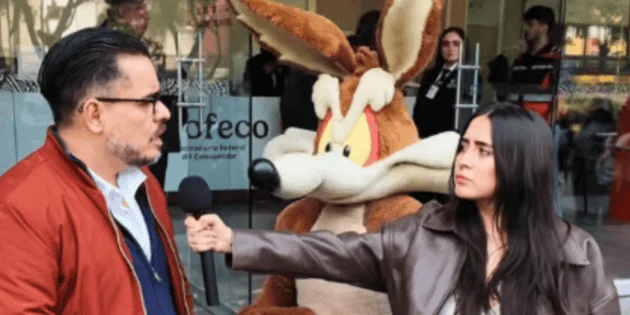
Mexico City witnessed an extraordinary confluence of animation and consumer advocacy as Wile E. Coyote, the enduringly tenacious yet perpetually thwarted character from Warner Bros.’ Looney Tunes universe, made an unprecedented appearance at the Federal Consumer Protection Agency (Profeco) headquarters. The renowned desert predator arrived at the institution’s offices in Mexico City to formally lodge a complaint against the colossal and infamous ACME Corporation, marking a pivotal moment in his decades-long pursuit of justice and, perhaps, a successful meal. This unique event, a highly publicized promotional initiative for the recently released film Coyote vs. ACME, transformed a fictional grievance into a tangible, if theatrical, call for accountability, resonating with both fans and consumer rights advocates alike.
The peculiar visit was meticulously documented in a video disseminated by Zima Entertainment, a prominent Mexican film distribution company, capturing the iconic character being attentively received by Profeco personnel. This viral footage showcased Wile E. Coyote, instantly recognizable in his signature determined demeanor, navigating the real-world bureaucracy of a consumer protection agency. The spectacle underscored the film’s central premise, blurring the lines between animated fiction and real-world consumer struggles.
A Decades-Long Grievance Culminates in Formal Action
For over 70 years, Wile E. Coyote has been a symbol of relentless persistence, yet also of spectacular failure, largely due to the unreliable and often dangerously defective products supplied by the ACME Corporation. From rocket-powered roller skates that backfired to elaborate contraptions designed to capture the elusive Road Runner that invariably malfunctioned, ACME’s catalogue has been a consistent source of frustration, injury, and comedic humiliation for the Coyote. His long-suffering plight, characterized by explosions, plummeting anvils, and self-inflicted injuries, forms the bedrock of the Looney Tunes canon. This visit to Profeco represents the culmination of countless failed attempts, finally pushing the beleaguered carnivore to seek redress through official channels, albeit within a meta-narrative framework.
The Coyote vs. ACME film, penned by James Gunn and directed by Dave Green, provides the narrative backdrop for this unprecedented legal action. In the movie, after enduring decades of catastrophic failures with ACME’s rockets, catapults, and various other "inservible" gadgets intended for catching the Road Runner, Wile E. Coyote finally decides to demand justice. He enlists the services of Kevin Avery, a compassionate but struggling human attorney, portrayed by actor Will Forte, to represent him in a groundbreaking lawsuit against the monolithic corporation. The film explores themes of corporate negligence, product liability, and the David-versus-Goliath struggle against an omnipresent, seemingly untouchable entity.
Profeco’s Commitment to "All Consumers, Including Desert Fauna"
During his high-profile visit to Profeco, the Coyote engaged in a poignant protest at the main entrance of the facilities. He held aloft a sign bearing the defiant slogan: "Si Profeco conmigo, ¿Quién contra mí?" (If Profeco is with me, who can be against me?), a powerful statement reflecting his unwavering demand for accountability. This visual protest, complete with the character’s earnest expression, instantly captivated onlookers and garnered significant media attention. Numerous individuals, both genuine onlookers and those participating in the promotional event, rallied alongside him, symbolizing widespread public empathy for his cause and, by extension, for all consumers who have felt similarly wronged by corporations.
César Iván Escalante, the titular head of Profeco, personally addressed the animated complainant’s grievances. His engagement with Wile E. Coyote was a testament to Profeco’s mission to protect all consumers, irrespective of their species or fictional status. Escalante Ruiz affirmed the agency’s dedication, stating, "Más allá de una opinión, es un hecho. El señor Coyote va a presentar una queja por una serie de productos que han sido defectuosos, porque él sabe que es su derecho y la Procuraduría Federal del Consumidor defiende a todos y todas, incluida la fauna consumidora del desierto." (Beyond an opinion, it is a fact. Mr. Coyote is going to file a complaint for a series of defective products, because he knows it is his right, and the Federal Consumer Protection Agency defends everyone, including the desert’s consumer fauna.) This statement, delivered with a professional demeanor, not only highlighted Profeco’s broad mandate but also expertly played into the satirical nature of the event, reinforcing the agency’s public image as a vigilant guardian of consumer rights.
The Broader Context of Consumer Protection in Mexico
Profeco, established in 1976, serves as Mexico’s principal government agency dedicated to protecting and promoting the rights of consumers. Its mandate includes preventing abusive commercial practices, ensuring fair pricing, mediating disputes between consumers and suppliers, and promoting consumer education. The agency has a robust system for receiving and processing complaints, from formal investigations into misleading advertising to resolving individual disputes over faulty products or services. In 2023 alone, Profeco processed thousands of complaints across various sectors, ranging from telecommunications and financial services to retail and tourism, underscoring its vital role in safeguarding economic justice for Mexican citizens.
The theatrical complaint by Wile E. Coyote, while fictional, cleverly drew attention to very real issues that Profeco tackles daily: product defects, false advertising, and corporate accountability. By having a universally recognized character represent these grievances, the event humanized (or rather, "coyote-ized") the often-complex process of consumer redress, making it relatable to a wider audience. This creative promotional strategy effectively used satire to underscore the fundamental principles of consumer law that Profeco upholds.
Analyzing ACME’s Fictional Business Practices and Real-World Parallels
The ACME Corporation, within the Looney Tunes universe, operates as a seemingly unregulated monopoly, providing a vast array of bizarre and often dangerous products, from jet-propelled unicycles to instant holes. Its brand is ubiquitous, yet its quality control is notoriously nonexistent. This fictional depiction serves as a potent satire of unchecked corporate power and indifference to consumer safety. The repeated failures of ACME products, which consistently put Wile E. Coyote in peril, highlight the real-world dangers of defective merchandise and the importance of stringent product safety standards.
The film Coyote vs. ACME delves into these themes head-on, presenting a legal drama that, despite its comedic premise, mirrors genuine class-action lawsuits and product liability cases. It prompts viewers to consider the responsibility of manufacturers and suppliers, the power dynamics between consumers and large corporations, and the role of the legal system in achieving justice. The film’s satirical approach allows for a humorous yet critical examination of these serious issues, making the subject matter accessible and engaging.
Public Reaction and Media Impact
The news of Wile E. Coyote’s visit to Profeco quickly became a viral sensation across social media platforms in Mexico and beyond. Users expressed a mix of amusement, nostalgia, and genuine appreciation for the creative marketing strategy. Many netizens shared their own "ACME-like" experiences with faulty products or unresponsive companies, finding a surprising resonance with the cartoon character’s predicament. The hashtag #CoyoteVsACME and #ProfecoConElCoyote trended, sparking discussions about consumer rights and the effectiveness of regulatory bodies.
Journalists and media outlets, initially reporting on the event with a lighthearted tone, also acknowledged the underlying message. The spectacle provided a unique opportunity to discuss Profeco’s mission and the importance of consumer protection in an engaging, unconventional manner. It served as a reminder that even in a world saturated with advertising, consumers have rights and avenues for recourse when products fail to meet expectations or cause harm.
The Film’s Journey to Audiences
The Coyote vs. ACME film has had a somewhat circuitous path to release. Initially slated for a theatrical release, it faced uncertainties regarding its distribution. However, it has now made its way to Mexican cinemas and is also scheduled to be featured in prestigious cultural venues such as the Cineteca Nacional México and the Cineteca Nacional Chapultepec, underscoring its perceived artistic and cultural merit beyond its comedic premise.
Beyond Will Forte as Kevin Avery, the film boasts a talented cast, including Lana Condor, Martha Kelly, and John Cena. Furthermore, other iconic Looney Tunes characters are expected to make appearances, enriching the narrative and providing additional layers of nostalgic appeal for long-time fans. The film’s release is anticipated to reignite interest in the classic Looney Tunes characters while offering a fresh, contemporary take on their timeless antics, infused with relevant social commentary.
Implications and Future Outlook
The Wile E. Coyote incident at Profeco serves as a brilliant example of how creative marketing can leverage beloved cultural icons to convey serious messages. It highlights the enduring power of characters like Wile E. Coyote to transcend their original context and engage with contemporary issues. For Profeco, the event provided invaluable public relations, demonstrating its accessibility and commitment to consumers in an unforgettable manner. For Warner Bros. and Zima Entertainment, it generated significant buzz for Coyote vs. ACME, positioning it not just as a comedy but as a film with a sharp satirical edge.
As the film continues its run in cinemas and potentially expands to other platforms, the conversation around corporate responsibility, consumer advocacy, and the pursuit of justice is likely to persist. Wile E. Coyote, once merely a symbol of futility, has now become an unlikely champion of consumer rights, proving that even in the face of insurmountable odds and defective products, the fight for fairness is a cause worth pursuing, even if it requires a visit to Profeco. The outcome of his cinematic lawsuit against ACME, much like his endless pursuit of the Road Runner, remains a captivating narrative for audiences worldwide, now enriched by its surprising real-world echoes.

0 Comments