
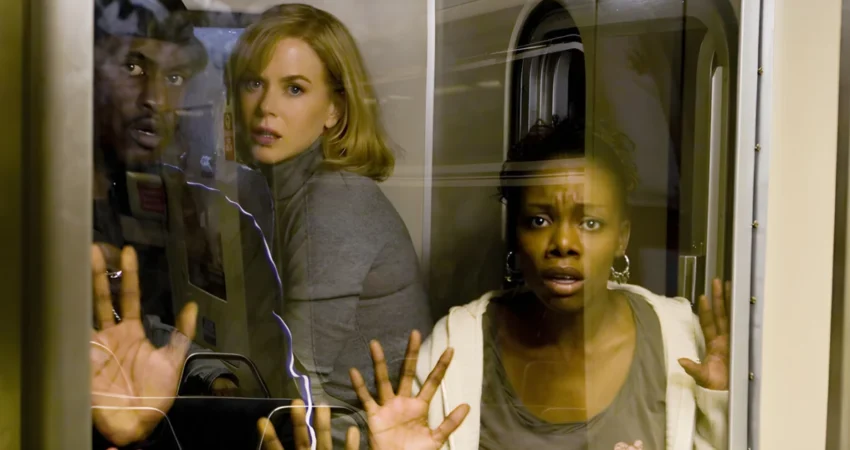
The landscape of science fiction cinema is littered with the remnants of ambitious remakes that sought to modernize classic tales for a contemporary audience. Among the most notable examples is the 2007 film The Invasion, a high-budget reimagining of Jack Finney’s 1955 novel, The Body Snatchers. Despite boasting a powerhouse cast led by Academy Award winner Nicole Kidman and the then-newly minted James Bond, Daniel Craig, the film became a cautionary tale of "production hell," studio interference, and the challenges of translating psychological dread into a modern action-thriller format. While the 1978 version, Invasion of the Body Snatchers, is widely regarded as one of the greatest horror films in history with a chillingly perfect ending, the 2007 iteration struggled to find its identity, ultimately failing at the box office before finding a second life on streaming platforms like Netflix and Max.
The Legacy of the Body Snatchers and the 1978 Benchmark
To understand the context of the 2007 failure, one must first examine the prestige of the source material. Jack Finney’s novel has been adapted for the silver screen four times, each reflecting the specific anxieties of its era. The 1956 original, directed by Don Siegel, was often interpreted as an allegory for the "Red Scare" and the loss of individuality in a conformist society. However, it was Philip Kaufman’s 1978 masterpiece that set the gold standard for the franchise. Moving the setting from a small town to San Francisco, the 1978 film utilized gritty cinematography and visceral practical effects to create an atmosphere of inescapable paranoia. Its ending—featuring Donald Sutherland’s haunting, finger-pointing scream—remains one of the most iconic moments in horror history, symbolizing the total defeat of humanity.
By the time Warner Bros. greenlit a new version in the mid-2000s, the goal was to pivot away from the overt horror of the 1970s and toward a grounded, medical thriller. The production, initially titled The Visiting, was intended to be a more cerebral exploration of the "Body Snatcher" concept, focusing on the biological realities of an extraterrestrial infection rather than the metaphorical implications of pod people.

A Troubled Production: The Director and the Studio Clash
The 2007 project began under the direction of Oliver Hirschbiegel, the German filmmaker who had garnered international acclaim for Downfall (Der Untergang). Hirschbiegel’s vision was reportedly atmospheric and slow-burning, prioritizing the psychological breakdown of the protagonist, Carol Bennell (Kidman), as she realizes the world around her is being replaced by emotionless husks.
However, upon reviewing Hirschbiegel’s initial cut, executives at Warner Bros. expressed significant dissatisfaction. The studio felt the film lacked the "pulse-pounding" action sequences required to compete in the summer blockbuster market. In a move that signaled a lack of confidence in the original director’s vision, the studio took the rare and expensive step of hiring the Wachowskis—the creative minds behind The Matrix—to rewrite the script. Furthermore, James McTeigue, the director of V for Vendetta, was brought in to oversee extensive reshoots.
These reshoots accounted for nearly one-third of the final film. The intervention introduced high-speed car chases, explosive action beats, and a more clinical, high-tech aesthetic that many critics felt clashed with the somber tone established in Hirschbiegel’s surviving footage. The creative tug-of-war resulted in a disjointed narrative that lacked the cohesive tension of its predecessors.
Narrative Shift: From Existential Dread to Clinical Thriller
In The Invasion, the catalyst for the disaster is a space shuttle crash that releases an alien virus into the Earth’s atmosphere. This virus alters human DNA during REM sleep, transforming victims into "clones" who appear identical to their former selves but lack all emotion and empathy. Nicole Kidman portrays Carol Bennell, a psychiatrist who notices a disturbing pattern among her patients: they claim their loved ones are no longer the people they once were.

Unlike the 1978 version, which relied on the "pod" mechanism—where physical bodies were grown to replace the originals—the 2007 film treated the invasion as a biological pandemic. This shift allowed the film to tap into post-9/11 anxieties regarding bioterrorism and global disease outbreaks. Carol, alongside her colleague Ben Driscoll (Daniel Craig), must navigate a world where any show of emotion can lead to detection and infection. The central conflict hinges on Carol’s struggle to remain awake while searching for her son, who possesses a unique immunity that could be the key to a cure.
The most significant departure from the 1978 film, however, lies in its resolution. While the 1970s version concluded with the bleak realization that the invasion was unstoppable, the 2007 film opted for a traditional Hollywood "happy ending." A vaccine is synthesized, the world is cured, and the emotional complexity of the alien takeover is largely ignored in favor of a clean wrap-up. This "complacent" ending was criticized for undermining the inherent horror of the premise.
Financial Failure and the Impact of Star Power
Despite the presence of Nicole Kidman and Daniel Craig, The Invasion was a catastrophic financial failure. The film’s production budget swelled to approximately $80 million, largely due to the extensive reshoots and the high salaries of its lead actors. Upon its theatrical release in August 2007, the film failed to capture the audience’s attention.
The domestic opening weekend brought in a meager $5.9 million, and the film eventually finished its global theatrical run with roughly $40 million in ticket sales. In the world of studio accounting, this represented a massive loss, as the film did not even recoup its initial production budget, let alone the tens of millions spent on global marketing and distribution.
Industry analysts pointed to several factors for this failure. The market was saturated with science fiction and horror titles, and the numerous title changes and production delays had dampened public interest. Furthermore, the hybrid nature of the film—part psychological drama, part action movie—made it difficult to market effectively to a specific demographic.
Critical Reception and Modern Re-evaluation
At the time of its release, The Invasion received lukewarm reviews. On the review aggregator Rotten Tomatoes, the film holds a "rotten" rating, with many critics describing it as "unnecessary" and "generic." Variety and Entertainment Weekly both reported on the behind-the-scenes turmoil, suggesting that the film’s lack of a singular creative voice was its downfall. Critics noted that while the cinematography was sleek and the performances were competent, the movie lacked the "soul" and "visceral impact" of the 1956 and 1978 versions.
However, the passage of time has allowed for a more nuanced re-evaluation of the film. When viewed today on streaming services, stripped of the baggage of its troubled production and the high expectations of 2007, The Invasion reveals itself to be a highly professional, if somewhat flawed, thriller. The chemistry between Kidman and Craig is palpable, and the film’s pacing is brisk—a direct result of the Wachowskis’ efforts to "tighten" the narrative.
For modern viewers, the film serves as a fascinating time capsule of mid-2000s filmmaking. It captures a moment when studios were transitioning from practical horror to CGI-enhanced thrillers. While it may not reach the heights of the 1978 classic, it offers a polished, "popcorn" experience that is far more competent than many of the lower-budget sci-fi offerings found on streaming platforms today.

Broader Implications for the Science Fiction Genre
The failure of The Invasion had a lasting impact on how studios approached remaking "untouchable" classics. It served as a reminder that star power and high-budget action sequences cannot compensate for a lack of narrative tension or a compromised creative vision. The film’s struggle also highlighted the difficulty of adapting Jack Finney’s story for an era where audiences had become accustomed to fast-paced spectacle.
Furthermore, the film’s shift toward a "biological virus" explanation prefigured the rise of the "contagion" subgenre of science fiction, which would later be perfected by films like Steven Soderbergh’s Contagion. By framing the alien invasion as a medical emergency rather than a supernatural replacement, The Invasion attempted to ground the story in a reality that felt uncomfortably close to home.
In conclusion, The Invasion remains a significant entry in the history of science fiction cinema, not necessarily for its quality, but for what it represents. It is a testament to the era of the "over-produced" remake—a film that had all the ingredients for success but was hindered by a lack of confidence in its original, more artistic direction. Today, as it finds a new audience on Netflix and Max, it serves as an entertaining, well-acted thriller that, while failing to surpass its predecessors, provides a unique look at how Hollywood attempts to reinvent its most enduring nightmares. For fans of the genre, it is a worthy, if non-essential, watch that highlights the enduring power of Finney’s original concept: the terrifying idea that those we love most could be replaced by something entirely foreign, yet perfectly identical.

0 Comments