
The olfactory landscape of the 21st century has undergone a profound shift, moving away from the simplistic, saccharine gourmands of the early 2000s toward complex, botanical compositions that prioritize realism and narrative depth. At the center of this movement is the fig—a note that defies easy categorization. Unlike the singular sweetness of a strawberry or the predictable brightness of a lemon, the fig offers a complete ecosystem of scent, encompassing the bitterness of the leaf, the woodiness of the bark, the creaminess of the sap, and the honeyed richness of the fruit. This multifaceted nature has made fig a cornerstone of niche perfumery, allowing creators to explore the tension between the green and the gourmand.
The Botanical and Chemical Foundation of Fig Scents
To understand the current fascination with fig, one must look at the technical challenges of its creation. In perfumery, there is no natural essential oil of fig that can be extracted via steam distillation or expression in the same way as lavender or bergamot. Instead, the "fig note" is an accord—a carefully balanced construction of synthetic and natural molecules.

Historically, the breakthrough in fig perfumery occurred in the mid-1990s with the use of Stemone, a chemical compound that provides a powerful green, leafy aroma. When combined with Gamma-octalactone (which provides a coconut-like creaminess) and Iso E Super (for woodiness), the modern fig accord was born. Industry data suggests that the "green" fragrance category, within which fig is a primary driver, has seen a 12% increase in market share within the niche sector over the last three years, as consumers move toward "nature-identical" scents that evoke outdoor environments and wellness.
A Chronology of the Fig Trend
The journey of the fig in fine fragrance follows a distinct timeline:
- 1994: Olivia Giacobetti creates Premier Figuier for L’Artisan Parfumeur, widely recognized as the first fragrance to capture the entire fig tree.
- 1996: Diptyque releases Philosykos, also by Giacobetti, which becomes the global benchmark for the genre.
- 2010–2020: The "Mediterranean Summer" trend sees mainstream brands like Acqua di Parma and Hermès bringing fig into the luxury-commercial consciousness.
- 2021–Present: The "New Niche" era, where brands like J.U.S and Simone Andreoli experiment with "dark" figs, "spiced" figs, and "aquatic" figs, moving the note into year-round, gender-neutral territory.
Analysis of Eight Exemplary Fig Compositions
The following eight fragrances represent the pinnacle of modern fig interpretation, moving beyond simple fruitiness to explore the ingredient’s structural and atmospheric possibilities.

1. Gingerlise by J.U.S (Eau de Parfum)
J.U.S (Joyaux Uniques et Sensoriels) operates on a philosophy of transparency and "open-source" perfumery. In Gingerlise, the fig is utilized not as a centerpiece, but as a structural mediator. The fragrance opens with a sharp, high-energy burst of citrus—lemon, bergamot, and lemongrass—which can often feel abrasive in traditional colognes. The inclusion of fig provides a "tactile" roundness, using its lactonic (milky) properties to soften the edges of the ginger and angelica root.
Market analysts note that J.U.S’s approach appeals to a younger demographic that values eco-responsibility and artistic transparency, with the brand offering refillable bottles and publicizing their full ingredient lists. Gingerlise exemplifies the use of fig as a textural element rather than a flavor profile.
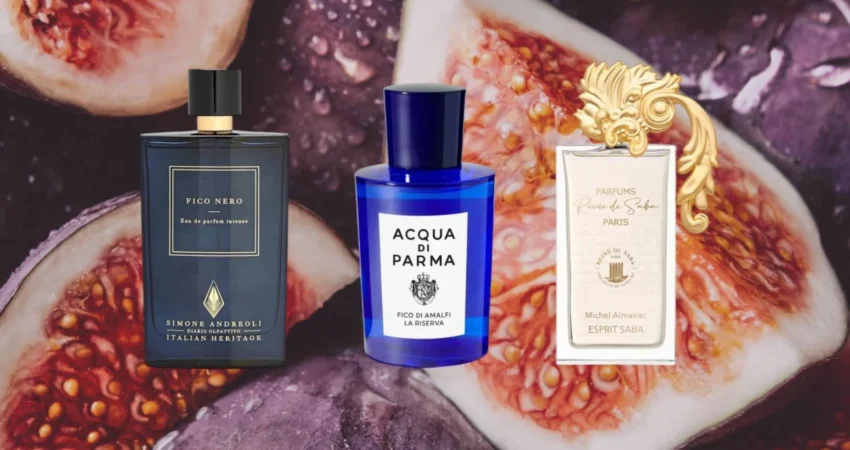
2. Fico Nero by Simone Andreoli
Italian perfumer Simone Andreoli is known for "olfactory diaries"—scents that capture specific geographical moments. Fico Nero is a tribute to the black fig of Chia, Sardinia. While many fig scents focus on the "green" aspect, Fico Nero leans into the "purple" and "creamy" aspects of the ripening fruit.

By pairing the fig with coconut milk, Andreoli creates a Mediterranean gourmand that avoids the cloying nature of vanilla-heavy scents. This composition reflects a broader industry trend toward "savory gourmands," where fruit sweetness is balanced by botanical realism.
3. Mousse Arashiyama by Le Jardin Retrouvé
Founded in 1975 and revived in recent years, Le Jardin Retrouvé is one of the original niche houses. Mousse Arashiyama takes the fig note out of the Mediterranean and into the damp, mossy bamboo groves of Kyoto. Here, the fig is integrated with oakmoss and aquatic notes.
The significance of this scent lies in its use of "mastic" (lentisco) and incense to create a smoky, green atmosphere. The fig here provides a "watery transparency," proving that the note can be used to evoke humidity and forest air rather than just sun-drenched orchards.

4. Kaleen by Rouge Bunny Rouge
The transition of Rouge Bunny Rouge from a cult makeup brand to a respected fragrance house was cemented by its "Provençal" and "Urban" scent stories. Kaleen, composed by Nicolas Bonneville, represents the "Urban" fig. It is a nocturnal, sophisticated take on the note, blending fig with litchi and rose.
The presence of pink pepper and vetiver gives Kaleen a structured, almost architectural feel. It moves the fig note into the realm of "cocktail perfumery," where fruit is treated with the complexity of a high-end spirit.
5. Wanderlust by Omanluxury
Omanluxury represents the burgeoning Middle Eastern niche market, which is increasingly influencing global trends. Wanderlust is a testament to the "Green Oriental" category. It places the fig in a heart of tea and clary sage, surrounded by a complex array of top notes including blackcurrant and green apple.

This fragrance is notable for its longevity and sillage—characteristics highly prized in Middle Eastern perfumery. It demonstrates that the traditionally "fresh" fig note can be given significant "weight" and "density" when backed by a base of cedarwood, sandalwood, and amber.
6. Fico di Amalfi La Riserva by Acqua di Parma
Acqua di Parma’s "Blu Mediterraneo" line has long been a bestseller, but La Riserva represents a prestige evolution. The "Riserva" process involves a two-month maceration period, a technique more commonly associated with fine wines or spirits.
This aging process allows the citrus and fig notes to meld into a silkier, more cohesive whole. The addition of orris (iris root) provides a powdery, luxury finish that elevates the fig from a casual summer scent to a formal, evening-appropriate fragrance. This reflects the industry’s "premiumization" trend, where existing popular notes are re-released in more concentrated, artisanal formats.

7. Sine Die by Laurent Mazzone
Laurent Mazzone (LM Parfums) is known for a dark, often provocative aesthetic. Sine Die subverts the "sunny" expectations of fig by pairing it with leather and violet. This creates a "Chypre" effect—a classic fragrance family characterized by the contrast between fresh top notes and a deep, mossy, or leathery base.
The use of leather transforms the fig from a fruit into a texture, evoking the scent of a luxury suede bag that might have held fresh figs. This "olfactory storytelling" is a key driver in the niche market, where consumers seek unique "sensory signatures."
8. Esprit Saba by Reine de Saba
The brand Reine de Saba is built entirely around the legends of the Queen of Sheba and the ancient incense routes. Esprit Saba uses fig as a bridge between the ancient and the modern. By combining fig with elemi (a resinous incense-like note) and pachyuli, the fragrance creates a "biblical" or "mythological" fig.

This scent highlights the historical significance of the fig in the Levant and Arabian Peninsula. It is an example of "heritage perfumery," where ingredients are chosen for their cultural and historical weight as much as their aroma.
Broader Impact and Market Implications
The diversification of the fig note has several implications for the global fragrance industry:
1. Sustainability and Sourcing: As the demand for "botanical" scents grows, the industry is investing more in synthetic biotechnology to create "green" molecules that are biodegradable and have a lower carbon footprint than traditional petroleum-based synthetics.

2. The Gender-Neutral Shift: Fig is inherently gender-neutral. It lacks the traditional "masculine" associations of heavy woods or the "feminine" associations of white florals. As the market for gender-neutral fragrances continues to expand (projected to grow at a CAGR of 6% through 2030), fig-based scents are perfectly positioned to capture this demographic.
3. Wellness and Aromachology: There is increasing evidence that "green" scents, including fig leaf accords, have a physiological calming effect on the wearer, mimicking the benefits of "forest bathing." This has led to the integration of fig notes into "functional fragrances" designed to reduce stress.
Conclusion
The eight fragrances analyzed—from the transparent energy of Gingerlise to the resinous depth of Esprit Saba—demonstrate that the fig is no longer a mere "fruit note." It has become a sophisticated tool for perfumers to build complex, atmospheric, and narrative-driven scents. As the fragrance industry moves toward greater artisanal detail and environmental consciousness, the fig’s ability to represent the entirety of nature—from the soil to the sun—ensures its continued relevance in the pantheon of high perfumery. The move away from "fig jam" sweetness toward "multifaceted botanical realism" marks a mature phase in olfactory art, where the goal is not just to smell good, but to evoke a world.

0 Comments