
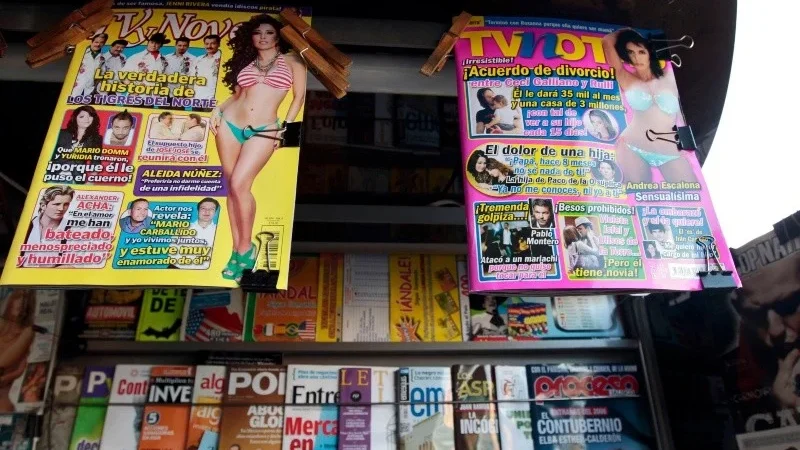
Mexico City, Mexico – Chucho Gallegos, the towering figure who revolutionized Mexican entertainment journalism and founded the seminal magazine TVyNovelas, passed away last night at the age of 84. His death marks the end of an era for a media landscape he profoundly shaped, leaving behind a legacy of exclusive scoops, unparalleled access, and a publication that became a cultural touchstone for millions across Mexico and Latin America.
A Distinguished Career Forged in Print and Broadcast
Born in an era when celebrity news was still largely confined to official press releases and guarded interviews, Jesús Gallegos — known affectionately as Chucho — embarked on a career that would redefine the genre. Though initially pursuing studies in pedagogy, Gallegos soon discovered his true calling in the vibrant, fast-paced world of media. His early professional journey saw him contribute to various publications, honing his journalistic instincts and developing a keen eye for the stories that captivated the public. He cut his teeth at titles such as "Atisbos" and "ABC," building a foundational understanding of print media operations. His foray into broadcast journalism came through "TeleGuía," a popular television guide, before he took on significant roles as a reporter and later as chief editor for the prominent program "Hoy Domingo." These early experiences provided him with a comprehensive understanding of both print and television media, a synergy that would prove invaluable in his later endeavors.
Gallegos possessed an innate ability to connect with people, a quality that served him exceptionally well in the often-guarded world of celebrity. Throughout his extensive career, he cultivated relationships with some of the most luminous stars of Mexican and Latin American entertainment. Legendary figures like María Félix, the iconic "Doña" of Mexican cinema; the charismatic Andrés García; the powerful vocalist Lupita D’Alessio; and the beloved singer-actress Lucero, among countless other celebrities from the booming decades of the 1980s and 1990s, frequently opened their homes and their lives to him. This extraordinary level of access allowed Gallegos to secure candid interviews and intimate confessions, which consistently translated into groundbreaking exclusives that dominated headlines and fueled public fascination. His approach to journalism was characterized by a blend of respectful inquiry and persistent pursuit, earning him both the trust of his subjects and the loyalty of his readership.
The Birth of a Media Phenomenon: TVyNovelas
The pivotal moment in Gallegos’s illustrious career arrived in 1979 with the founding of TVyNovelas. This magazine was not merely another entertainment publication; it was a cultural phenomenon that quickly soared to unprecedented heights of popularity, fundamentally altering the landscape of Mexican celebrity journalism. Under Gallegos’s visionary direction, TVyNovelas transcended its role as a simple news outlet, evolving into an institution that mirrored and, at times, dictated the pulse of Mexican popular culture.
From its inception, TVyNovelas distinguished itself by offering a unique blend of exclusive celebrity interviews, behind-the-scenes insights into telenovela productions, and captivating personal stories that resonated deeply with its audience. Gallegos’s editorial strategy focused on humanizing the stars, presenting their triumphs and tribulations in a relatable manner, while always maintaining a sense of aspirational glamour. This formula proved immensely successful, establishing the magazine as the undisputed leader in its niche. Its weekly circulation numbers reportedly reached hundreds of thousands, sometimes even exceeding a million copies during peak periods, cementing its status as one of Mexico’s best-selling magazines.
Beyond its print success, TVyNovelas further extended its influence by establishing its own prestigious awards ceremony, the "Premios TVyNovelas." These annual accolades quickly became the benchmark for excellence in Mexican television, recognizing the best in telenovelas, actors, actresses, and other television personalities. The awards not only celebrated industry achievements but also provided a powerful platform for the magazine, reinforcing its authority and deepening its connection with both the industry and the public. Under Gallegos’s stewardship, the magazine maintained its preeminence for over two decades, remaining under his directorship until 2004.
A Golden Era of Celebrity Exclusives
The pages of TVyNovelas, under Chucho Gallegos’s discerning editorial eye, chronicled some of the most memorable and talked-about stories in Mexican entertainment history. These narratives were more than mere gossip; they were carefully crafted features that often broke news and offered exclusive glimpses into the lives of beloved stars, becoming indelible parts of the collective cultural memory.
Among the standout stories that defined this golden era were the much-anticipated birth of Pedro Antonio, the firstborn son of the iconic singer and actress Lucía Méndez. The magazine provided an intimate look into this personal milestone, capturing the joy and excitement surrounding one of Mexico’s most celebrated figures. Similarly, the pregnancy announcement of the radiant Maribel Guardia was another major exclusive, meticulously documented and shared with an eager readership. These personal life events, reported with a balance of discretion and detail, built a deep sense of connection between the stars and their fans.
Perhaps one of the most high-profile and enduring stories covered during Gallegos’s tenure was the whirlwind, highly publicized romance between the beloved telenovela queen Victoria Ruffo and the multifaceted comedian and producer Eugenio Derbez. Their relationship, from its blossoming stages to its eventual complexities, was a constant source of fascination for the public, and TVyNovelas was consistently at the forefront of breaking developments. These stories, among many others, not only propelled the magazine’s sales but also solidified Gallegos’s reputation as a master storyteller and a trusted chronicler of celebrity lives. His journalistic legacy is intrinsically linked to these narratives, which captured the essence of an era when the lines between public fascination and private lives were drawn differently, allowing for a unique brand of celebrity journalism.
The Unforeseen Departure: The Michelle Vieth Scandal
Despite his monumental contributions and the unwavering success of TVyNovelas under his leadership, Chucho Gallegos’s tenure at the helm came to an abrupt and controversial end in 2004. This departure stemmed from a profound ethical disagreement that brought to light the evolving complexities of media responsibility and celebrity privacy.
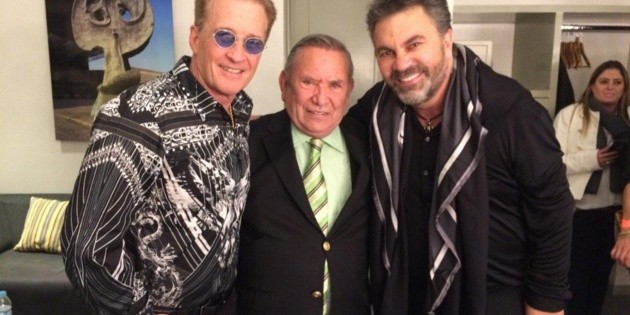
The details of this significant conflict were publicly revealed by Gallegos himself in a candid interview with Gustavo Adolfo Infante for the program "El minuto que cambió mi destino" in 2021. As part of Grupo Editorial Televisa, TVyNovelas ultimately operated under the authority of high-ranking executives, most notably Pepe Bastón, who at the time served as the president of television and content for the media conglomerate. Bastón, who would later gain international tabloid attention for his marriage to actress Eva Longoria in 2016, found himself in a direct confrontation with Gallegos over a highly sensitive issue: the non-consensual publication of an intimate video involving actress Michelle Vieth.
The "videoescándalo," as it became known, involved an intimate video of Vieth that had been leaked and circulated without her consent. This incident ignited a national discussion about privacy, exploitation, and the media’s role in such sensitive matters. TVyNovelas had published a report on the scandal, a decision that drew the ire of Bastón. Gallegos recounted the tense exchange: "I could no longer withstand the pressures from Pepe Bastón," he stated in the interview. Bastón confronted Gallegos directly, questioning his editorial judgment: "Why do you dare publish this about Michelle Vieth? Imagine if they offended your daughters like that."
The executive’s personal appeal underscored the gravity of the situation, shifting the debate from mere journalistic interest to a deeply personal and ethical realm. The conversation reportedly lasted for about half an hour, a tense standoff between editorial independence and corporate directives. Towards the end of the discussion, Bastón posed a loaded question: "Do you know what’s going to happen?" To which Gallegos, understanding the implied ultimatum, responded with resolute conviction: "Yes, I know what’s going to happen." Immediately following this exchange, Chucho Gallegos presented his resignation, signaling a definitive break from the publication he had founded and nurtured for 25 years. This incident remains a critical case study in media ethics, highlighting the growing tension between the public’s right to know and an individual’s right to privacy, especially in the nascent stages of digital media’s impact on traditional journalism. His departure underscored a changing guard in media priorities and the increasing corporate oversight that would come to define the industry.
A Final Chapter: Health Battles and Passing
In the months leading up to his passing, Chucho Gallegos had been battling significant health challenges. The news of his death was first reported by Gil Barrera, the current director of TVyNovelas, signaling a poignant continuity in the legacy Gallegos established. Minutes later, the popular morning program "Hoy" confirmed the information via its social media channels, triggering a wave of condolences and expressions of shock among his vast network of followers and industry colleagues.
While the specific causes of his demise have not been officially disclosed, it was known that the veteran journalist had been in critical condition, hospitalized in intensive care. His health had been a concern since August, when he was admitted due to a severe bacterial infection that led to internal hemorrhages. The gravity of his condition prompted his family to issue an urgent public appeal for blood donors, highlighting the seriousness of his fight. Despite the medical efforts and the outpouring of support, Gallegos ultimately succumbed to his illness, bringing an end to a life dedicated to chronicling the lives of others.
Industry Mourns a Legend
The confirmation of Chucho Gallegos’s passing elicited an immediate and profound outpouring of grief and respect from across the Mexican entertainment industry. Personalities from various facets of the artistic world took to social media and other platforms to express their condolences and share their memories of the man who had played such a significant role in their careers and the broader media landscape.
Among those who paid tribute were prominent figures such as Roberto Palazuelos, the actor and businessman; Ana María Alvarado, a respected entertainment journalist herself; Rodrigo de la Cadena, the singer and television host; Victoria Ruffo, whose career Gallegos had extensively covered; and Sergio Mayer, the actor and former politician. Mayer’s tribute was particularly poignant, describing Gallegos as an integral part of his professional journey. "Rest in peace, my dear friend Chucho Gallegos. You leave us an important legacy. Thank you always for your support and advice. I carry you in my heart," Mayer posted, encapsulating the sentiment shared by many who had worked with or been covered by Gallegos.
These tributes underscored not only Gallegos’s professional achievements but also his personal impact. He was remembered not just as a journalist, but as a mentor, a confidant, and a friend to many of the stars he covered. His ability to foster genuine relationships with celebrities, often transcending the traditional reporter-subject dynamic, set him apart and allowed him to capture the authentic stories that defined an era.
Legacy and Impact on Mexican Media
Chucho Gallegos’s passing marks the end of an extraordinary chapter in Mexican media history. His vision for TVyNovelas created a template for entertainment journalism that was widely emulated but rarely surpassed. The magazine, under his guidance, not only reported on celebrity news but also played a crucial role in shaping public perception and fostering a unique cultural dialogue around the lives of public figures.
His tenure at TVyNovelas coincided with a period of immense growth and influence for Mexican popular culture, particularly through the global reach of telenovelas. Gallegos understood the symbiotic relationship between these narratives and the public’s desire to connect with the stars who brought them to life. He provided a platform where fans could feel closer to their idols, offering a blend of aspirational content and relatable human stories.
The ethical dilemma surrounding his departure from TVyNovelas also cemented his legacy as a journalist who, despite immense pressure, stood by his principles. While the incident itself was contentious, it highlighted Gallegos’s dedication to editorial autonomy and his willingness to make difficult choices in the face of corporate directives, even when it meant sacrificing his own position.
In an increasingly fragmented and digital media landscape, where celebrity news is often instantaneous and less curated, Gallegos’s era represents a time when entertainment journalism was a craft, built on trust, access, and compelling storytelling. He leaves behind not just a successful publication, but a profound influence on how Mexico consumed and understood its stars. Chucho Gallegos will be remembered as a pioneer, a titan of the tabloid, and a journalist who truly understood the heart and soul of Mexican entertainment. His contributions will continue to resonate, shaping the discourse around celebrity and media for generations to come.

0 Comments