
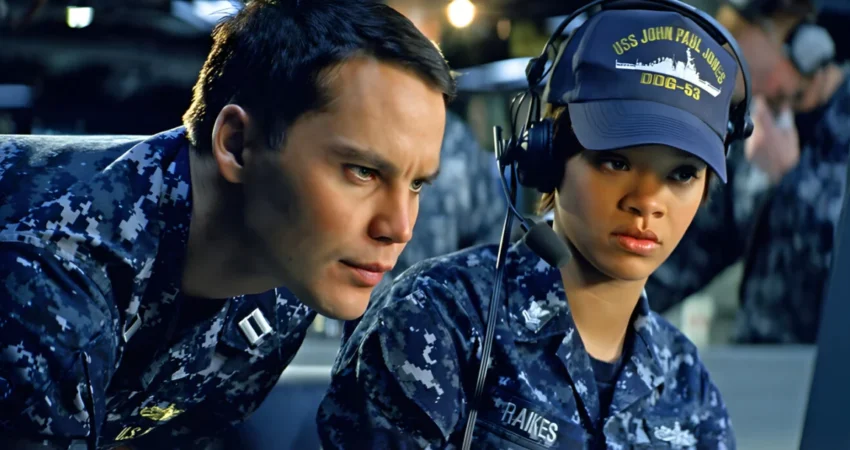
The cinematic landscape of 2012 was defined by a seismic shift in how studios approached franchise building, and few films represent the ambitions and risks of that era better than Battleship. As the film prepares to depart the HBO Max streaming catalog on September 15, audiences are presented with a final window to revisit a production that attempted to bridge the gap between traditional board games and high-stakes science fiction. Directed by Peter Berg and backed by a staggering production budget, Battleship remains a polarizing yet technically impressive milestone in the history of military-themed action cinema. Its exit from the platform marks the end of its current streaming cycle, prompting a retrospective look at its production, its unfortunate timing against the burgeoning Marvel Cinematic Universe, and its eventual status as a cult favorite among genre enthusiasts.
The Genesis of a High-Stakes Adaptation
The journey of Battleship from a plastic peg-and-grid board game to a $209 million blockbuster began with a massive partnership between Hasbro and Universal Pictures. Following the explosive success of the Transformers franchise, Hasbro sought to capitalize on its intellectual property by transforming classic games into narrative-driven spectacles. The concept of a naval warfare film based on a game about guessing coordinates was met with initial skepticism by critics and industry analysts alike. However, Universal committed to a vision that combined authentic naval procedure with an extraterrestrial invasion narrative.
Peter Berg, known for his work on Friday Night Lights and The Kingdom, was tapped to direct. Berg’s personal connection to the Navy—his father was a naval historian—influenced the film’s dedication to certain levels of maritime authenticity, despite the fantastical premise. The production was granted unprecedented access to military resources, filming extensively in the waters off Hawaii and utilizing the decommissioned Iowa-class battleship, the USS Missouri. This blend of real-world military hardware and high-end digital effects became the cornerstone of the film’s aesthetic identity.

A Chronology of Production and Strategic Positioning
The development of Battleship followed a strict timeline aimed at securing a prime spot in the 2012 summer blockbuster season. Pre-production began in earnest in 2009, with a script by Jon and Erich Hoeber that sought to justify the "grid-based" combat of the original game within a modern tactical context. By 2010, the casting of Taylor Kitsch, fresh off his success in television, and international pop star Rihanna, making her acting debut, signaled the studio’s intent to capture a broad, global demographic.
Principal photography commenced in late 2010 in Honolulu, Hawaii. The production was a massive undertaking, involving complex water-based shoots that are notoriously difficult in Hollywood. The timeline of the film’s release, however, proved to be its greatest challenge. Originally slated for a different window, the film eventually landed in May 2012. This placed it in direct competition with Marvel Studios’ The Avengers, which premiered just two weeks prior. While Battleship performed respectably in international markets where it was released earlier, its domestic debut was overshadowed by the cultural phenomenon of Earth’s Mightiest Heroes.
Financial Performance and Global Market Dynamics
To understand the legacy of Battleship, one must analyze the data behind its theatrical run. The film’s production budget was estimated at approximately $209 million, with an additional $100 million spent on global marketing and distribution. In the industry, a film of this scale typically needs to earn three times its production budget to be considered a definitive financial success.
Battleship ultimately grossed $303 million worldwide. While the domestic haul was a disappointing $65 million, the film found a significant audience overseas, particularly in Asia and Latin America. In markets like China and Russia, the film’s emphasis on large-scale destruction and naval machinery resonated strongly. This discrepancy between domestic and international performance highlighted a growing trend in the 2010s: the "global blockbuster" that survives on international receipts even when North American audiences are indifferent. Despite the narrative that the film was a "box office bomb," the $303 million total ensured that it remained a visible, if not highly profitable, part of Universal’s portfolio for years to come.

Technical Achievement and Visual Effects
One of the most enduring aspects of Battleship is its technical execution. The visual effects were handled by Industrial Light & Magic (ILM), the legendary firm responsible for Star Wars and Jurassic Park. The challenge for ILM was to create extraterrestrial technology that felt physically grounded and distinct from the "living metal" look of the Transformers series.
The alien "Regents" and their shredder-drones were designed with a focus on mechanical weight and kinetic energy. The film’s signature action sequence—a tactical battle where the Navy uses tsunami-warning buoys to track alien ships via a grid system—was a direct and clever homage to the board game’s mechanics. Critics who dismissed the film often overlooked the complexity of its water simulations and the seamless integration of practical naval vessels with CGI elements. The use of the USS Missouri in the third act provided a sense of scale and historical weight that elevated the film above standard science fiction fare.
The Ensemble Cast and Early Career Milestones
Looking back at Battleship today, the film serves as a time capsule for several high-profile careers. Taylor Kitsch was positioned as the next great leading man, and while the film’s reception slowed that momentum, his performance as Alex Hopper remains a solid example of the "rebellious hero" archetype. Alexander Skarsgård provided a grounded foil as the disciplined older brother, a role that preceded his transition into more prestige television and film work.
Perhaps most notable is the presence of Jesse Plemons and Rami Malek in supporting roles. Both actors have since become Academy Award-winning or nominated stars, but in 2012, they were part of the film’s tactical crew, providing the human element to the high-tech chaos. Rihanna’s role as Petty Officer Cora Raikes was also a major talking point; her performance was praised for its physicality and lack of "diva" artifice, proving she could hold her own in an ensemble action cast. Liam Neeson, though appearing in a limited capacity as Admiral Shane, lent the production the "gravitas" necessary to sell the film’s more earnest military themes.

Critical Reception vs. Audience Longevity
Upon release, Battleship faced a difficult critical environment. It currently holds a 34% rating on Rotten Tomatoes, with many critics citing its thin plot and perceived commercialism as primary flaws. However, the "Audience Score" and subsequent home video sales tell a different story. Over the last twelve years, the film has undergone a re-evaluation. Audiences have come to appreciate its straightforward commitment to "adrenalized" entertainment, a contrast to the increasingly complex and interconnected "cinematic universes" that now dominate the genre.
The film does not attempt to be a philosophical treatise on alien life; instead, it is an unapologetic celebration of naval tradition and tactical ingenuity. This clarity of purpose has allowed it to find a permanent home on cable television and streaming services, where it frequently ranks among the most-watched action titles during its availability.
Broader Implications for Board Game Adaptations
The legacy of Battleship is also tied to the evolution of how toys and games are adapted for the screen. Following its release, Hollywood became more cautious with large-scale board game adaptations. Projects based on Monopoly, Candy Land, and Clue were either delayed or reimagined as smaller-scale productions.
However, the tide has turned again in recent years. The success of Dungeons & Dragons: Honor Among Thieves and the cultural dominance of Barbie suggest that audiences are not opposed to game-based films, provided the tone is correctly calibrated. Battleship was a pioneer in this regard, proving that a film could take a simple premise and expand it into a massive world, even if the financial timing wasn’t perfect. It paved the way for studios to realize that the "brand" is only the starting point; the execution and the "spectacle" are what ultimately sustain the audience’s interest.

Final Viewing Opportunity on HBO Max
As the September 15 deadline approaches, the removal of Battleship from HBO Max serves as a reminder of the fleeting nature of digital licensing. While the film will likely appear on other platforms such as Peacock or Netflix in the future, its departure marks the end of a significant chapter in its streaming history. For fans of military science fiction, or those who missed the spectacle on the big screen, the next few days represent the final chance to stream the film as part of a standard subscription.
The film’s endurance is a testament to Peter Berg’s direction and the sheer scale of Universal’s ambition. In an era where many blockbusters feel indistinguishable from one another, Battleship remains a unique, loud, and undeniably entertaining anomaly. Whether viewed as a tactical military exercise or a high-octane alien invasion flick, it continues to command attention more than a decade after its controversial launch.
In conclusion, Battleship is more than just a footnote in the history of 2012 cinema. It is a case study in global marketing, a showcase for early-career Hollywood heavyweights, and a masterclass in visual effects integration. As it sails away from HBO Max, it leaves behind a legacy of being one of the most underrated and misunderstood blockbusters of the modern era. Those looking to experience the roar of the USS Missouri’s 16-inch guns one last time should act before the countdown concludes on September 15.

0 Comments