
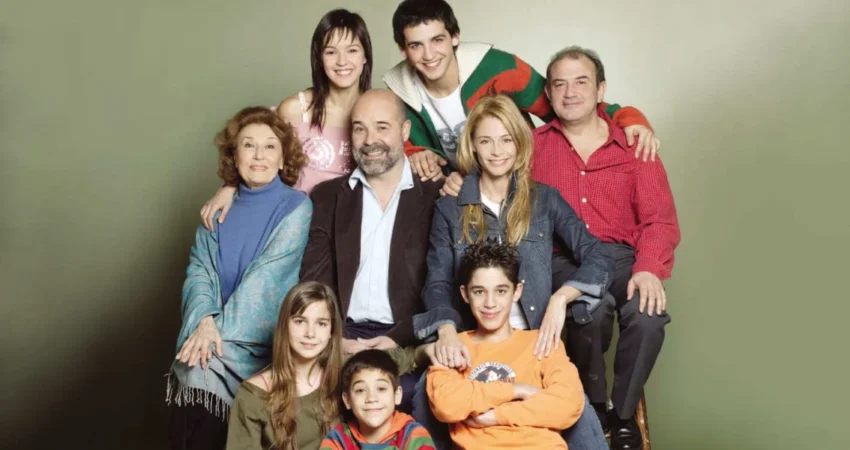
Eighteen years have passed since the final episode of "Los Serrano," a beloved Spanish television series that captivated audiences for eight seasons, but its conclusion remains one of the most debated and memorable finales in the history of Spanish television. Daniel Écija, the visionary creator behind the show, has recently shed light on the decision-making process that led to that polarizing ending, candidly admitting that with the benefit of hindsight, he would likely opt for a different path. His reflections offer a unique perspective on the pressures and creative challenges faced during the production of a highly successful, long-running series.
In a candid conversation with journalist Jorge Neila, shared on Neila’s Instagram profile, Écija delved into the controversial episode that brought the Telecinco fiction to a close in 2008. Far from defending the choice, the producer acknowledged that the decision to frame a significant portion of the series’ events as a dream of the protagonist, Diego Serrano, was made with undue haste. "It was a disastrous idea," Écija stated, reflecting on the rushed nature of the resolution.
The Genesis of a Controversial Finale: A Weekend Decision
Daniel Écija explained that personal circumstances led him to distance himself from the day-to-day operations of "Los Serrano" during its final season. The series, born from a particularly significant period in his life, saw him take a step back amidst a personal separation. This detachment meant that he did not watch the final season as it aired, only catching up years later. Despite this temporal distance, a crucial decision regarding the series’ conclusion required his intervention, and time was a critical constraint.
According to Écija’s recollection, the creative team spent an entire weekend grappling with how to bring the intricate narrative of "Los Serrano" to a satisfying close. After a night of intense deliberation, the "dream" solution emerged one morning as he observed one of his daughters playing football. The idea was that the entire narrative arc of the final season, or a significant portion thereof, could be revealed as a dream sequence experienced by Diego Serrano. This creative gambit, however, has since been described by the creator himself as "anachronistic" and "strange" in retrospect.
Écija’s Retrospective on the "Dream" Ending
The final episode depicted Diego Serrano, portrayed by the esteemed Antonio Resines, waking up and effectively resetting the narrative to a point closely resembling the series’ inception. This narrative device elicited a profound and often vocal reaction from viewers who had invested eight seasons of emotional engagement with the characters and their evolving lives.
Écija now concedes some of the inherent contradictions and logical inconsistencies that this decision introduced. The child characters, who had visibly grown and matured over the eight seasons, suddenly appeared in a context that rendered their development visually incongruous. He humorously recalled that it was almost strange that the younger characters didn’t appear with mustaches, highlighting the temporal dissonance created by the dream conceit.
Acknowledging the Flaws: What Écija Would Do Differently
While the controversial finale generated significant backlash, Écija distinguishes between this specific resolution and his overall appreciation for the series as a whole. He firmly believes that "Los Serrano" was an "extraordinary series." With the passage of time and the perspective it affords, he can even approach that divisive ending with a degree of humor. His current stance is unambiguous: "Today, I probably wouldn’t make the same decision."
This admission does not equate to a disavowal of the finale. Écija has absorbed the criticisms leveled against the ending over the years and has, in some ways, come to appreciate the ironic humor found in the stark contrast between the dramatic trajectory the story had reached and the unexpected, almost abrupt, resolution chosen to bid farewell.
The Lingering Shadow of "Los Serrano’s" Finale
"Los Serrano," which premiered on Telecinco in 2003, rapidly ascended to become a monumental phenomenon in Spanish television fiction during the 2000s. Anchored by the performances of Antonio Resines and Belén Rueda, the ensemble cast also included notable talents such as Verónica Sánchez, Fran Perea, Natalia Sánchez, Víctor Elías, and Alejo Sauras, among many others. The series explored the complexities of blended families, adolescent challenges, and relatable everyday life with a blend of humor and heartfelt drama, resonating deeply with a broad demographic.

However, its final episode has etched itself into popular culture, becoming almost as iconic as some of the show’s most memorable characters and plotlines. The "dream" ending transcended mere narrative conclusion; it became a cultural touchstone, a point of reference for discussions about television finales and audience expectations.
Eighteen years later, the creator’s acknowledgment that the chosen exit was not the most effective underscores the enduring impact of that decision. Conceived within the confines of a single weekend, the finale achieved something few could have anticipated: it ensured that the conclusion of "Los Serrano" would continue to be a subject of discussion and debate for nearly two decades, a testament to its polarizing nature and the deep connection audiences felt with the Serrano family.
Broader Context and Industry Implications
The case of "Los Serrano’s" finale is not an isolated incident in the television industry. Successful, long-running series often face immense pressure to deliver a satisfying conclusion that honors years of character development and narrative arcs. The challenge is magnified when a series achieves the sustained popularity of "Los Serrano," accumulating a devoted fanbase with high expectations.
Historically, finales have been a critical juncture for television shows. Some, like the conclusion of "The Sopranos" or "Game of Thrones," have been lauded for their boldness and thematic resonance, while others, such as the ending of "How I Met Your Mother," have faced significant backlash for perceived betrayals of character or narrative logic. The "dream" trope, in particular, is often viewed as a narrative shortcut that can undermine the emotional investment viewers have made in the preceding story.
The reflections of Daniel Écija highlight a common dilemma faced by creators: balancing the demands of network executives, the pressures of ratings, and the integrity of their creative vision. In Écija’s case, personal circumstances and time constraints played a significant role in the final decision. His subsequent candor offers a valuable lesson in creative accountability and the evolution of artistic judgment over time.
Analyzing the "Dream" Trope in Television
The use of a dream sequence as a narrative device to conclude a story is a well-established, albeit often controversial, technique. Its appeal lies in its ability to offer a seemingly neat resolution, allowing creators to avoid the complexities of a definitive ending or to subvert audience expectations. However, it carries the inherent risk of feeling like a cop-out, devaluing the emotional journey that viewers have undertaken.
In the context of "Los Serrano," the dream ending had a particularly jarring effect because the series had consistently grounded its storytelling in relatable, everyday situations. The introduction of a fantastical or subjective reality in the finale clashed with the show’s established tone and verisimilitude. The age of the characters, who had grown considerably over the series’ run, further complicated this approach, making the return to an earlier state feel disorienting and, as Écija admits, visually inconsistent.
The Enduring Legacy of "Los Serrano"
Despite the controversy surrounding its finale, "Los Serrano" remains a significant piece of Spanish television history. Its ability to connect with audiences on an emotional level, its strong ensemble cast, and its exploration of universal themes cemented its place in the cultural landscape. The show’s success demonstrated the viability of family-centric sitcoms and dramas in the Spanish market, paving the way for future productions.
The lingering discussions about its ending are, in a way, a testament to the show’s impact. A truly forgettable series would have faded into obscurity, its finale relegated to a footnote. The fact that the "dream" conclusion of "Los Serrano" continues to be a talking point speaks volumes about the passion and engagement it continues to inspire. It serves as a reminder that even in the realm of television, the pursuit of a perfect ending is an elusive and often debated endeavor.

0 Comments