
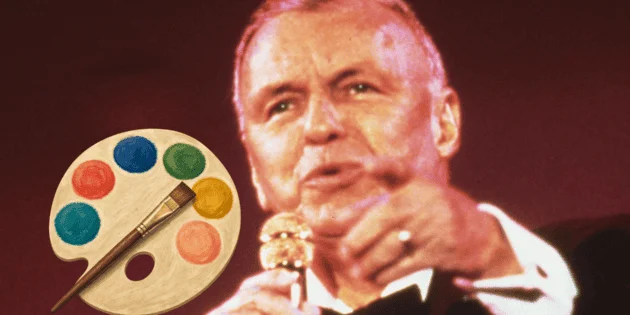
The world knows Frank Sinatra as "Ol’ Blue Eyes," the unparalleled crooner, the Rat Pack leader, and a formidable actor whose voice defined generations. Yet, beneath the veneer of showmanship and undeniable talent lay a deeply complex individual, one who found solace not only in music but also in the quiet, contemplative act of painting. This lesser-known facet of his life has recently been thrust into the spotlight with the surprising emergence of one of his intimate artworks in Mexico, reigniting interest in the melancholic artist who frequently depicted sad clowns as an outlet for his internal struggles. This discovery challenges conventional perceptions of the legend, inviting a deeper understanding of the man who, despite global adoration, grappled with profound personal torments.
The Revelation and its Immediate Impact
The surprising appearance of a Frank Sinatra original painting in Mexico has sent ripples through the art world and among devotees of the legendary entertainer. The news initially broke through digital channels, specifically captivating audiences on platforms like TikTok and Instagram, thanks to content creator Selma Loriv. Loriv’s detailed exposé brought to light a little-known, yet profoundly significant, aspect of Sinatra’s private life: his deep immersion in painting as a form of emotional catharsis. Her social media narratives, which quickly went viral, highlighted the poignant fact that behind the charismatic crooner lay a vulnerable artist, often retreating to his canvas to express feelings of melancholy through the recurring motif of sad clowns. This digital revelation, bypassing traditional art institutions, underscored the democratizing power of social media in uncovering and disseminating cultural heritage. The object of this fascination is now reportedly in the possession of Matos el Valuador, a highly respected Mexican expert in antiquities and valuations, whose involvement lends significant credibility to the authenticity and historical importance of the find. His current stewardship of the artwork places Mexico at the center of a burgeoning discussion about Sinatra’s multifaceted legacy.
Frank Sinatra: Beyond the Microphone to the Canvas
For decades, Frank Sinatra embodied the zenith of American entertainment—a vocal powerhouse whose smooth delivery and commanding stage presence made him an icon. His public image was meticulously cultivated, projecting confidence, charisma, and an almost untouchable aura of cool. Yet, beneath this carefully constructed façade, Sinatra was a man of intense emotional depth and often tumultuous personal life. It is in this private realm that his passion for painting truly flourished, serving not as a casual hobby but as a vital psychological outlet. Far from the demanding schedules of recording studios, film sets, and concert halls, the solitary act of painting offered Sinatra a sanctuary—a space where he could confront and articulate his inner turmoil without the glare of public scrutiny.
His choice of subject matter—predominantly clowns, often depicted with a palpable sense of sorrow—is particularly telling. In art history and psychology, the clown figure frequently symbolizes a duality: outward mirth concealing inner pain, a mask of joy donned to hide profound sadness. For Sinatra, this motif resonated deeply with his own experiences. Despite his stratospheric success and the adulation of millions, his life was punctuated by well-documented periods of personal crisis, including highly publicized divorces, career setbacks in the 1950s, and battles with depression. The canvas became a silent confidante, allowing him to externalize these often-agonizing emotions. Critics and biographers have long explored the melancholic undercurrents in Sinatra’s vocal performances; his paintings offer a direct, visual correlative to these emotional landscapes, providing an unfiltered glimpse into the soul of a man often perceived as invincible. This artistic practice reveals a side of Sinatra that was deeply sensitive, introspective, and profoundly human, challenging the monolithic image of the eternal showman.
A Chronology of Artistic Expression
Frank Sinatra’s engagement with painting was not a fleeting fancy but a sustained commitment spanning over four decades, indicating its profound importance in his life. While the exact inception date of his artistic endeavors remains somewhat elusive, biographical accounts suggest he began exploring visual arts sometime in the 1950s, a period marked by significant personal and professional upheaval. It was during this turbulent decade, specifically in 1957 amidst his highly contentious and emotionally draining divorce from actress Ava Gardner—a relationship widely regarded as one of the most passionate and destructive in Hollywood history—that Sinatra created one of his most recognized and revealing self-portraits. This particular work depicted him as a melancholic clown, a stark visual representation of his profound sadness and vulnerability during what was arguably one of the darkest periods of his life. The public image of the swaggering romantic was momentarily stripped away, replaced by the raw, unvarnished emotion of a heartbroken man.
This self-portrait served as a powerful testament to his reliance on art as a coping mechanism. Throughout his later years, painting remained a consistent presence. Though never seeking public recognition for his art, Sinatra frequently gifted these deeply personal works to his closest friends and confidantes, offering them not just a painting, but a piece of his hidden self. These gifts were often accompanied by intimate notes, further underscoring the personal significance of his creations. This practice inadvertently built a private collection of his works, known only to a select few, which explains why many art critics and historians remained largely unaware of the extent of his artistic output until relatively recently. His artistic journey, therefore, represents a parallel narrative to his celebrated musical career, offering a unique chronological insight into his evolving emotional landscape.
The Mexican Connection: Provenance and Authentication
The emergence of a genuine Frank Sinatra painting in Mexico introduces a compelling international dimension to this cultural discovery. Matos el Valuador, a name synonymous with expertise in Mexican antiquities and a respected figure in the country’s art and collectibles market, currently holds the artwork. His involvement provides a crucial layer of authenticity to the find, given his professional reputation for rigorous verification processes. The journey of such an intimate piece from Sinatra’s private world to a Mexican collection raises intriguing questions about its provenance. While specifics are yet to be fully disclosed, it is plausible that the painting was either a personal gift from Sinatra to a friend or associate with ties to Mexico, or it entered the country through a private acquisition by a discerning collector over the decades.
The initial public revelation, orchestrated by content creator Selma Loriv across influential social media platforms like TikTok and Instagram, highlights a contemporary trend in art discovery. In an age where traditional art galleries and auction houses often dominate the narrative, Loriv’s viral posts demonstrated the capacity of digital media to democratize access to and information about significant cultural artifacts. Her storytelling resonated with millions, effectively transforming a niche art discovery into a global conversation. Matos el Valuador’s subsequent confirmation and public engagement further validated the find, transitioning it from online speculation to a concrete, verifiable historical object. The presence of this artwork in Mexico not only enriches the nation’s private art collections but also establishes a unique cultural link to one of the 20th century’s most iconic figures, potentially drawing new interest from international art enthusiasts and Sinatra aficionados alike.
The Market and Legacy of Celebrity Art
The market for art created by celebrities who are primarily known for other fields, such as music or acting, is a fascinating and increasingly valuable niche. Frank Sinatra’s paintings, like those of fellow musicians Tony Bennett (a skilled jazz painter), Bob Dylan (known for his landscapes and portraits), or even David Bowie (an experimental artist), command attention not solely for their aesthetic merit but significantly for their unique provenance. These works offer a rare, personal glimpse into the minds of figures who have shaped popular culture, providing a different lens through which to appreciate their complexity.
For Sinatra, whose artistic output was intensely private and not intended for commercial sale, each piece carries an elevated sense of intimacy and rarity. Unlike works by trained artists, the value of celebrity art often intertwines with the artist’s fame, the narrative surrounding its creation, and its ability to reveal an unknown facet of their public persona. This particular painting, imbued with the personal struggles of a man at the pinnacle of fame, transcends mere celebrity memorabilia; it becomes a historical artifact that enriches the understanding of an icon. Its surfacing is likely to stimulate considerable interest among collectors specializing in celebrity artifacts, Americana, and modern art, potentially setting new benchmarks for such unique pieces.
Broader Implications and Future Prospects
The discovery of a Frank Sinatra painting in Mexico holds significant broader implications, extending beyond the immediate excitement of the find. For Sinatra scholarship, this artwork serves as a tangible piece of evidence that compels a re-evaluation of his entire public and private life. It encourages biographers, music historians, and cultural critics to delve deeper into the psychological underpinnings of his artistry, acknowledging that his emotional expression was not confined to his vocal cords but also flowed through his paintbrush. This revelation enriches his legacy, transforming him from a one-dimensional musical titan into a more relatable, vulnerable, and multifaceted human being.
Moreover, the unexpected appearance of this painting sparks hope among collectors and institutions that other unrecorded works by Sinatra might still exist in private collections around the world. The practice of gifting these pieces to close friends suggests a decentralized distribution, making future discoveries a distinct possibility. This event also highlights Mexico’s growing prominence in the international art scene, not just as a hub for contemporary art, but also as a significant location for historical and celebrity-related artifacts. Ultimately, this discovery does more than just unveil a painting; it uncovers another layer of Frank Sinatra’s soul, inviting the world to appreciate the silent struggles and artistic refuges of a man who truly painted his own complex soul.

0 Comments