
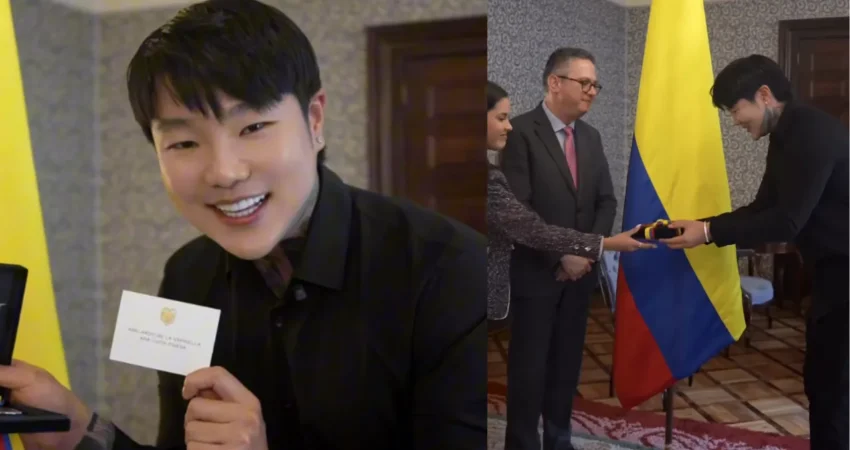
The journey of South Korean content creator Zion Hwang towards obtaining Colombian nationality has taken a significant step forward, marked by his recent reception at the Ministry of Foreign Affairs (Chancellery) and the public acknowledgment of his long-standing ties to the nation. Hwang, who has resided in Colombia for over a decade, has formally expressed his desire to become a Colombian citizen, a petition that has now progressed beyond its initial stages and garnered official attention. While this development signifies a positive stride, it is crucial to understand that it does not automatically confer citizenship; rather, it initiates a formal procedural path that requires further commitment and adherence to established legal frameworks.
Hwang’s initial arrival in Colombia was driven by the aspiration to master the Spanish language. However, over the years, his sojourn evolved into a profound connection with the country. He has established his life, cultivated a career as a content creator and singer, and forged deep bonds that he now seeks to formalize through naturalization. His decision to pursue Colombian nationality underscores a personal narrative of integration and appreciation for the nation that has become his adopted home.
A Public Appeal and Official Engagement
The public announcement of Hwang’s intention was made through a direct address to President Abelardo de la Espriella, initiating a chain of events that led to his engagement with the Chancellery. In a video message, Hwang articulated the depth of his connection to Colombia, stating, "Hello, Mr. President? Nice to meet you, I am Zion, I am from South Korea, but I have been here in Colombia for more than ten years, in love." His heartfelt declaration highlighted not only his duration of stay but also the emotional significance Colombia holds for him.
He further emphasized the transformative impact of Colombia on his life, expressing profound gratitude: "And most importantly, I love Colombia so much and I am so grateful to Colombia because it saved my life." This powerful statement suggests a personal narrative of overcoming significant challenges or finding solace and purpose within the country, reinforcing the sincerity of his desire for citizenship.
The culmination of his public appeal was a direct request for nationality: "Mr. President, imagine, I have been here for more than ten years and I still don’t have nationality. I want to be truly Colombian. Can you please give it to me?" This earnest plea resonated, prompting an official response from the government.
The Chancellery’s Response and Guidance
Following President de la Espriella’s request to review Hwang’s case, officials from the Ministry of Foreign Affairs extended an invitation to him. This meeting served as a crucial step in the naturalization process, providing Hwang with comprehensive guidance on the requirements and procedures for obtaining Colombian nationality by adoption. The Chancellery’s engagement signifies a formal acknowledgment of his petition and a commitment to outlining the path forward.
During the meeting, Pedro Agustín Roa, the Vice Minister of Foreign Affairs, was present. He acknowledged Hwang’s expressed affection for Colombia and extended a warm welcome, underscoring the country’s openness to individuals who demonstrate genuine commitment and integration. The Vice Minister’s presence underscored the importance the Chancellery places on such cases and their role in facilitating the naturalization process for individuals with strong ties to the nation.
It is imperative to clarify that this meeting and the orientation provided do not constitute an immediate approval of Hwang’s nationality. Instead, it served to demystify the complex legal and administrative journey ahead. The Chancellery’s role in this instance was to act as a guide, ensuring that Hwang understood the official channels and criteria he must meet to successfully apply for citizenship.
A Symbolic Recognition: The Tiger Medal and Insignia
Beyond the procedural guidance, Zion Hwang was presented with a symbolic token of recognition: a tiger-shaped medal and an institutional insignia. This gesture, while not conferring nationality, serves as a tangible acknowledgment of his deep-seated connection to Colombia and his contributions as a content creator and public figure. The tiger, a powerful symbol often associated with strength and resilience, may also carry cultural significance within the context of Colombian identity or Hwang’s personal journey.
The authorities, during the presentation, explicitly highlighted the profound affection Hwang has demonstrated towards the country. This recognition by the government underscores the value placed on individuals who actively embrace Colombian culture and contribute to its social fabric. Hwang’s acceptance of this award was met with a humble expression of gratitude, reinforcing his appreciation for the acknowledgment.
Understanding the Nuances of Nationality Acquisition
The presentation of the medal and insignia has understandably sparked questions about whether this signifies Hwang’s immediate Colombian citizenship. It is crucial to differentiate between symbolic recognition and legal acquisition of nationality. The insignia, while an honor, is not a substitute for the formal legal process required for naturalization.
Colombian nationality by adoption, as is the case for most foreigners seeking citizenship, involves a rigorous legal procedure managed by the Ministry of Foreign Affairs. This process requires the applicant to formally submit an application, provide extensive documentation, and meet specific criteria that typically include a minimum period of residency, demonstration of good conduct, and often, proof of integration into Colombian society. The Chancellery’s role is to meticulously review these applications to ensure compliance with national laws and regulations.
Therefore, the recognition received by Hwang marks a significant milestone in his personal narrative and his relationship with Colombia. It signifies the government’s awareness and appreciation of his commitment. However, the path to becoming an official Colombian citizen remains contingent on his formal application and successful navigation of the established legal framework. The insignia serves as a promising indicator of goodwill and potential, but the substantive legal process is yet to be fully completed.
The Broader Context: Immigration and Integration in Colombia
Zion Hwang’s pursuit of Colombian nationality is part of a larger narrative of immigration and integration in Colombia. In recent years, the country has witnessed a growing influx of foreign nationals, attracted by its cultural richness, economic opportunities, and natural beauty. Content creators and influencers, like Hwang, play a unique role in this dynamic, often acting as cultural bridges and ambassadors, showcasing Colombia to a global audience.
The process of naturalization for foreigners in Colombia is governed by Law 43 of 1993 and subsequent decrees. Foreigners can obtain Colombian nationality through various means, including birth, adoption, or naturalization. Naturalization, in turn, can be granted through presidential decree or by option, depending on the specific circumstances and the applicant’s background. For individuals like Hwang, who have established residency and demonstrated a strong connection to the country, the pathway of naturalization by adoption is the most relevant.
The requirements for naturalization typically include:
- Residency: A minimum period of legal residency in Colombia, usually five years, although this can be reduced in certain cases, such as marriage to a Colombian citizen or for individuals with significant contributions to the country.
- Good Conduct: A demonstration of good moral and civic conduct, often verified through police and criminal record checks.
- Oath of Allegiance: A commitment to uphold the laws and Constitution of Colombia.
- Language Proficiency: While not always a strict legal requirement for all categories, proficiency in Spanish is often implicitly expected and facilitates integration.
Hwang’s decade-long residency comfortably exceeds the typical requirement, and his public declarations and engagement with the Chancellery suggest a strong desire for integration. The Chancellery’s role in providing guidance is crucial, as the bureaucratic process can be complex for applicants unfamiliar with Colombian legal procedures.
Implications and Future Outlook
The case of Zion Hwang highlights the increasing diversity of Colombia and the evolving nature of national identity. As more individuals, like Hwang, choose to build their lives and contribute to the country, the concept of what it means to be Colombian expands. His journey, from a language student to a beloved content creator and aspiring citizen, reflects a successful process of cultural assimilation and a deep appreciation for the Colombian way of life.
The official recognition he has received from the Chancellery can serve as an encouragement to other foreigners residing in Colombia who aspire to become citizens. It underscores the government’s willingness to engage with and support individuals who demonstrate a genuine commitment to the nation.
For Hwang, the next steps involve formally submitting his application and diligently fulfilling all the legal requirements. This process may involve further documentation, interviews, and adherence to specific timelines. The symbolic recognition he has received is a testament to his efforts thus far, but the ultimate goal of obtaining Colombian nationality hinges on the successful completion of the official naturalization process.
The story of Zion Hwang’s pursuit of Colombian nationality is a compelling narrative of personal connection, cultural integration, and the formalization of belonging. His journey underscores the transformative power of immigration and the enduring appeal of Colombia as a destination for those seeking a new home and a sense of community. As he continues on this path, his experience offers valuable insights into the processes of naturalization and the growing multicultural tapestry of Colombia. The tiger medal and insignia he received are not merely souvenirs, but rather symbols of a deep and evolving bond, marking a significant chapter in his ongoing dedication to the nation he now calls home.

0 Comments