
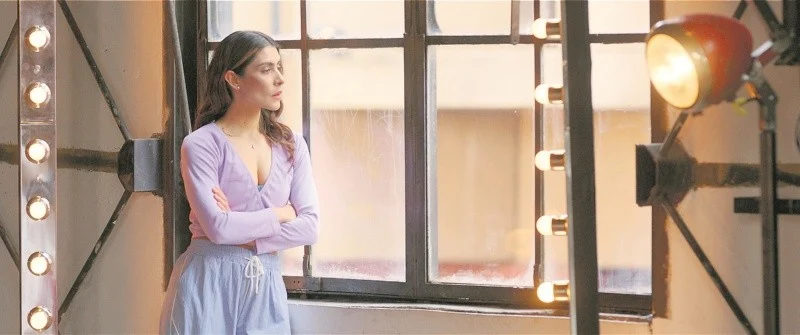
The Mexican cinematic landscape welcomes a fresh narrative exploring themes of midlife disillusionment and the transformative power of unexpected passions with the premiere of "El Club del Pie Izquierdo." Directed by Celso R. García, this comedy, starring Adrián Uribe, María León, and Mónica Huarte, opened nationwide on September 10th, inviting audiences to reflect on the pursuit of personal fulfillment beyond the confines of routine. The film centers on Juan Pablo, a character portrayed by Adrián Uribe, whose seemingly stable life—marked by family, a steady job, and a well-established routine—is abruptly challenged by an improbable catalyst: a reggaeton dance class. This pivotal moment serves as the genesis of a journey toward self-reinvention, prompting a broader conversation about the universal human experience of questioning one’s path when the mundane overshadows joy.
The Genesis of Discontent: Juan Pablo’s Awakening
Juan Pablo’s predicament is one familiar to many in contemporary society. For years, his life has been characterized by an almost mechanical rhythm: the daily commute through the bustling traffic of Mexico City, followed by long hours at an office desk, only to repeat the cycle the following day. This depiction immediately establishes him as an archetype of the modern individual caught in the relentless churn of professional and domestic responsibilities. Despite having built a life that many would consider successful—a family, a career—he gradually realizes that the vibrant pursuits and personal enjoyments that once defined him have faded into the background, overshadowed by the demands of his structured existence. The film deftly uses this relatable premise to tap into a collective anxiety about lost passions and the silent erosion of personal identity within established routines.
The spark for Juan Pablo’s reawakening comes from an unlikely source: a reggaeton class. This choice of dance genre is particularly significant, as it often carries connotations of youth, spontaneity, and a departure from traditional, structured forms. For a man in his forties, deeply entrenched in a "square" and conventional life, embracing reggaeton represents not just a physical challenge but a profound symbolic rupture with his past self. It is a bold step into a territory where his familiar certainties—his age, his professional identity, his perceived social standing—are stripped away, forcing him to confront deeply ingrained insecurities and preconceived notions about where certain opportunities or experiences belong in the timeline of life. The film thus transcends mere comedy, posing a fundamental question: What happens when one realizes they have been living the same day, repeatedly, for far too long?
A Cast of Acclaimed Talent Brings the Story to Life
The ensemble cast of "El Club del Pie Izquierdo" brings a wealth of experience and comedic timing to this poignant story. Adrián Uribe, renowned for his extensive career in Mexican television and film, particularly in comedy, embodies Juan Pablo. Uribe’s portrayal of a middle-aged office worker grappling with the unfamiliar rhythms of reggaeton is informed by his own admitted distance from the genre, a factor he found advantageous in authentically conveying his character’s initial discomfort. "For me, reggaeton is one of the most foreign rhythms," Uribe confessed in an interview with EL INFORMADOR. "I danced it once in a dance reality show, but I think that disconnection I have with that rhythm, feeling it so distant, helped ‘Juan Pablo’ a lot." This self-awareness allowed Uribe to seamlessly translate his personal unfamiliarity into a comedic yet genuine performance, making Juan Pablo a truly "fish out of water" character, endearing himself to audiences who might recognize a similar awkwardness. His observation that "many men my age will identify" underscores the film’s broad appeal to a demographic often overlooked in narratives about self-discovery through dance.
María León, a multifaceted artist celebrated for her work as a singer, actress, and dancer, takes on the role of Paulina, the demanding reggaeton instructor. León’s deep personal connection to dance, having studied a Bachelor’s Degree in Dance at the University of Guadalajara and worked as a teacher, lends an authentic depth to her character. Her understanding of the discipline, passion, and challenges inherent in dance allows her to craft a performance that is both authoritative and empathetic. "Everything I have learned for a long time was at the service of the character of ‘Paulina’," León shared. While Paulina initially harbors skepticism about Juan Pablo’s motivations, believing he lacks genuine passion for dance, his persistence gradually softens her stance. This evolving dynamic is crucial to the film’s emotional arc, highlighting how commitment can transform initial resistance into mentorship.
Mónica Huarte, another prominent figure in Mexican comedy and theater, plays Moni, the owner of the dance studio. Huarte’s role is pivotal in maintaining the film’s comedic tone amidst its underlying themes of dissatisfaction. She is part of the supportive, albeit sometimes bemused, group that witnesses Juan Pablo’s awkward foray into dance. Huarte acknowledged the delicate balance required to achieve this: "I think it’s a difficult line, because this film has a kind of realism. I think the director asked us for something very authentic and honest, but we must not forget that it is a comedy." Her ability to infuse humor into a character rooted in a realistic setting underscores her comedic prowess and the film’s nuanced approach to its subject matter.
Yuriria del Valle portrays Bárbara, Juan Pablo’s wife, whose character provides a critical perspective on the ripple effects of personal change within a long-term relationship. Bárbara, too, is entrenched in a conventional, predictable life, and her husband’s sudden pursuit of reggaeton forces her to confront her own complacency and the unspoken agreements of their marriage. Del Valle highlights the film’s central message of reinvention: "It’s a film about reinventing yourself. The phrase that summarizes the entire film is ‘let life lead you to dance.’ Not just because the film is about dancing, but because the thesis of the film is to dare to step out of your comfort zone." Her character’s journey parallels Juan Pablo’s, demonstrating that personal growth is often a shared, if sometimes challenging, experience within a partnership. The film champions the idea that individuals, and by extension, relationships, are not static, but rather capable of evolution and rediscovery, regardless of age.
Thematic Depth: Beyond the Dance Floor
While "El Club del Pie Izquierdo" uses dance as its primary narrative device, its thematic explorations extend far beyond the choreography. The film delves into the universal human struggle against complacency and the societal pressures that often dictate what constitutes a "successful" or "appropriate" life at different ages. Juan Pablo’s journey challenges the notion that certain opportunities are exclusive to youth, advocating instead for a lifelong pursuit of personal joy and self-expression.
Adrián Uribe’s reflections on the film’s message resonate deeply with this theme: "When you feel something is missing from your life, I think that’s when you have to rethink: ‘What am I going to do? Continue on the same path, doing the same thing every day?’ You have to move, do something different, try, take a class, even take a different path or change your daily routine, to try to get different results." This sentiment encapsulates the film’s core philosophy: active engagement with life and a willingness to embrace the unknown are essential for sustained fulfillment.
The dynamic between Juan Pablo and Paulina further illustrates this. Paulina’s initial reluctance to engage with Juan Pablo, stemming from her perception of his lack of genuine passion, gives way to a profound connection built on his persistence. María León emphasizes a powerful line her character delivers: "Stop thinking and feel." This advice serves as a potent metaphor for the film’s broader message, encouraging audiences to shed intellectual overanalysis in favor of intuitive action and emotional connection. It’s a call to embrace vulnerability and allow oneself to be guided by inner desires rather than external expectations.

Moreover, the film addresses the often-unseen impact of one person’s transformation on those around them. Bárbara’s storyline, as Juan Pablo’s wife, showcases how an individual’s decision to pursue change can disrupt established dynamics within a family unit. Yuriria del Valle highlights that "Bárbara also lives within a daily structure that changes when her husband decides to question it." This subplot enriches the narrative by demonstrating that self-reinvention is not an isolated act but a force that can catalyze growth and introspection in others, challenging the comfort of predictability in favor of a more dynamic and authentic existence. The film subtly suggests that true connection within a relationship thrives not on static conformity, but on mutual growth and acceptance of evolving identities.
Cultural Context and Industry Trends
"El Club del Pie Izquierdo" enters the Mexican cinematic landscape at a time when local productions, particularly comedies, continue to demonstrate strong box office performance and cultural relevance. Mexican comedy has experienced a significant resurgence over the past decade, with films often blending humor with social commentary or heartfelt narratives. This genre has proven to be a consistent draw for domestic audiences, offering stories that reflect contemporary Mexican life and cultural nuances. Films like "Nosotros los Nobles" (2013), "Hazlo como hombre" (2017), and "Mirreyes contra Godínez" (2019) have achieved considerable commercial success, demonstrating a strong appetite for local stories that resonate with diverse demographics. "El Club del Pie Izquierdo" fits squarely within this tradition, leveraging the popularity of its lead actors and a relatable premise to engage a broad audience.
Director Celso R. García, known for his work in both drama and comedy, brings a distinctive touch to the film. His previous credits include the critically acclaimed "La Delgada Línea Amarilla" (2015), which demonstrated his ability to blend poignant storytelling with a humanistic approach. His direction in "El Club del Pie Izquierdo" seeks to balance the inherent humor of Juan Pablo’s awkward journey with the underlying emotional depth of his quest for meaning. This blend of authentic realism and comedic lightness, as described by Mónica Huarte, is a hallmark of successful contemporary Mexican comedies.
The film’s musical elements also play a significant role. María León’s participation in the main theme song underscores her versatile talent, while the inclusion of a salsa version of Napoleón’s classic "Vive" adds a layer of intergenerational appeal and thematic resonance. "Vive" (Live) perfectly encapsulates the film’s message of embracing life and its opportunities, connecting the narrative to a broader cultural consciousness around self-affirmation and seizing the moment. The choice of reggaeton as the central dance form is also noteworthy, reflecting its widespread popularity and cultural impact across Latin America, making Juan Pablo’s initial aversion and eventual embrace of it all the more significant.
The Enduring Message: Never Too Late to Dance
One of the most powerful and enduring messages of "El Club del Pie Izquierdo" is that age is not a barrier to new experiences or personal transformation. Yuriria del Valle eloquently articulated this sentiment: "Never is it too late to give yourself the opportunity to experience new things; and maybe you do something and it wasn’t really what you wanted, but you try, or you do something different and you discover that yes, that was what you wanted and it turns out that it changes your life." This underscores the film’s optimistic outlook, encouraging audiences to view life as a continuous journey of discovery rather than a linear progression with fixed endpoints.
The actors themselves echoed this sentiment through their personal reflections on maintaining passion in their own long careers. Mónica Huarte, witnessing colleagues become "disenchanted" with their profession, emphasized the importance of appreciating the journey rather than solely focusing on destinations. "I think the key to not falling into that is to appreciate the path, because then there is so much obsession with getting somewhere that I say: ‘Well, where do we get to?’ You don’t get anywhere. You do achieve things, but it’s the path." This perspective aligns perfectly with Juan Pablo’s journey, where the act of dancing, the process of learning and stumbling, becomes as significant as any mastery he might achieve.
Adrián Uribe, with over three decades in the entertainment industry, shared a similar perspective, expressing that he has never lost his enthusiasm for his craft. His ability to connect his extensive career experience to the film’s premise highlights the universal nature of its message. "Hopefully, everyone, and not just in this career, in any career, if they feel bored, does something to get out of it," Uribe concluded. "Either you change your attitude or you do something new, but do something, don’t stay there. Life is so short that we think we are going to be eternal, and you realize that no one has life bought. This life, as they say, is for eating here, not for takeout. So live." This impassioned plea serves as the film’s ultimate call to action, urging audiences to actively engage with their lives, challenge their comfort zones, and embrace the joy of continuous evolution.
Looking Ahead: The Impact and Future Endeavors
"El Club del Pie Izquierdo" is poised to contribute to the ongoing dialogue about personal growth and societal expectations in Mexico. Its blend of humor and heartfelt reflection offers an accessible entry point for audiences to consider their own lives and potential for change. The film’s success will not only be measured in box office numbers but also in its ability to resonate with viewers, inspiring them to perhaps take their own "left-footed" steps into unfamiliar yet rewarding territories.
The cast members continue to be active in various projects. Yuriria del Valle, for instance, is set to close 2026 with a busy slate, including the Sony-produced series "Señoras Mal," a third installment of an undisclosed film, and a theatrical production with Pablo Perroni at Teatro Milán. She is also developing two personal projects: a screenplay nearing completion and a play co-written with another actress. This continued productivity and creative exploration among the cast members further reinforces the film’s message of perpetual reinvention and the importance of pursuing one’s passions.
"El Club del Pie Izquierdo" also features performances from Mauricio Isaac, Miguel Burra, and Panuco, rounding out a talented ensemble that brings depth and dynamism to the narrative. As the film begins its theatrical run, it stands as a testament to the power of cinema to entertain, provoke thought, and inspire audiences to embrace the unpredictable dance of life. It’s a timely reminder that within the confines of routine, there often lies an untapped wellspring of joy and self-discovery, waiting for that one bold, perhaps even clumsy, step onto the dance floor.

0 Comments