
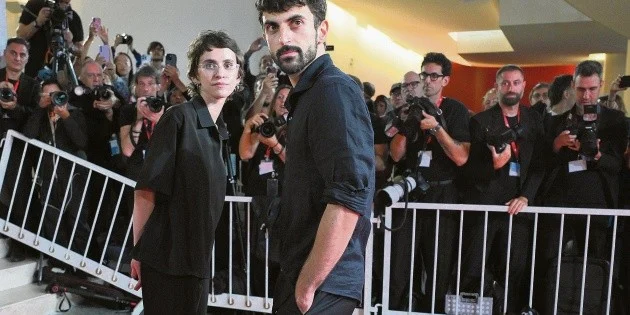
There is a deliberate disquiet in the imagery of "Naza," a documentary that places the mundane reality of Tel Aviv’s illuminated cityscape against the chilling testimonies of Israeli military personnel. As protagonists speak of surveillance, targeting, and bombardments, behind them, another city, Tel Aviv, remains awake and alive. Its lighted windows, residential buildings, and the persistent hum of daily life continue, seemingly untouched by the remote conflict unfolding elsewhere. This stark visual dichotomy forms the very foundation of the film by Yuval Abraham and Rachel Szor, creating a powerful cinematic commentary on modern warfare.
A Cinematic Juxtaposition: Normalcy and Testimony
"Naza" is meticulously constructed on this striking contrast. On one side, the perceived normalcy of an Israeli metropolis; on the other, the unfiltered accounts of 24 individuals connected to the Israeli army. These include intelligence officers and soldiers who detail military operations in Gaza, elaborating on the sophisticated systems employed to locate targets and execute remote attacks. The documentary, which made its global debut at the Venice Film Festival, eschews conventional investigative journalism in its presentation. Instead, it opts for a profoundly cinematic approach: lending digitally altered faces and voices to individuals who claim direct involvement in the design or operation of the described military systems.
The identities of these former and current military personnel remain shrouded in secrecy. The interviews, spanning three years, were conducted clandestinely and under the cover of night, primarily on the rooftops of Tel Aviv. The voices and visual appearances of the participants were digitally manipulated, a crucial measure undertaken to safeguard their anonymity and protect them from potential repercussions. This artistic choice transforms anonymity into an integral part of the film’s visual language. The pervasive darkness in these interview scenes is not merely a security precaution; it evolves into a potent moral backdrop, reflecting the shadowy ethical terrain explored by the film.
Behind the Screen: The Mechanics of Remote Conflict
At the heart of "Naza" lies a deceptively simple yet profoundly complex question: How does warfare function when a significant portion of its critical decisions are made far removed from the physical locations where bombs ultimately fall? The testimonies gathered by Abraham and Szor meticulously describe advanced surveillance systems and intricate mechanisms for remote strikes. Participants speak candidly about the deployment of artificial intelligence (AI) to identify potential Hamas targets and discuss operations against residential buildings where, according to their accounts, military personnel were aware that families might be present.
The Israeli army has publicly acknowledged its use of AI as a supportive tool for target identification, though it consistently maintains that no attack is executed without direct human intervention. A military official cited in the documentary reiterates this position, emphasizing that the ultimate decision to fire rests with a human operator. This inherent tension between increasing automation and persistent human responsibility forms a critical, recurring theme throughout the entire film.
"Naza" intentionally steers clear of solely depicting the devastating aftermath of bombings. Its primary objective, as articulated by its directors, is to meticulously examine the underlying mechanisms that enable these actions: the intricate web of surveillance, data collection, algorithmic analysis, target identification, and the consequential decisions made by those who operate these advanced systems. This focus explains the film’s insistence on listening intently to those who were intimately involved in these processes. "It’s different to hear the people who designed and operated these systems talking about it in front of a camera," Rachel Szor explained during the film’s presentation at Venice, highlighting the unique power of direct testimony.
Contextualizing Modern Warfare: AI, Ethics, and Gaza
To fully grasp the implications of "Naza," it is essential to contextualize the film within the broader landscape of the Israeli-Palestinian conflict and the evolving nature of modern warfare. The Gaza Strip, a densely populated Palestinian enclave, has been under an Israeli and Egyptian blockade since 2007, following the Hamas takeover. This has led to a series of significant military confrontations, often characterized by asymmetric warfare, with Israel employing advanced military technology against militant groups operating within Gaza. The humanitarian situation in Gaza has been a consistent international concern, with repeated calls for civilian protection and adherence to international law.
The integration of artificial intelligence into military operations represents a paradigm shift in global warfare. AI-driven systems are increasingly used for intelligence gathering, target recognition, logistical support, and even in decision-making processes, albeit typically with a "human-in-the-loop" or "human-on-the-loop" oversight. Proponents argue that AI can enhance precision, reduce human error, and minimize risks to military personnel. However, critics and ethicists raise serious concerns about accountability, the potential for algorithmic bias, the reduction of human empathy in combat, and the slippery slope towards fully autonomous weapon systems, often termed "killer robots," which could select and engage targets without human intervention. The film "Naza" delves into these very ethical dilemmas, showcasing the human perspective from within the operational framework.
From Journalism to Cinema: A New Form of Witnessing
A notable aspect of "Naza" is that a portion of its foundational material was not entirely new to the public sphere. The documentary draws upon extensive investigative reports published between 2023 and 2025 by respected journalistic outlets such as +972 Magazine, Local Call, and The Guardian, the latter also serving as a co-producer of the film. The crucial distinction, according to the filmmakers, lies in the deliberate translation of these compelling testimonies from the realm of investigative journalism to the immersive and impactful medium of cinema.
The documentary thus offers a fresh and distinct way to engage with information that had already circulated. There is a profound difference, the filmmakers argue, between reading a military officer’s testimony in a print investigation and witnessing a voice, observing a subtle pause, detecting a flicker of doubt, or hearing an intricate explanation as an interviewee endeavors to reconstruct, before a camera, the operational mechanics of their participation.
Yuval Abraham encapsulates this distinction in terms of accountability: making it considerably more challenging for future generations or authorities to deny the reality of what transpired. Significantly, the film does not attempt to portray all its interviewees as remorseful or repentant. Some indeed express profound regret; others speak with a detached indifference, and a few even convey a sense of pride in their actions. For the filmmakers, these variations in emotional response are less critical than the overarching objective of reconstructing and exposing the complex military systems they describe. This represents a deliberate and powerful narrative choice: "Naza" does not seek to engineer a collective confession or a unified moral stance. Instead, it aims to meticulously unveil a system and allow the inherent contradictions and varied perspectives of those who operated it to resonate authentically within the film’s narrative.
Venice Premiere and Enduring Impact
"Naza" arrived at the Mostra de Venecia with relatively little advance fanfare. Its inclusion in the festival program occurred shortly before the event’s commencement, a decision that its producers attributed, among other reasons, to the extensive time required to meticulously complete the anonymization process for all participants. Its presence, however, carried significant weight within the competition: it was the sole documentary vying for the prestigious Golden Lion and one of only two films directed by a woman in the main competition.
The reception in Venice was marked by a palpable sense of anticipation and widespread critical acclaim. However, the festival served not merely as a venue for the film’s exhibition; it became an integral part of its overarching discourse. Filmmaker Jonathan Glazer, director of the critically acclaimed "The Zone of Interest," was explicitly cited as an inspiration by "Naza’s" creators. Glazer’s powerful concept—that victims can remain visually off-screen without ever disappearing from the audience’s conscience—serves as a guiding principle for "Naza." This approach allows the film to construct a narrative where absence carries a constant and profound weight. Indeed, the harrowing ruins and suffering in Gaza do not need to occupy every frame to maintain a visceral and inescapable presence in the viewer’s mind.
The broader implications of "Naza" are far-reaching. It significantly contributes to ongoing global discussions about military accountability, transparency in operations, and the ethical governance of advanced technologies in conflict zones. By bringing these testimonies to a cinematic platform, the documentary has the potential to profoundly shape public understanding and ignite deeper debates regarding the human cost of remote warfare and the intricate moral landscape navigated by those who execute it. Furthermore, "Naza" reinforces the enduring power of documentary filmmaking as a vital tool for bearing witness, challenging established narratives, and fostering critical introspection into some of the most complex geopolitical and ethical challenges of our time. It compels viewers to confront the uncomfortable realities of modern conflict, urging a closer examination of the mechanisms that enable it and the human lives irrevocably altered by its reach.
Agencies
CT

0 Comments