
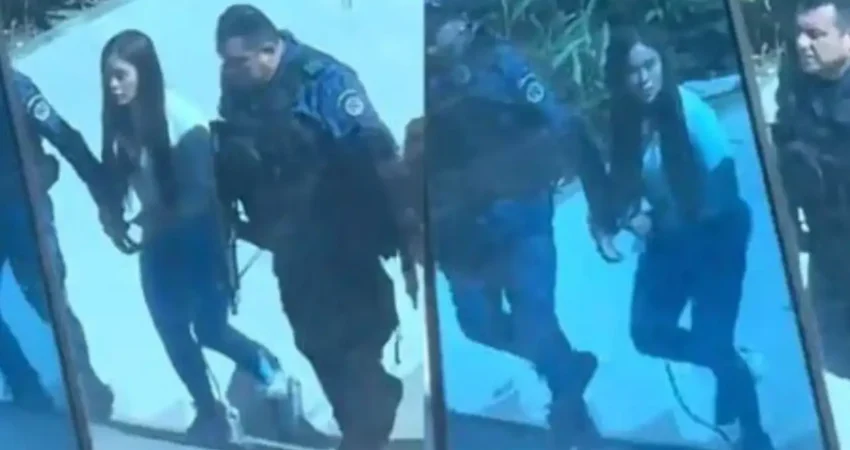
The public spectacle of social media personality Daneidy Barrera Rojas, widely known as "Epa Colombia," being transported under heavy security, visibly shackled and chained, from the Picaleña prison to the Ibagué courts for a judicial hearing has once again thrust her into the national spotlight. The images, captured and disseminated across social media platforms, underscore the ongoing legal entanglements of the influencer and her current status as a convicted individual serving a significant prison sentence. This highly visible transfer highlights the logistical complexities and security measures involved in managing high-profile inmates within the Colombian penitentiary system.
Background of the Legal Proceedings
The current incarceration of Epa Colombia stems from a series of events that unfolded during the 2019 national protests. Her conviction is rooted in acts of vandalism committed at a TransMilenio station in Bogotá, the footage of which she subsequently broadcasted on her social media channels. This action led to a judicial ruling that found her guilty of several charges, including incitement to commit crimes for terrorist purposes, aggravated damage to another’s property, and disruption of public transportation services. The court imposed a sentence of 63 months and 15 days of imprisonment, a substantial period reflecting the severity of the offenses.
Prior to her current confinement at the Picaleña prison in Ibagué, Barrera Rojas had been held at other correctional facilities. She was initially transferred from the School of Carabineros in Bogotá and, before that, had been incarcerated at the El Buen Pastor prison. Each of these relocations signifies the ongoing nature of her legal situation and the administrative processes involved in managing her sentence.
The Transfer to Ibagué: A Public Display of Custody
The recent transfer to Ibagué was necessitated by a specific judicial proceeding. The images that have circulated show Barrera Rojas, accompanied by officials from the National Penitentiary and Prison Institute (Inpec), being moved towards the judicial offices located in the Los Arrayanes sector. The use of handcuffs and leg restraints during this movement has drawn considerable attention and sparked debate among social media users regarding the necessity and appropriateness of such measures for a public figure.
The decision to use restraints during inmate transport is a standard security protocol implemented by correctional authorities to prevent escapes, maintain order, and ensure the safety of both the inmate and the public. However, in the case of a personality with Epa Colombia’s significant online presence, such visible displays of restraint can amplify public scrutiny and elicit varied emotional responses, ranging from sympathy to condemnation.
Chronology of Epa Colombia’s Legal Journey
November 2019: During widespread protests in Colombia, Daneidy Barrera Rojas, as Epa Colombia, vandalizes a TransMilenio station in Bogotá. Videos of the incident are posted on her social media accounts.
Subsequent Period: Investigations commence into her actions, leading to charges being filed by the Colombian Attorney General’s Office.
[Approximate Date of Conviction – Not specified in original text, but inferred]: Epa Colombia is convicted of inciting to commit crimes for terrorist purposes, aggravated damage to another’s property, and disruption of public transportation services.
[Date of Sentencing – Not specified in original text, but inferred]: The court sentences her to 63 months and 15 days of imprisonment.
[Period of Initial Incarceration – Not specified in original text]: Barrera Rojas is initially held at El Buen Pastor prison.
[Transfer to Bogotá – Not specified in original text]: She is subsequently transferred to the School of Carabineros in Bogotá.
[Transfer to Picaleña, Ibagué – Not specified in original text]: Barrera Rojas is moved to the Picaleña prison in Ibagué.
September 11, 2026: Epa Colombia is transported under heavy guard, visibly shackled and chained, from Picaleña prison to the Ibagué courts for a judicial hearing related to her ongoing legal process.
Supporting Data and Legal Context
The sentence of 63 months and 15 days translates to over five years of imprisonment. This duration is significant and places her within the category of individuals serving considerable sentences for serious offenses. The charges themselves – incitement to commit crimes for terrorist purposes, aggravated damage, and disruption of public transport – carry substantial legal weight in Colombia.
The legal framework surrounding these charges is designed to deter acts that destabilize public order and infrastructure. Incitement to commit crimes, particularly with a terrorist or disruptive intent, is viewed as a severe offense due to its potential to galvanize widespread public disorder. Aggravated damage to property, especially public property like a TransMilenio station, implies a higher degree of culpability, often due to the value of the property or the method of destruction. Disruption of public transportation directly impacts the daily lives of citizens and the functioning of urban centers.
The fact that her conviction is linked to the 2019 protests is also noteworthy. This period was marked by significant social unrest across Colombia, and the actions of individuals during such times are often subject to heightened legal scrutiny. The judiciary’s role is to balance the right to protest with the need to maintain public order and protect property.
Inferred Reactions and Broader Implications
While the original article does not provide direct quotes from legal representatives or family members, it is reasonable to infer that Epa Colombia’s defense team would be actively involved in managing her legal appeals and ensuring her rights are upheld throughout the judicial process. Any appeals or motions filed by her legal counsel would likely focus on challenging the conviction, the sentence, or the conditions of her detention and transfer.
The public’s reaction, as noted by the article, has been varied. Social media platforms often serve as a barometer for public sentiment, and the images of Epa Colombia in restraints have likely generated a spectrum of opinions. Some may view it as a necessary consequence of her conviction, while others might express sympathy or question the severity of the visible security measures. This public discourse is a reflection of the complex relationship between celebrity, social media influence, and the justice system.
The broader implications of this case extend beyond Epa Colombia herself. It serves as a case study on how public figures are treated within the legal system, the role of social media in amplifying legal proceedings, and the challenges faced by correctional authorities in managing high-profile inmates. The constant media attention and public interest in her case underscore the evolving landscape of celebrity and its intersection with legal accountability.
Furthermore, the case raises questions about restorative justice and rehabilitation. While Epa Colombia is serving her sentence, the long-term impact of her actions and the potential for her to contribute positively to society upon her release remain subjects of interest. Her continued presence in the public consciousness, even while incarcerated, highlights the enduring influence of social media personalities.
Official Responses and Security Protocols
The Inpec, as the agency responsible for inmate custody and transportation, operates under established protocols designed to ensure security and order. The use of handcuffs and leg restraints is a standard operating procedure in situations deemed to pose a potential security risk, which can include the inmate’s history, the nature of their offense, or the public visibility of the transfer.
While specific internal directives of the Inpec are not publicly detailed, their actions in this instance are consistent with general correctional practices aimed at preventing any security breaches during inmate movement. The agency’s primary mandate is to safely manage the prison population and to ensure that inmates appear for court proceedings without incident. The level of security employed during Epa Colombia’s transfer is indicative of the perceived need to maintain strict control during her movement between the correctional facility and the judicial center.
Analysis of the Situation
The recurring media attention surrounding Epa Colombia’s legal battles and incarceration reflects a broader societal fascination with individuals who achieve fame through unconventional means, particularly social media. Her story highlights the potential pitfalls of unchecked online behavior and the legal consequences that can ensue. The visible display of her being shackled and chained, while a procedural aspect of her detention, serves as a potent visual reminder of her convicted status and the limitations imposed by the judicial system.
The repeated transfers and court appearances indicate that her legal process is still actively unfolding, despite her conviction and sentencing. This could involve various stages, such as appeals, reviews of sentence conditions, or other related legal proceedings that necessitate her presence in court. Each of these events, amplified by social media, contributes to a continuous narrative surrounding her life in and out of legal trouble.
Ultimately, the case of Epa Colombia serves as a complex illustration of how digital fame intersects with the realities of the criminal justice system. The public’s gaze, often fueled by social media, scrutinizes every aspect of her journey, from her initial actions to her current incarceration and courtroom appearances. The shackled and chained image is not merely a detail of a transfer; it is a powerful symbol within this ongoing public narrative, representing the consequences of actions and the stringent measures of the legal system.

0 Comments