
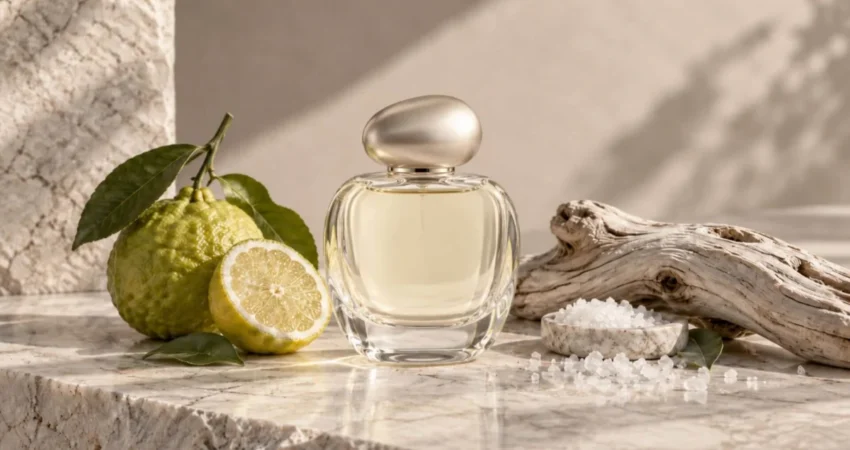
The traditional olfactory calendar has long dictated a sharp divide between the seasons, prescribing light, effervescent citruses for the summer months and dense, resinous gourmands for the winter. However, a significant shift in consumer behavior and artistic direction within the fragrance industry is challenging this binary. As the northern hemisphere enters the transitional period of September, a new category of "inter-season" scents is emerging, led by compositions that pair the high-frequency brightness of bergamot with the mineralic depth of sea salt and driftwood. This movement is exemplified by recent releases from heritage houses like Jo Malone London and niche pioneers such as Byredo, which seek to capture the melancholic beauty of the British coastline at the end of the summer season.
The Evolution of the Transitional Scent Profile
The move toward "coastal citrus" for autumn represents a departure from the heavy spicing typically associated with the cooling weather. Traditionally, the arrival of September signaled a return to notes of cinnamon, cardamom, and sandalwood. Yet, market data suggests that a growing segment of fragrance enthusiasts is seeking "transparency" in their scent wardrobes—fragrances that provide a sense of cleanliness and light without being fleeting.

Bergamot (Citrus bergamia) serves as the bridge in this evolution. Unlike more "juicy" or "sweet" citruses like orange or grapefruit, bergamot possesses a complex chemical makeup that includes linalyl acetate and linalool, giving it a characteristic green, floral, and slightly bitter edge. This inherent complexity allows it to harmonize with the dry, woody notes that define autumn perfumery. When combined with marine accords, it creates a profile that evokes "cold sun"—a sensation of brightness that lacks the heat of July, making it an ideal accompaniment for the early days of trench coats and light knitwear.
A Chronology of Citrus and Mineral Accords in Perfumery
To understand the current popularity of bergamot and salt, one must look at the historical trajectory of these notes. Bergamot has been a cornerstone of fine perfumery since the 18th century. Johann Maria Farina, who created the original Eau de Cologne in 1709, utilized bergamot to provide a sophisticated top note that distinguished his creation from the heavy musks of the era. For centuries, bergamot remained a "top note" staple, designed to dissipate quickly.
The 1990s introduced the "ozonic" or "marine" revolution, driven by the discovery and widespread use of Calone 1951, a synthetic compound that mimicked the smell of sea breezes and watermelon. However, the 2020s have seen a refinement of this concept. Rather than the "aqueous" or "watery" scents of thirty years ago, modern perfumery focuses on "mineral" notes. This involves the construction of accords that suggest the texture of salt on skin, the smell of sun-bleached wood, and the damp air of a rocky shoreline. The current trend represents a maturation of the marine category, moving away from the "oceanic" fantasies of the past toward a more grounded, realistic interpretation of the natural environment.

Technical Analysis: Jo Malone London Sea Salt & Bergamot Cologne
The release of Sea Salt & Bergamot Cologne by Jo Malone London marks a specific point in this timeline. Inspired by the Celtic Sea and the rugged topography of the British coast, the fragrance is structured to provide a narrative of the late-summer transition.
The composition opens with a concentrated burst of Italian bergamot, sourced primarily from the Calabria region, which accounts for nearly 90% of the world’s production. This is immediately met by a sea salt accord. In perfumery, salt is an "olfactory illusion," as salt itself has no volatile aroma. Perfumers achieve this sensation by using mineralic molecules and trace amounts of algae or moss extracts to trigger the brain’s association with the seaside.
The base of the fragrance is anchored by driftwood. Unlike traditional cedar or oud, driftwood accords are characterized by a "dry" and "salty" woodiness, often achieved through the use of molecules like Ambroxan or Vetiver. This structural choice ensures that the fragrance maintains a presence in cooler air, providing a clean, sophisticated trail that is neither overly floral nor heavy. At a price point of 76 euros for 30 milliliters, the product is positioned within the "accessible luxury" segment, targeting consumers who prioritize versatility and office-appropriate elegance.

Supporting Data: The Economic Impact of the Clean Aesthetic
The rise of transitional fragrances like those featuring bergamot and salt is closely linked to the "Clean Girl" and "Quiet Luxury" aesthetics that have dominated social media and fashion retail over the last 24 months. According to industry reports from McKinsey & Company, the global fragrance market is projected to reach $69 billion by 2030, with the "niche and prestige" segment growing at a significantly faster rate than mass-market perfumes.
Consumer surveys indicate a 22% increase in the demand for "gender-neutral" scents, a category where citrus-woody compositions thrive. Furthermore, the concept of "fragrance layering"—a technique championed by Jo Malone London—has encouraged consumers to purchase multiple lighter scents to create a personalized, seasonal blend. This has effectively cushioned the industry against the traditional seasonal slumps, as consumers no longer buy one "winter" bottle, but rather curate a collection of modular scents that can be adapted as the temperature fluctuates.
Alternative Perspectives: Byredo and the Spiced Citrus Direction
While Jo Malone London focuses on the mineralic and coastal, other houses are exploring the bergamot-autumn connection through a more aromatic lens. Byredo’s Sunday Cologne offers a pertinent case study in how to transition citrus into the deep autumn.

Byredo, founded in Stockholm by Ben Gorham, often utilizes a "modernist" approach to traditional structures. Sunday Cologne (formerly known as Fantastic Man) retains the luminous opening of bergamot but introduces cardamom and star anise. The inclusion of these spices, followed by a base of incense, patchouli, and vetiver, moves the fragrance away from the coast and toward the forest.
This alternative approach highlights a split in the market:
- The Coastal Mineralists: Consumers seeking clean, saline, and "airy" scents (Jo Malone London, James Heeley).
- The Aromatic Traditionalists: Consumers seeking citrus paired with resins and spices to create a "warm" freshness (Byredo, Acqua di Parma).
Both directions confirm that bergamot is no longer viewed as a seasonal ingredient, but as a structural tool for providing "lift" to heavier compositions.

Sustainability and Sourcing in the Bergamot Industry
As the demand for bergamot-heavy fragrances grows, the industry faces challenges regarding raw material sustainability. The bergamot orange is a delicate hybrid, highly susceptible to climate fluctuations in its primary growing region of Calabria.
The International Fragrance Association (IFRA) has also implemented strict regulations on bergamot oil due to the presence of bergapten, a phototoxic substance that can cause skin irritation when exposed to sunlight. Modern perfumery almost exclusively uses "FCF" (Furocoumarin-Free) bergamot oil, which has been processed to remove these compounds. This technological requirement adds a layer of cost and complexity to the production of high-quality citrus fragrances, further cementing their status as premium products.
Broader Impact and Industry Implications
The shift toward "September Citruses" suggests a broader cultural trend: the blurring of seasonal boundaries. As global temperatures rise and traditional seasonal markers become less distinct, consumer preferences are reflecting a desire for "seasonless" wardrobes. Fragrances that can navigate the office, the outdoors, and the transition from day to night are becoming the most valuable assets in a consumer’s arsenal.

Industry analysts predict that the next five years will see a further expansion of the "mineral" category. We can expect to see more experimentation with notes like "cold flint," "wet pavement," and "metallic salts" as perfumers seek to provide freshness that feels urban and sophisticated rather than tropical or edible.
The success of collaborations, such as the ongoing partnership between Jo Malone CBE and Zara, also indicates that these sophisticated scent profiles are trickling down to the mass market. With offerings under 36 euros that mimic the complexity of niche perfumery, the "coastal citrus" DNA is becoming a universal standard for the modern autumn.
In conclusion, the emergence of bergamot and sea salt as autumn staples is not merely a passing trend but a reflection of a more nuanced understanding of scent. By leveraging the historical prestige of bergamot and the modern innovation of mineral accords, fragrance houses are providing a solution for the contemporary consumer: a way to carry the light of summer into the cooling shadows of the late year. This movement reinforces the idea that perfumery is an art of atmosphere, capable of capturing not just a smell, but a specific moment in time.

0 Comments