
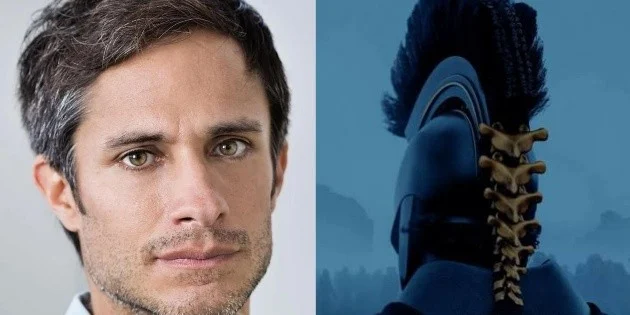
Mexican actor Gael García Bernal has found himself at the epicenter of a significant media storm following sharp criticism directed at Christopher Nolan’s highly anticipated cinematic adaptation of Homer’s The Odyssey. The controversy, which erupted prominently on September 12, 2026, centers on Bernal’s contention that Nolan’s decision to film the ancient Greek epic entirely in English compromises its historical and cultural fidelity.
The Genesis of the Controversy: A Challenge to Anglocentrism
García Bernal, known for his roles in acclaimed films like Amores Perros and Y tu mamá también, as well as his advocacy for Latin American cinema and social issues, voiced his strong disapproval regarding the linguistic choice for The Odyssey. According to widely circulated statements made on September 12, 2026, the actor argued that a narrative so profoundly embedded in Greek civilization and mythology inherently loses its authentic essence when translated and presented solely in English, the dominant language of the global film industry. He emphasized that such an approach risks stripping the story of its deep cultural nuances and historical context.
This critique by García Bernal is not an isolated incident but rather a potent articulation of a long-standing debate within the film community regarding linguistic diversity and cultural representation in major Hollywood productions. He posited that contemporary blockbusters, especially those drawing from non-Western or ancient cultures, should embrace linguistic pluralism. His intention, he stated, was to spark a serious discussion about how cultural narratives are portrayed and consumed on a global scale, advocating for a more inclusive and respectful approach to source material. This stance resonates with a growing movement pushing for greater authenticity in historical and culturally specific narratives, particularly in an era where global audiences are increasingly receptive to subtitled and foreign-language content.
Christopher Nolan’s ‘The Odyssey’: An Ambitious Undertaking
Christopher Nolan’s announcement of an adaptation of The Odyssey had already generated immense anticipation. Nolan, renowned for his complex narratives, visual grandeur, and meticulous attention to detail in films such as Inception, Dunkirk, and the Oscar-winning Oppenheimer, is considered one of Hollywood’s most influential contemporary directors. His previous works often explore themes of time, memory, and morality, making Homer’s epic – a tale of a hero’s arduous ten-year journey home after the Trojan War, battling mythical creatures and divine wrath – a seemingly perfect fit for his ambitious vision.
The scale of a Nolan-helmed Odyssey is undoubtedly colossal, likely involving a multi-million-dollar budget, cutting-edge visual effects, and a global distribution strategy aimed at maximizing box office returns. Historically, major studio adaptations of ancient epics, from Troy to 300 to Gladiator, have predominantly been produced in English, a strategic choice aimed at securing broader international appeal and mitigating the perceived commercial risks associated with foreign-language films in many Western markets. This commercial imperative often clashes with arguments for historical and cultural accuracy, creating a persistent tension that García Bernal’s comments have now brought sharply into focus for Nolan’s latest venture.
The Swift and Severe Digital Backlash
While García Bernal’s initial remarks were intended to foster a nuanced discussion, the debate quickly veered into a far more acrimonious territory upon its migration to social media platforms like X (formerly Twitter) and TikTok. The response from the digital audience was swift, overwhelming, and largely hostile, characterized by sarcasm and accusations of hypocrisy.
Thousands of users quickly pounced on the actor, accusing him of maintaining an inconsistent stance given his own extensive filmography. Internet denizens wasted no time in scrutinizing García Bernal’s career, highlighting his numerous prominent roles in English-language Hollywood productions. Comments flooded social media feeds, pointing out his work in acclaimed series like Mozart in the Jungle (for which he won a Golden Globe), as well as films such as M. Night Shyamalan’s Old, Disney-Pixar’s Coco (as the voice of Héctor), and the recent Amazon Studios feature Cassandro, all of which are primarily in English.
One of the most widely replicated messages of the day succinctly captured the prevailing sentiment: "It’s easy to criticize Nolan’s creative decisions when you’ve also cashed checks for acting in English." This pointed remark underscored the widespread perception that Bernal was applying a double standard, benefiting from the very "anglocentric machinery" he was now critiquing. Other users questioned whether his objection was truly about authenticity or if it stemmed from other motives, given the commercial realities of global filmmaking. The speed and intensity of this digital "call-out culture" showcased the power of social media to instantly scrutinize public figures and their past actions, often simplifying complex debates into stark accusations of inconsistency.
The Broader Debate: Artistic Integrity vs. Commercial Viability
García Bernal’s critique taps into a much larger, ongoing discourse within the film industry: the perennial tension between artistic integrity, cultural authenticity, and commercial viability.
Arguments for English-Language Production:
Proponents of English-language adaptations of international stories often cite several pragmatic reasons. English is the lingua franca of global entertainment, providing access to a massive international audience, particularly in lucrative markets like North America and parts of Asia. Producing a film in English simplifies global marketing, distribution, and syndication, reducing the need for extensive subtitling or dubbing across dozens of languages. Furthermore, a larger talent pool of internationally recognized English-speaking actors can be drawn upon, increasing a film’s star power and appeal. Major studios argue that the enormous budgets required for epic productions like The Odyssey necessitate choices that maximize their return on investment, and an English-language version is often seen as the safest bet. The history of Hollywood is replete with examples of foreign stories or historical events being told in English, from Shakespearean adaptations to biblical epics, suggesting a long-standing tradition.
Arguments for Linguistic Diversity and Authenticity:
Conversely, advocates for linguistic diversity, like García Bernal, argue that cultural and historical narratives gain immense depth and nuance when presented in their original languages or languages historically appropriate to the setting. They contend that language is not merely a vehicle for dialogue but an intrinsic component of culture, identity, and worldview. Subtitles and dubbing, while useful, can never fully capture the subtleties of the original linguistic performance. The success of foreign-language films like Bong Joon-ho’s Parasite (South Korea), Alfonso Cuarón’s Roma (Mexico), and Edward Berger’s All Quiet on the Western Front (Germany) – all of which achieved significant critical acclaim and commercial success globally, including major Oscar wins – demonstrates that audiences are increasingly willing to engage with non-English content. These successes challenge the long-held industry assumption that foreign-language films inherently possess limited global appeal. Moreover, prioritizing original languages can open doors for a more diverse array of talent, both in front of and behind the camera, fostering a more inclusive global film industry.
Timeline of Events (September 12, 2026):
- Early Morning (PST): Gael García Bernal’s statements regarding Christopher Nolan’s The Odyssey begin to circulate through entertainment news outlets, possibly originating from an interview or press event.
- Mid-Morning: Initial reactions emerge on X and TikTok. Some users express agreement with Bernal’s call for linguistic diversity, while others immediately question his personal filmography.
- Afternoon: The debate intensifies dramatically. Screenshots and clips of Bernal’s past English-language roles go viral, accompanied by critical commentary and memes accusing him of hypocrisy. Hashtags related to "GaelGarciaBernal" and "#NolanOdyssey" trend globally.
- Evening: Major entertainment news sites pick up on the social media storm, further amplifying the controversy. Industry pundits begin weighing in on the broader implications for cultural authenticity in Hollywood.
- Late Night: The volume of online discussion remains exceptionally high, showcasing the rapid and pervasive nature of digital discourse in shaping public opinion around celebrity statements and major cultural projects.
Official Silence and Unintended Marketing
As of September 12, 2026, neither Gael García Bernal’s public relations team nor representatives for Christopher Nolan or the studio behind The Odyssey have issued official statements to address the escalating controversy. This silence could be strategic, allowing the online debate to run its course without adding fuel to the fire, or it could signify a decision not to dignify the social media frenzy with a formal response.
Paradoxically, this intense digital controversy has inadvertently served as a highly effective, albeit unconventional, marketing campaign for Nolan’s The Odyssey. The heated debate has significantly amplified global awareness and heightened public expectation for the film. In the age of the internet, where virality often trumps traditional advertising, a passionate public discussion, even if contentious, can quickly transform into invaluable promotional buzz. Millions who might not have been aware of Nolan’s upcoming project are now keenly aware of it, and the very linguistic choice that sparked the debate has become a talking point, fueling curiosity about how Nolan will ultimately tackle such a monumental and culturally significant narrative.
Broader Implications for the Film Industry
The spat between Gael García Bernal and the implicit practices of a major Hollywood director like Christopher Nolan regarding language in film adaptation carries broader implications for the entertainment industry. It underscores the increasing demand from audiences and creators alike for more authentic and culturally sensitive storytelling. While the commercial pressures of global filmmaking remain immense, the success of non-English language films and the rising prominence of diverse voices suggest a potential shift in audience expectations and industry norms.
This incident may prompt other major studios and directors to more carefully consider their linguistic choices when adapting culturally specific historical or mythological narratives. It highlights the delicate balance filmmakers must strike between artistic vision, historical accuracy, cultural representation, and the undeniable commercial realities of financing and distributing multi-million-dollar productions. The debate sparked by Bernal is a microcosm of a larger cultural conversation, pushing the boundaries of how global stories are told, and by whom, in an increasingly interconnected world.
Ultimately, while the immediate impact on Gael García Bernal’s public image remains to be fully assessed – balancing his reputation as an activist with the perceived hypocrisy by some – the controversy has undeniably cast a brighter spotlight on Christopher Nolan’s The Odyssey. It has transformed a creative decision into a global discussion point, proving once again that in the digital age, even critical discourse can inadvertently become the most potent form of promotion for an anticipated cinematic event. The discussion on September 12, 2026, serves as a poignant reminder of the complex interplay between art, commerce, and culture in the evolving landscape of global cinema.

0 Comments