
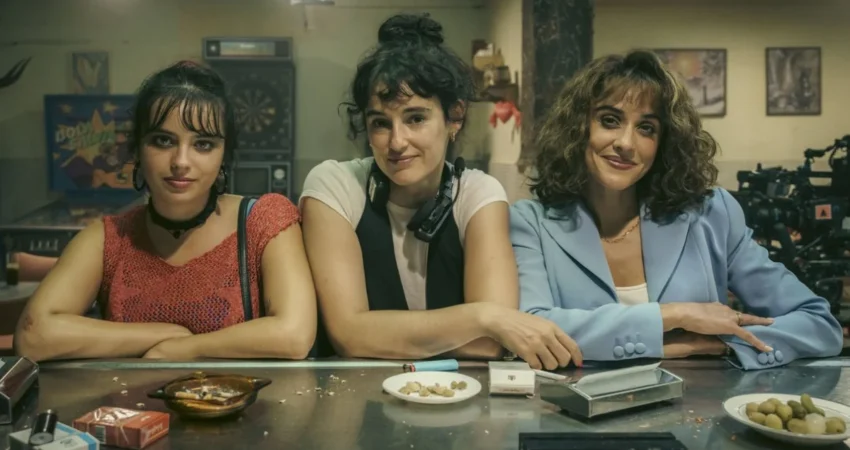
Atresplayer, the streaming platform of Spanish media giant Atresmedia, has commenced principal photography for its latest original series, "Crimen en España" (Crime in Spain). The ambitious five-episode production, created by María Bastarós and directed by Claudia Costafreda, began filming in the stark volcanic landscapes of Lanzarote before relocating to Barcelona. This new offering promises a complex narrative that intertwines thriller elements with psychological horror, surrealism, and the metaphorical exploration of Spain’s pervasive relationship with violence as a media spectacle.
The series delves into a compelling premise centered on Gema, a crime journalist portrayed by Macarena García, who finds herself in a profound personal crisis. Seeking to revitalize her stalled career, she becomes engrossed in the case of several missing teenagers in a small provincial town. It is here that she encounters Aina, a young woman grappling with her own inner demons, brought to life by Belén Barenys. Their shared journey of desperation and investigation propels them into the heart of Spain’s intricate and often exploitative media coverage of violent events.
"Crimen en España" is not a conventional thriller. The production itself describes the series as a potent blend of "thriller with a fantastic setting, psychological horror, metaphor, and dreamlike sequences." This genre-bending approach, under the directorial vision of Claudia Costafreda, is expected to yield a distinct and impactful viewing experience. Costafreda’s previous work, particularly her acclaimed direction on the series "Cardo," demonstrated a remarkable ability to navigate uncomfortable thematic territories with a firm grip on tone and narrative coherence, suggesting that "Crimen en España" will similarly tread a fine line between the unsettling and the compelling.
The creative force behind the series, María Bastarós, is an emerging talent whose previous contributions to television have garnered significant attention. The trust placed in her by atresplayer for a project of this formal and thematic ambition signals a strategic direction for the platform, indicating a commitment to exploring more challenging and artistically driven narratives. This move aligns with broader trends in the streaming landscape, where platforms are increasingly investing in original content that offers unique perspectives and pushes creative boundaries to capture a discerning audience.
A Stellar Ensemble Cast Anchors the Narrative
The supporting cast of "Crimen en España" is notably impressive, featuring a roster of respected actors that adds significant weight and depth to the production. The ensemble includes Ana Torrent, Julián Villagrán, Mónica Cruz, Adelfa Calvo, Milo Quifes, Jedet, Daniel Ibáñez, and Itsaso Arana, among others. This eclectic mix of performers, drawn from diverse backgrounds in arthouse cinema, genre television, and mainstream entertainment, reflects the series’ own hybrid tonal ambitions. The inclusion of such varied talent suggests a deliberate effort to create a rich tapestry of characters and performances that can embody the multifaceted themes of the series.
Macarena García, who has recently garnered critical acclaim for her roles in "La Mesías" and "Se tiene que morir mucha gente," brings a renewed intensity to her portrayal of Gema. These recent projects have seen García transition into more complex and emotionally charged roles, moving beyond the persona that initially brought her widespread recognition. In "Crimen en España," she embodies a character riddled with flaws, using her journalistic profession as both a shield and a snare. Belén Barenys, who previously impressed audiences with her performance in "Autodefensa," takes on the challenging role of Aina, a character who must carry the emotional weight of the narrative from a darker, more introspective space.
Production and Strategic Location Choices

The production of "Crimen en España" is being handled by Buendía Estudios Canarias, with the collaborative efforts of Suma Content and the direct participation of Atresmedia. Ignacio Corrales, Mariano Piñeiro, and Andrea H. Catalá serve as executive producers, with Montse García Álvarez overseeing the project as Director of Fiction for Atresmedia. This collaborative structure underscores the significant investment and strategic importance Atresmedia places on this new series.
The decision to commence filming in Lanzarote is a deliberate artistic choice that goes beyond logistical considerations. The island’s unique volcanic landscape, often described as lunar and otherworldly, provides a striking visual backdrop that complements the series’ ambition to weave fantastical elements into its thriller framework. This stark, almost primal environment is expected to amplify the psychological tension and sense of isolation experienced by the characters. The subsequent move to Barcelona promises a shift in visual tone, potentially introducing a more urban and perhaps more conventional, yet still complex, setting that will contrast with the raw intensity of Lanzarote. This duality in locations suggests a narrative that explores disparate facets of Spanish life and psyche, united by the overarching theme of media-driven violence.
Context and Thematic Relevance: Spain’s Media Landscape
"Crimen en España" arrives at a time when the relationship between media, sensationalism, and public perception of violence is a subject of ongoing debate and critical analysis in Spain and globally. The series aims to dissect how news cycles, particularly those focused on crime and tragedy, can shape public consciousness, often transforming real-life suffering into a form of entertainment. This exploration is particularly relevant in a country where certain types of crime reporting have historically been characterized by sensationalism and a focus on graphic details, potentially contributing to a desensitization to violence or a distorted understanding of its impact.
The narrative’s focus on a journalist grappling with her career and the ethical implications of her work provides a critical lens through which to examine the media’s role in perpetuating or mitigating societal anxieties. The disappearance of teenagers, a recurring and deeply sensitive topic in public discourse, serves as a potent catalyst for exploring these themes. The series will likely delve into the pressures faced by journalists to deliver compelling stories, the potential for exploitation of victims’ narratives, and the psychological toll such coverage can take on both the subjects and the storytellers.
Broader Impact and Analysis
The series’ exploration of psychological horror and surrealism suggests an intent to move beyond a purely procedural crime drama. By incorporating elements of the fantastical, "Crimen en España" may aim to illuminate the subconscious anxieties and collective fears that contribute to society’s fascination with violence. This approach could offer a more nuanced understanding of why certain stories capture public attention and how the media landscape both reflects and shapes these preoccupying narratives.
The hybrid genre approach is a significant departure for atresplayer, which has historically produced a range of content, including successful dramas and comedies. This investment in a more artistically daring and thematically complex series signals a potential evolution in the platform’s content strategy, aiming to attract a more sophisticated audience and to position itself as a producer of critically relevant and culturally significant programming. The success of "Crimen en España" could pave the way for similar ambitious projects, further diversifying the Spanish television landscape.
The narrative arc, comprising five episodes, will likely build suspense and psychological tension through a carefully paced unraveling of the central mystery. The interplay between Gema’s journalistic drive and Aina’s personal turmoil is expected to form the emotional core of the series, grounding its more abstract thematic concerns in relatable human experiences. The series poses a fundamental question: how does Spain consume violence, and what are the consequences of transforming tragedy into a spectacle? "Crimen en España" appears poised to offer a provocative and visually compelling answer, distinguishing itself as a potentially groundbreaking addition to the Spanish television canon. Its unique blend of genres, strong creative team, and relevant thematic exploration position it as one of the most anticipated series from atresplayer in recent memory.

0 Comments